
Sailing aboard Holland America Line’s Nieuw Statendam for the Canary Island Enchantment with Morocco & Portugal itinerary was a voyage of wonder, blending luxurious onboard experiences with captivating ports of call. Among these, Agadir, Morocco, emerged as a highlight—a vibrant tapestry of history, culture, and natural beauty. This blog post offers an in-depth exploration of Agadir’s storied past and a detailed account of our unforgettable day there, crafted to inspire and inform. Optimized for readability and search engines, it features snippets, evocative quotes, and a poetic finale to capture the essence of our adventure.
Table of Contents
The Storied History of Agadir, Morocco
Agadir, a bustling port city on Morocco’s southern Atlantic coast, is a place where ancient roots intertwine with modern resilience. Nestled between the rugged Anti-Atlas Mountains and the vast Sahara Desert, its history is a saga of Berber ingenuity, Islamic splendor, European ambitions, and a remarkable rebirth. Below, we delve into Agadir’s past, providing a comprehensive backdrop to its vibrant present.
Ancient Origins: Berber Foundations and Phoenician Trade
Agadir’s story begins with the Berber (Amazigh) people, Morocco’s indigenous inhabitants, who settled the fertile Souss Valley thousands of years ago. Archaeological evidence, including stone tools and pottery, suggests human presence in the region as early as prehistoric times. The Berbers, skilled in agriculture and fishing, leveraged Agadir’s mild climate and coastal access to cultivate crops and trade resources. The city’s name, derived from the Berber word agadir—meaning “fortified granary”—reflects these early communities’ focus on storing grain and protecting against raids.
Agadir’s name echoes its ancient role: a bastion of sustenance in a land of plenty.
By the 8th century BCE, Phoenician traders established outposts along Morocco’s coast, including near present-day Agadir. These maritime adventurers connected the region to Mediterranean trade networks, exchanging goods like gold, salt, and argan oil—a UNESCO-protected resource unique to southwest Morocco. The Berbers’ expertise in animal husbandry and agriculture made Agadir a vital hub, fostering early cultural exchanges that shaped its identity.
Islamic Transformation and Medieval Prosperity
The arrival of Islam in the 7th century CE marked a pivotal shift. The Idrisid dynasty, Morocco’s first Islamic rulers, unified much of the region by the 8th century, promoting scholarship and commerce. Agadir, though not a political capital, benefited from its position in the Souss region, a key node in trans-Saharan trade routes. Caravans laden with gold, ivory, spices, and slaves traversed the desert, linking sub-Saharan Africa with Europe and the Middle East. Agadir’s coastal access facilitated the export of these goods, enriching local communities.
In the 11th century, the Almoravid dynasty strengthened Agadir’s strategic role by constructing fortified granaries and defensive structures. These agadirs protected against nomadic raids and ensured food security, underscoring the city’s importance. The kasbah, built on a hill overlooking the harbor, became a symbol of regional power, its walls guarding both people and prosperity.
Portuguese Incursion and Saadian Reclamation
The 15th century brought European interest to Morocco’s shores. In 1505, the Portuguese established a trading post and fortress at Agadir, naming it Santa Cruz de Aguer. Their goal was to control the lucrative trans-Saharan trade and counter Ottoman expansion. The fortified enclave, complete with cannons and a garrison, transformed Agadir into a contested prize. Portuguese ships exported sugar, dates, and argan oil to Europe, while the Berbers resisted foreign dominance.
This European foothold was short-lived. In 1541, the Saadian dynasty, a powerful Moroccan force from the Draa Valley, recaptured Agadir, expelling the Portuguese. The Saadians revitalized the city as a major port, rebuilding the kasbah and fostering trade with Europe and Africa. Agadir flourished as a cosmopolitan hub, attracting merchants, scholars, and adventurers. The Saadian era marked a golden age, with the city’s markets brimming with exotic goods and its harbor bustling with activity.
Decline and Colonial Intrigue
By the 17th century, Agadir’s prominence waned as Morocco’s political center shifted to cities like Fez, Marrakech, and Rabat under the Alawite dynasty, which remains Morocco’s ruling family. Competition from ports like Essaouira, coupled with piracy along the coast, diminished Agadir’s role. The kasbah fell into disrepair, and the city became a quiet fishing and trading outpost, its markets overshadowed by inland centers.
The 19th century reignited foreign interest as European colonial powers—France, Britain, and Germany—vied for influence in Morocco. Agadir’s strategic port drew particular attention, culminating in the 1911 Agadir Crisis. Germany’s dispatch of the gunboat Panther to Agadir’s harbor was a bold assertion of its interests against French dominance. Resolved through diplomacy, the crisis highlighted Agadir’s geopolitical significance and foreshadowed France’s colonization of Morocco in 1912. Under French rule, Agadir served as a minor administrative center, its economy tied to agriculture and fishing.
The 1960 Earthquake: A Defining Tragedy
Agadir’s most transformative moment came with the 1960 earthquake, a cataclysm that reshaped the city. Lasting just 15 seconds, the 5.7-magnitude quake leveled much of Agadir, killing approximately 15,000 people—nearly a third of the population—and leaving tens of thousands homeless. The old city, including the historic kasbah, was reduced to rubble, marking a profound loss for Morocco.
In a heartbeat, Agadir fell, yet its spirit rose from the ruins.
King Mohammed V, father of modern Morocco, vowed to rebuild, declaring, “If Agadir is destroyed, it will be rebuilt.” Reconstruction embraced modernist principles, with wide boulevards, earthquake-resistant buildings, and a focus on tourism and commerce. The port was expanded to handle international trade, and Agadir’s beaches were developed to attract visitors. The partially restored kasbah, perched on its hill, stands as a poignant reminder of the city’s loss and resilience.
Agadir Today: A Modern Beacon
Today, Agadir is Morocco’s premier beach destination and a thriving economic hub, with a population exceeding 400,000. Its diverse community—Berber, Arab, and expatriate—reflects a blend of tradition and modernity. The economy thrives on tourism, fishing, and agriculture, particularly the export of citrus fruits and argan products. Agadir’s modern skyline, with its hotels and resorts, contrasts with its historical roots, yet its souks, mosques, and cultural festivals preserve a distinctly Moroccan character.
Agadir’s history is a testament to its ability to adapt and endure. From Berber granaries to Saadian splendor, colonial contests to a modern renaissance, the city embodies Morocco’s resilient spirit. For visitors, it offers a unique blend of past and present, making it a must-see on any Moroccan journey.
Snippet: Why Explore Agadir’s History?
- Ancient Roots: Discover Berber traditions and Phoenician trade networks.
- Cultural Crossroads: Trace Agadir’s role in Islamic and European history.
- Resilient Spirit: Learn how Agadir rose from the 1960 earthquake to become a modern gem.
Our Unforgettable Day in Agadir, Morocco
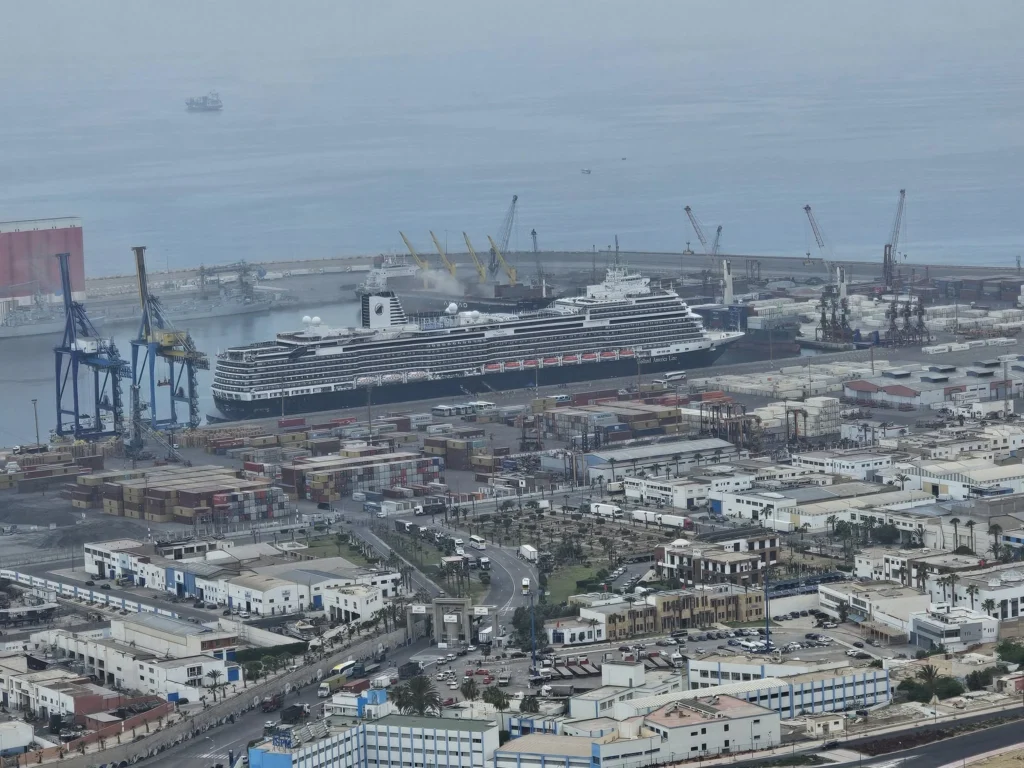
After days of sailing the Atlantic aboard the luxurious ms Nieuw Statendam, Agadir’s coastline was a thrilling sight. Our stop in this vibrant city, part of the Canary Island Enchantment with Morocco & Portugal itinerary, promised a deep dive into Morocco’s soul. From sacred sites to bustling markets, and serene oases to unexpected adventures, our day in Agadir was a sensory journey that left us enchanted. Below, we share every moment, enriched with details to inspire your own exploration.
Morning: Sacred Sites and Coastal Charms
Mosque Mohammed V: A Spiritual Awakening
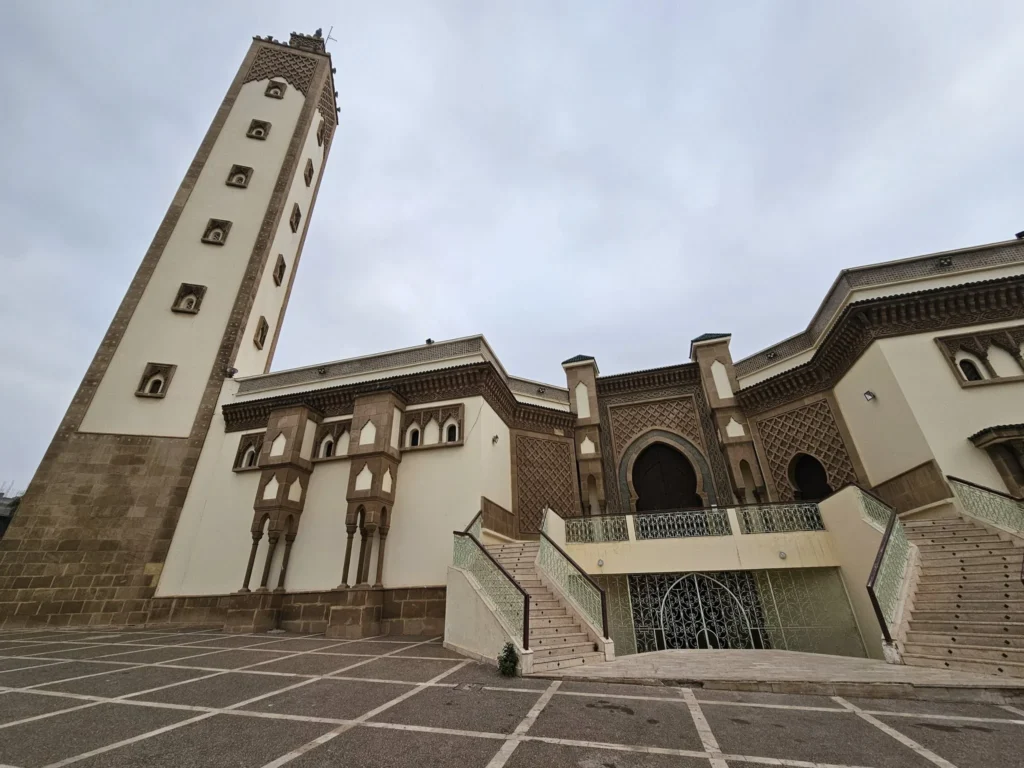
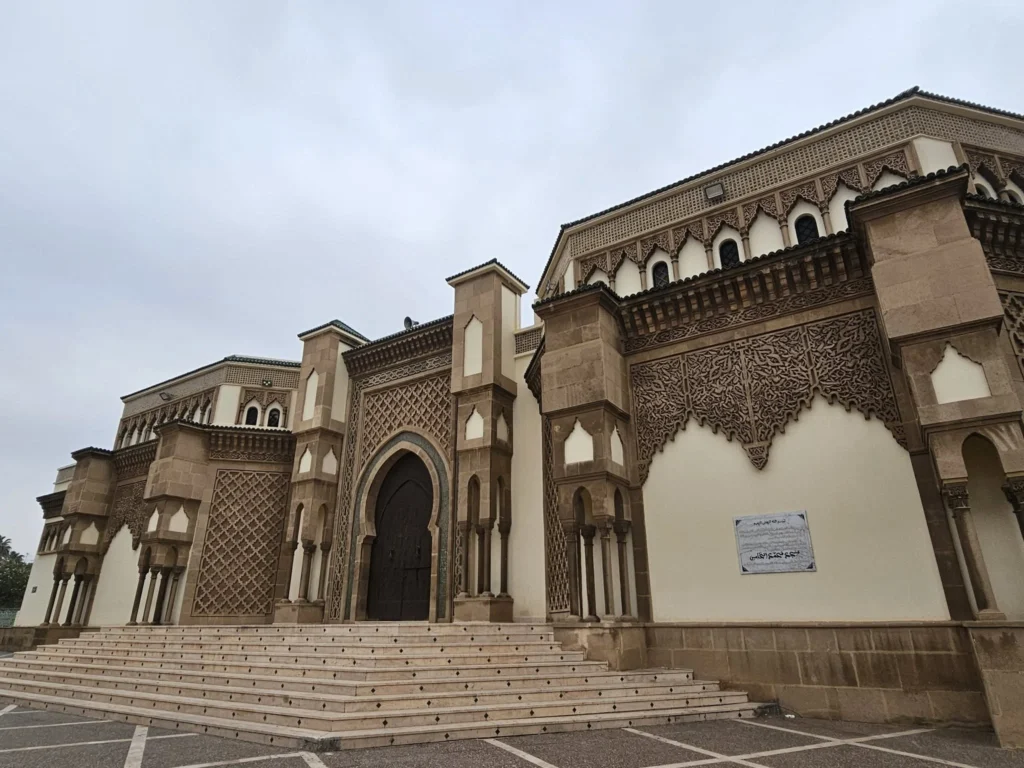
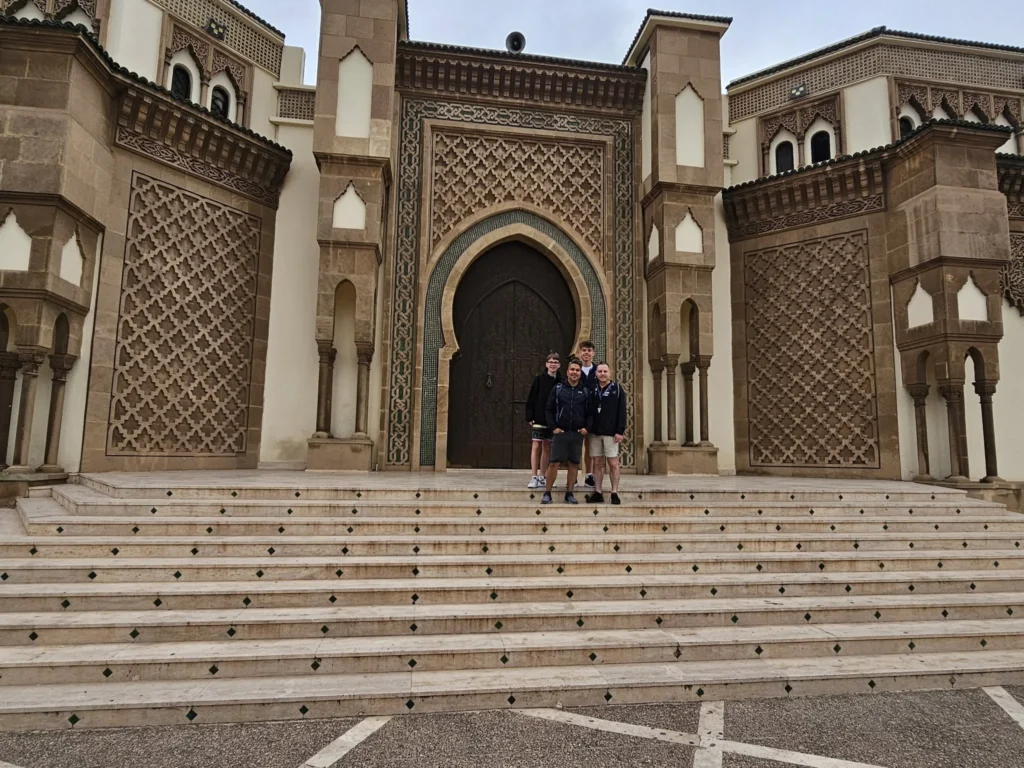
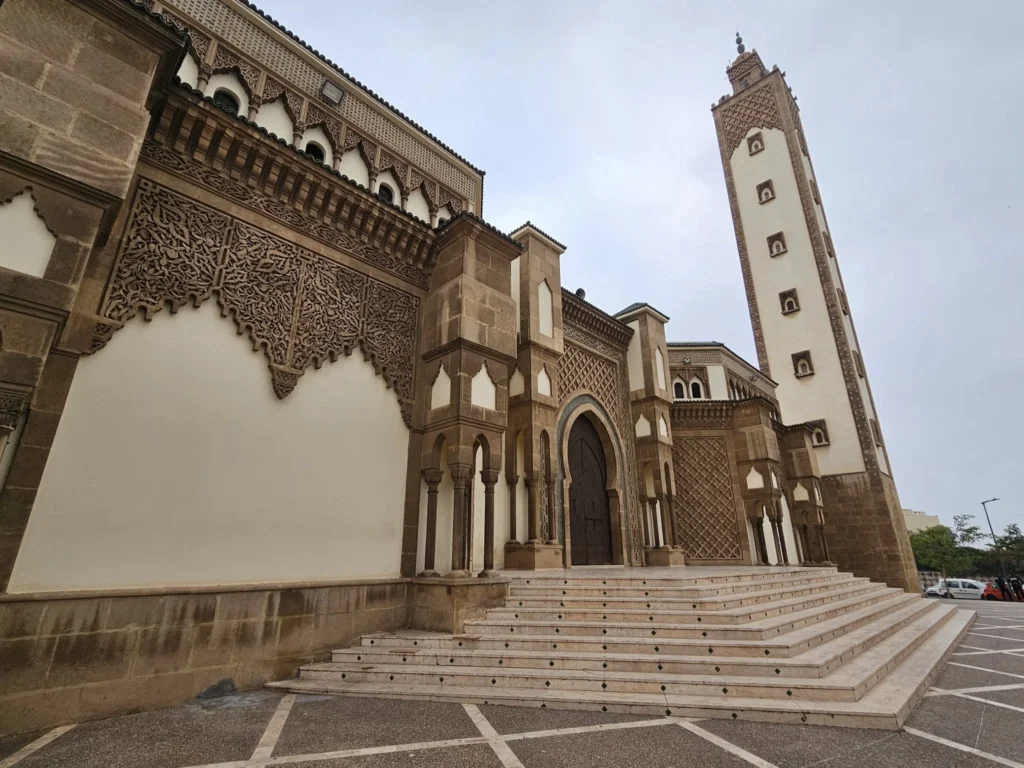
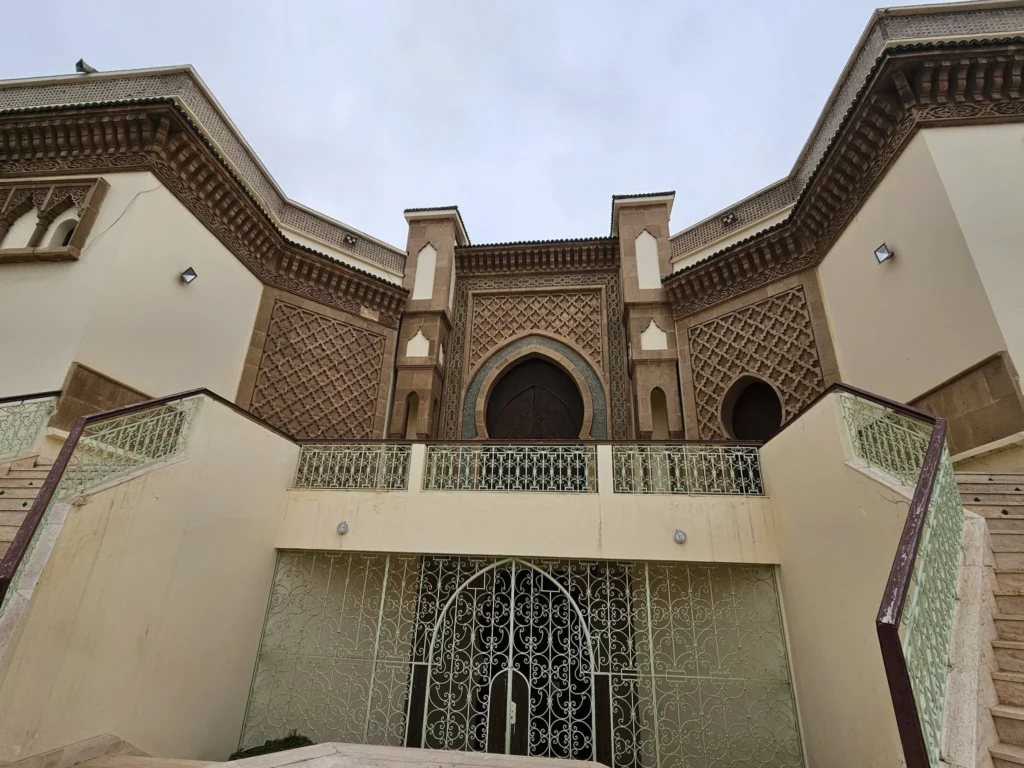
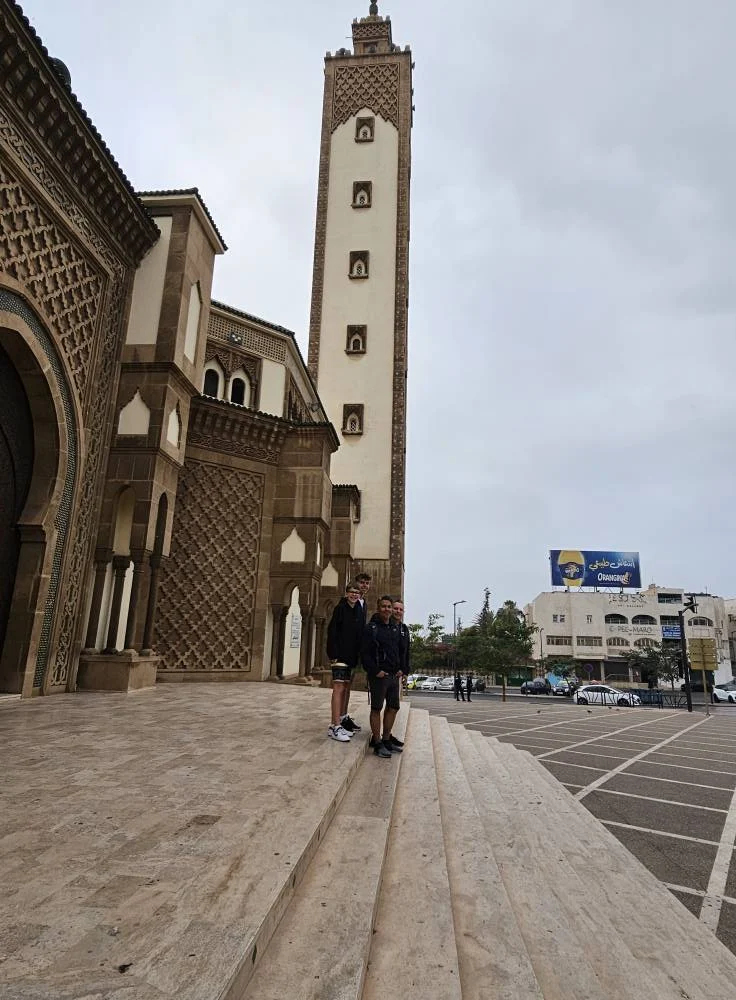
Our day began as the Nieuw Statendam docked seamlessly at Agadir’s port. After a hearty breakfast at the ship’s Lido Market, where fresh pastries and made-to-order omelets fueled our excitement, we disembarked, eager to immerse ourselves in Morocco. Our first stop was Mosque Mohammed V, a striking example of modern Moroccan architecture in Agadir’s bustling heart. Its white façade, adorned with intricate zellige tilework, shimmered in the morning light, while the green-tiled minaret soared above the city.
Though non-Muslims could not enter, our guide’s passionate narrative brought the mosque to life. Named for Morocco’s beloved king, it serves as a spiritual and communal anchor for locals. We stood in awe, absorbing the serene ambiance and the faint echo of the call to prayer. The visit grounded us in Agadir’s cultural depth, setting a reflective tone for the day.
At Mosque Mohammed V, we felt Agadir’s heartbeat—faith and heritage in perfect harmony.
Snippet: Visiting Mosque Mohammed V
- Architecture: Admire the white façade and green-tiled minaret.
- Cultural Insight: Learn about its role in Agadir’s spiritual life.
- Photography: Capture the mosque’s elegance from its serene courtyard.
Agadir Marina: A Coastal Stroll
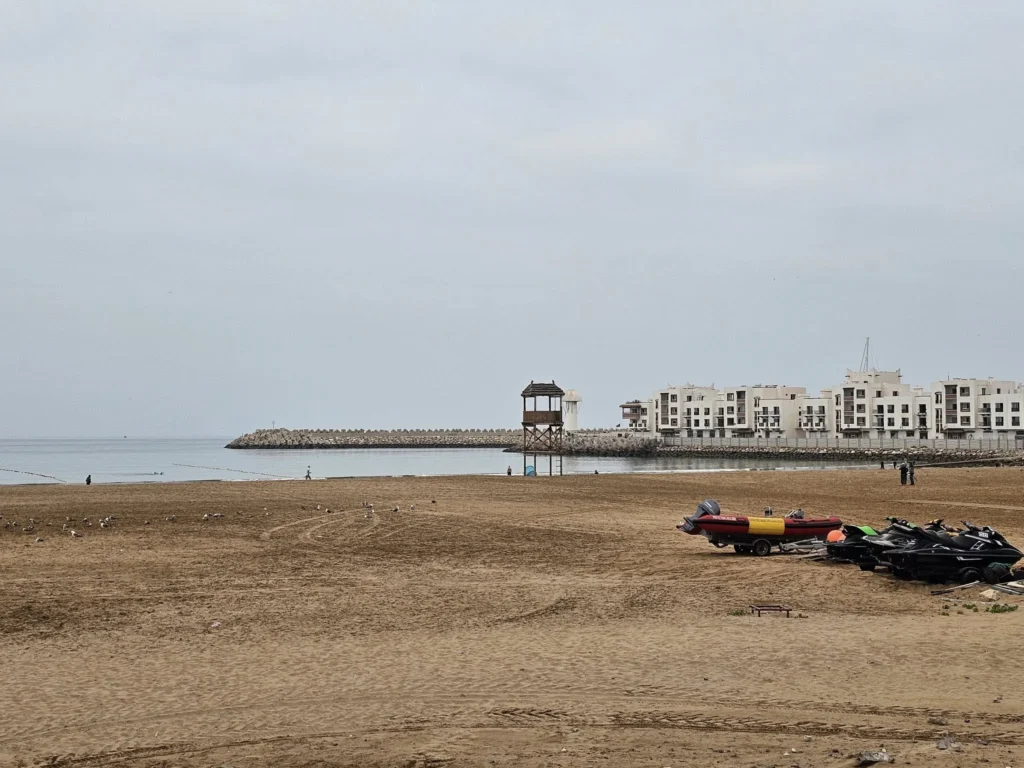
Next, we headed to the Agadir Marina, a lively waterfront that blends modern leisure with coastal charm. The promenade buzzed with activity—cafes served aromatic Moroccan coffee, boutiques displayed local crafts, and yachts bobbed gently in the harbor. We strolled along the beach, sinking our toes into soft, golden sand as the Atlantic breeze carried hints of salt and spices. The beach stretched for miles, framed by the distant Anti-Atlas Mountains, creating a postcard-perfect scene.
Families played in the surf, vendors offered fresh coconut water, and we couldn’t resist snapping photos of the vibrant tableau. The marina’s relaxed vibe was a perfect introduction to Agadir’s laid-back coastal culture, leaving us energized for the adventures ahead.
Mid-Morning: History and High Spirits
Agadir Oufella: A Panoramic Perspective
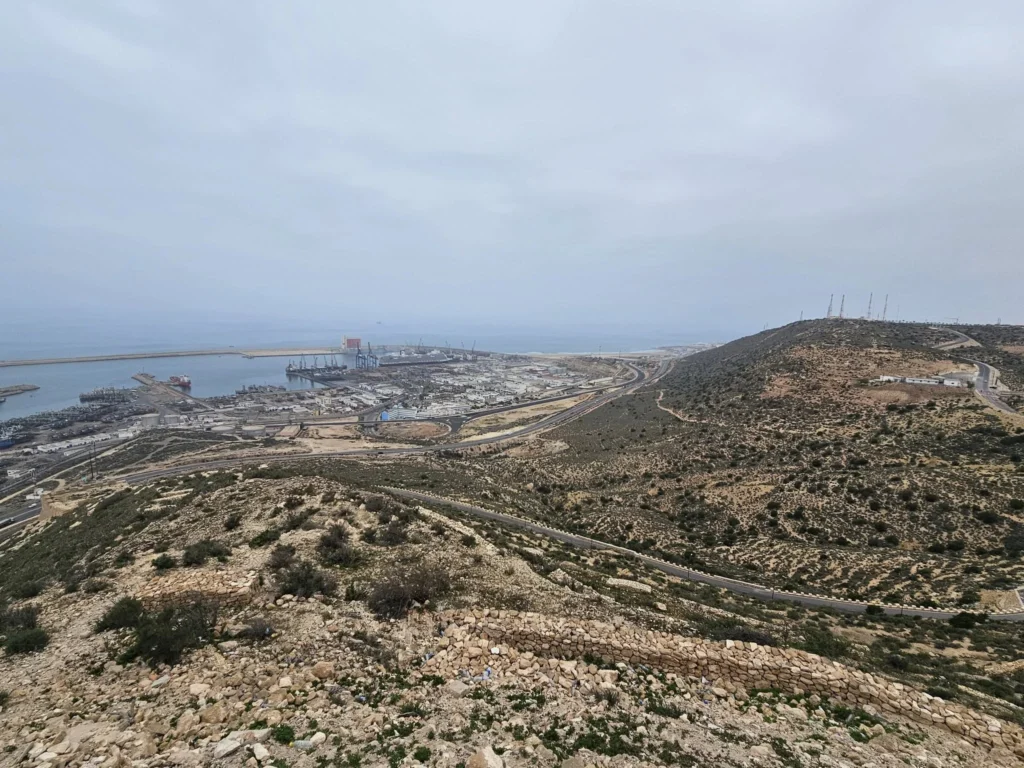
Our journey continued to Agadir Oufella, the historic kasbah perched atop a hill overlooking the city. The short drive offered sweeping views of Agadir’s sprawling coastline and modern skyline. Though the kasbah was largely destroyed in the 1960 earthquake, its remnants—fortified walls inscribed with “God, Country, King”—evoke its Saadian-era grandeur. At the viewpoint, we gazed at the Atlantic’s sparkle and the city’s blend of old and new, from fishing boats to high-rise hotels.
Our guide shared poignant stories of the kasbah’s past and the earthquake’s devastation, adding emotional depth to the site. The wind carried a sense of timelessness, and we felt connected to Agadir’s resilient spirit. The view was a highlight, offering a moment to pause and reflect on the city’s journey.
From Oufella’s heights, Agadir unfolded—a city reborn, yet rooted in history.
Camel Ride: Sven’s Desert Delight
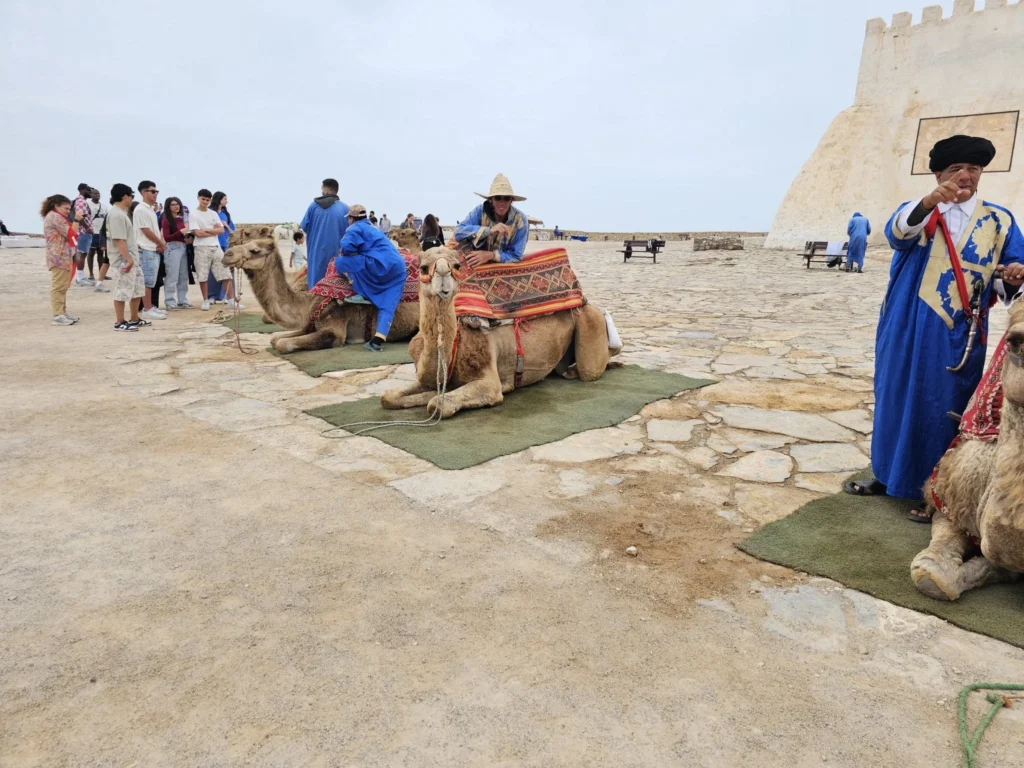
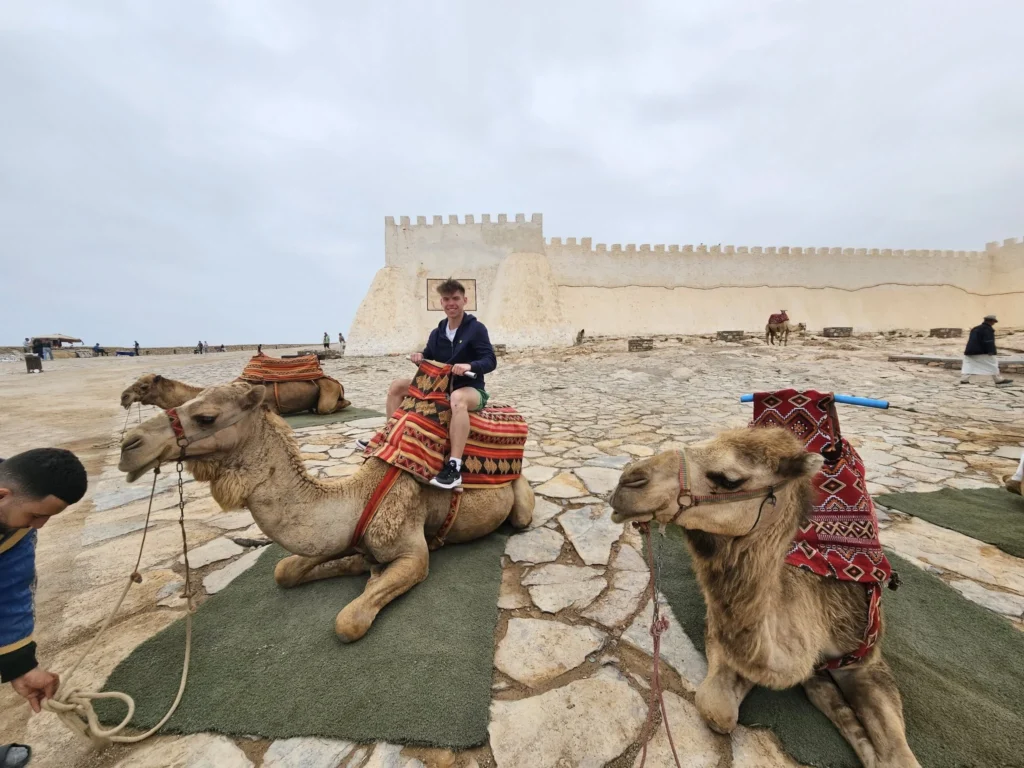
At the hill’s base, an unexpected adventure awaited: a camel ride. Sven, always eager for excitement, climbed aboard a gentle camel led by a local handler. The brief ride along a scenic path was both thrilling and comical, with Sven grinning as the camel swayed rhythmically. I captured the moment on camera, knowing it would be a cherished memory.
The handlers shared insights about camels’ role in Berber culture, from nomadic travel to trade caravans, blending fun with education. The experience grounded us in Morocco’s desert heritage, adding a playful note to our morning.
Snippet: Camel Rides in Agadir
- Unique Experience: Sway through scenic paths on a friendly camel.
- Cultural Connection: Learn about camels in Berber traditions.
- Photo Op: Capture unforgettable moments for your travel album.

Lunchtime: Souk El Had’s Vibrant Chaos
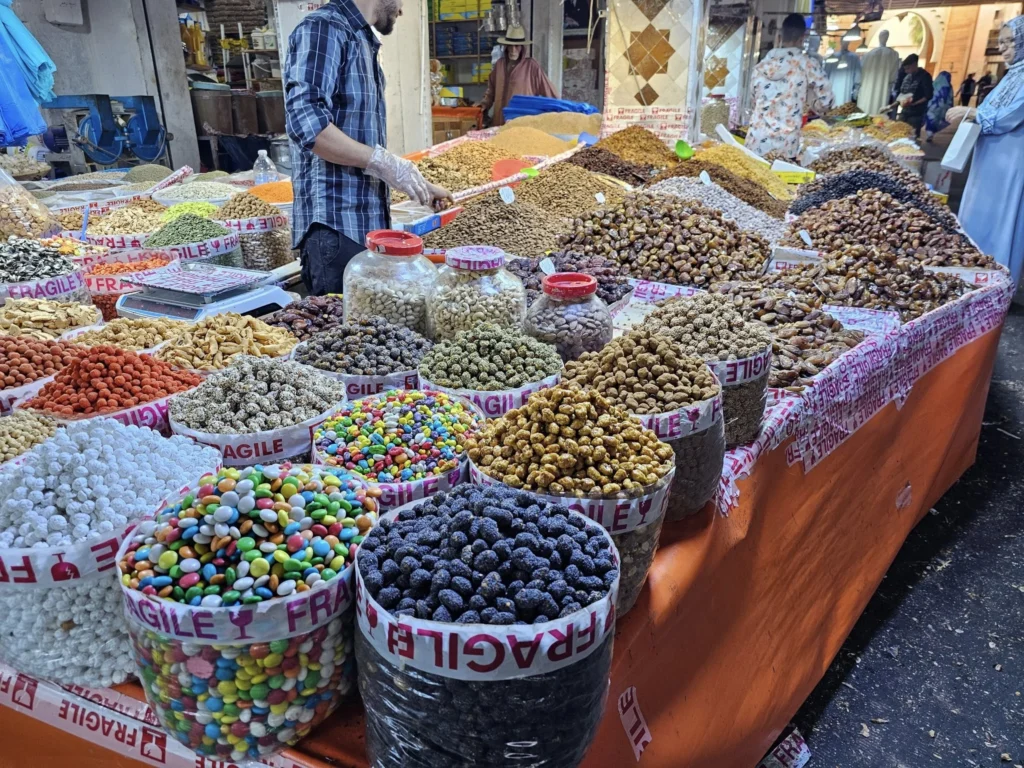
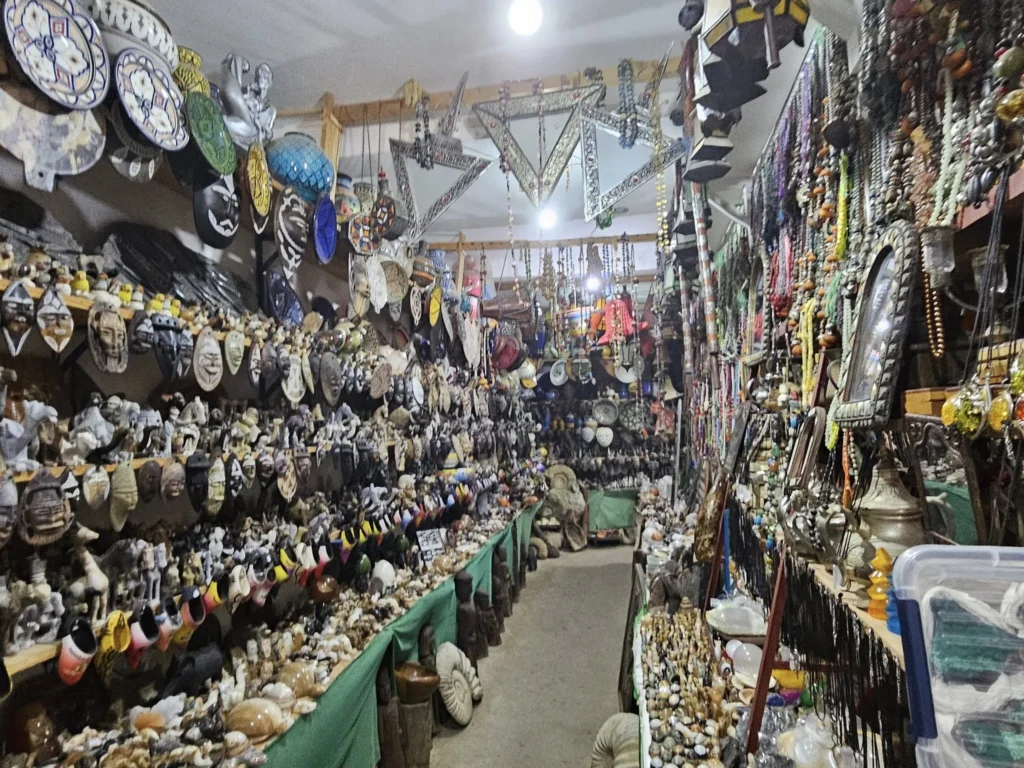
By midday, our appetites for both food and culture led us to Souk El Had, Africa’s largest indoor market. This sprawling bazaar was a sensory overload in the best way—narrow aisles brimmed with stalls selling vibrant spices, fresh produce, intricate jewelry, and supple leather goods. The air was thick with aromas of cumin, saffron, and grilled meats, while vendors’ calls created a lively symphony.
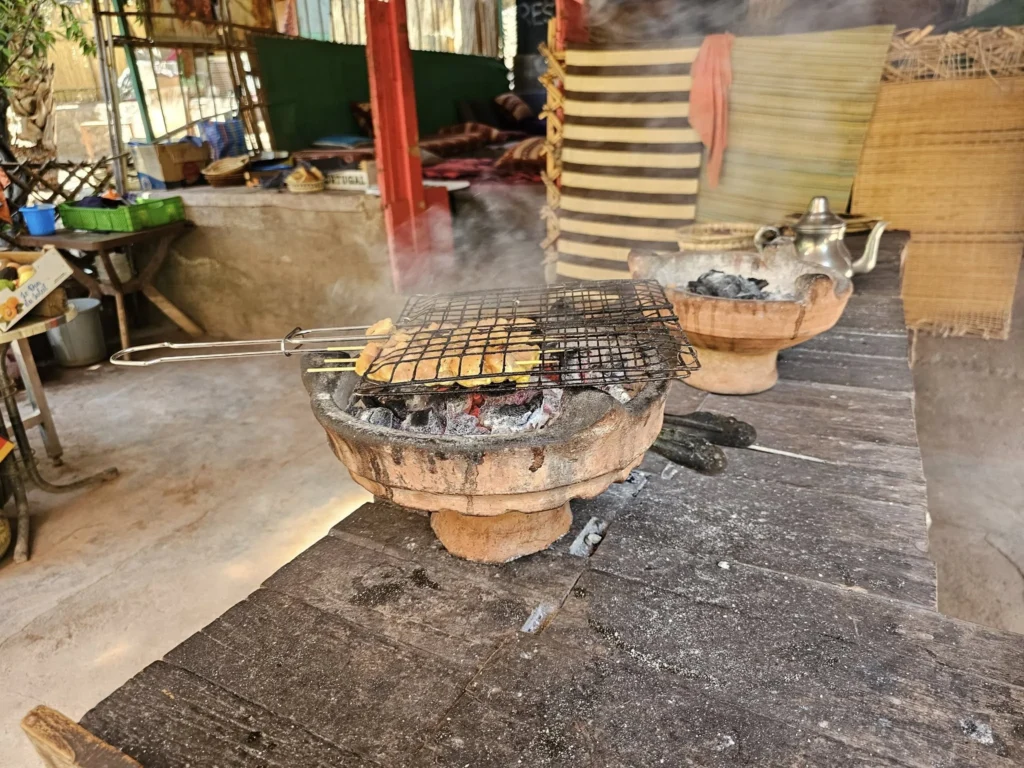
Our guide navigated us to a small stall for a Moroccan street food lunch. Freshly baked khobz bread, paired with zesty harissa and succulent grilled kebabs, was a revelation. We sipped sweet mint tea, poured dramatically from a silver teapot, its refreshing warmth complementing the meal. Bargaining was part of the experience, and we haggled good-naturedly for souvenirs—a handwoven rug, a vial of argan oil, and a pair of silver earrings. The souk’s energy was infectious, immersing us in Morocco’s artisanal traditions.
Souk El Had was a whirlwind of color and flavor, where every stall told a story.
Snippet: Must-Try Foods at Souk El Had
- Khobz Bread: Warm, crusty, and perfect with dips like harissa.
- Grilled Kebabs: Juicy, spiced, and cooked to perfection.
- Mint Tea: Sweet, aromatic, and a Moroccan ritual.


Afternoon: Nature’s Embrace
Paradise Valley: An Oasis of Serenity
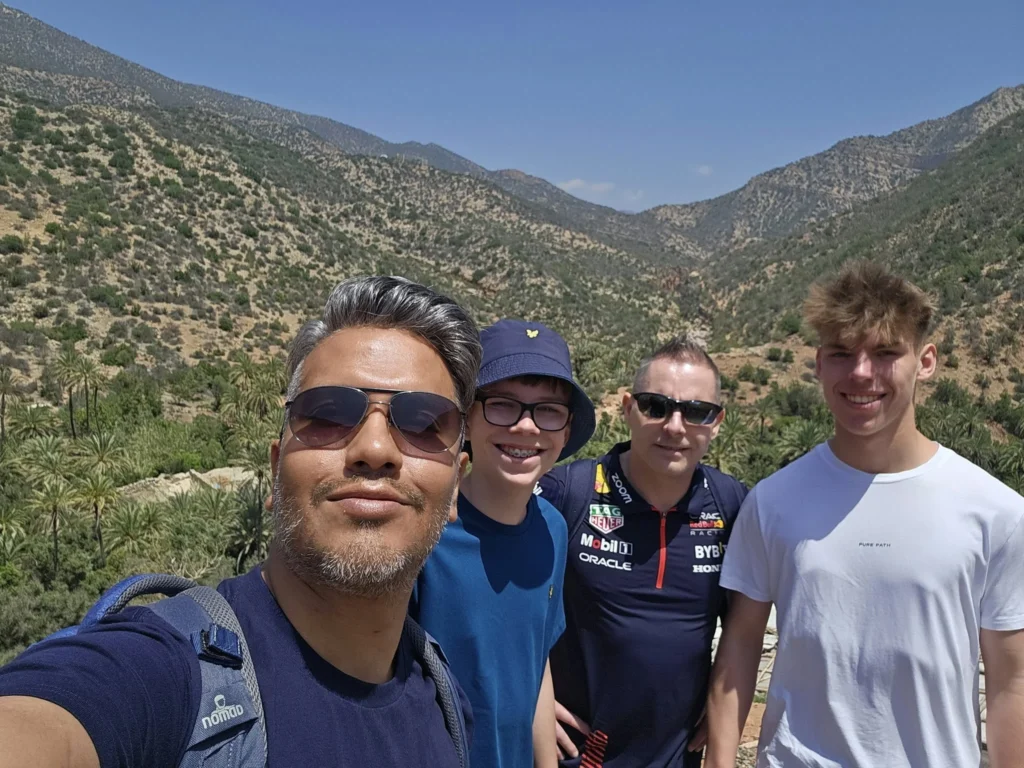
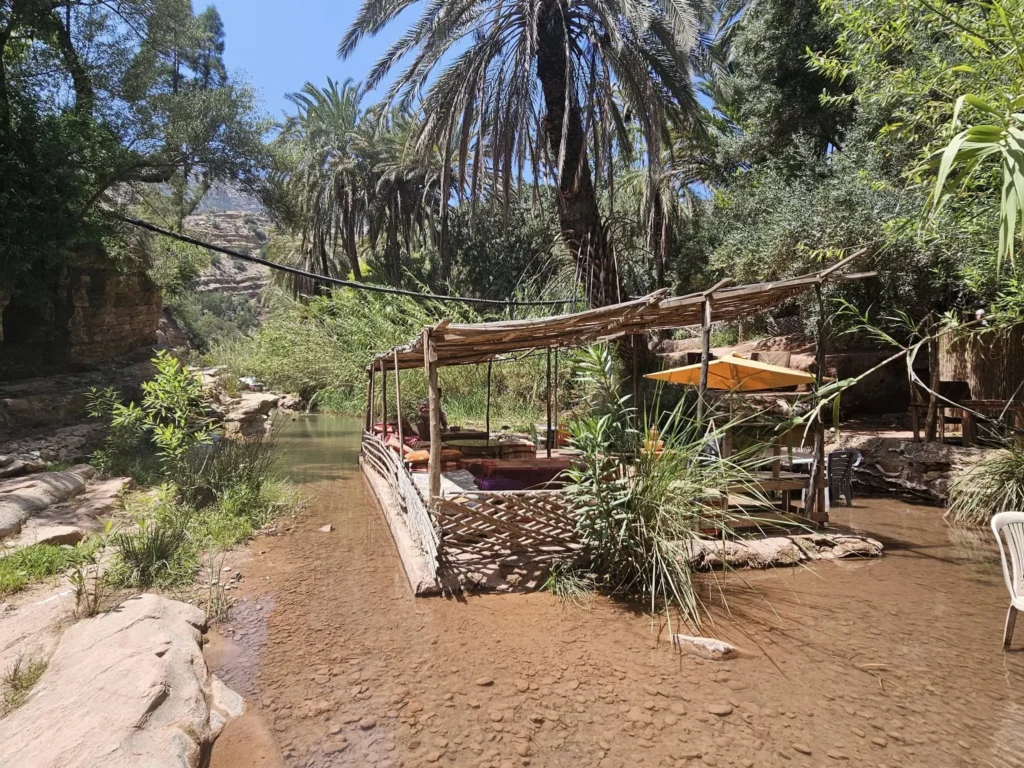
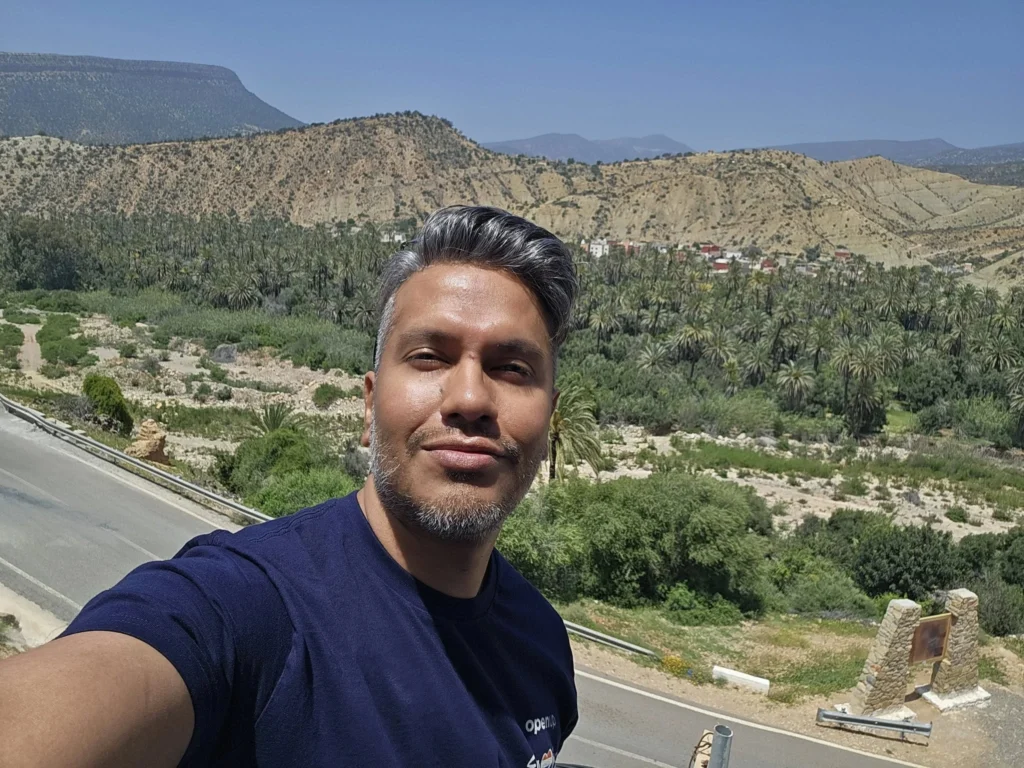
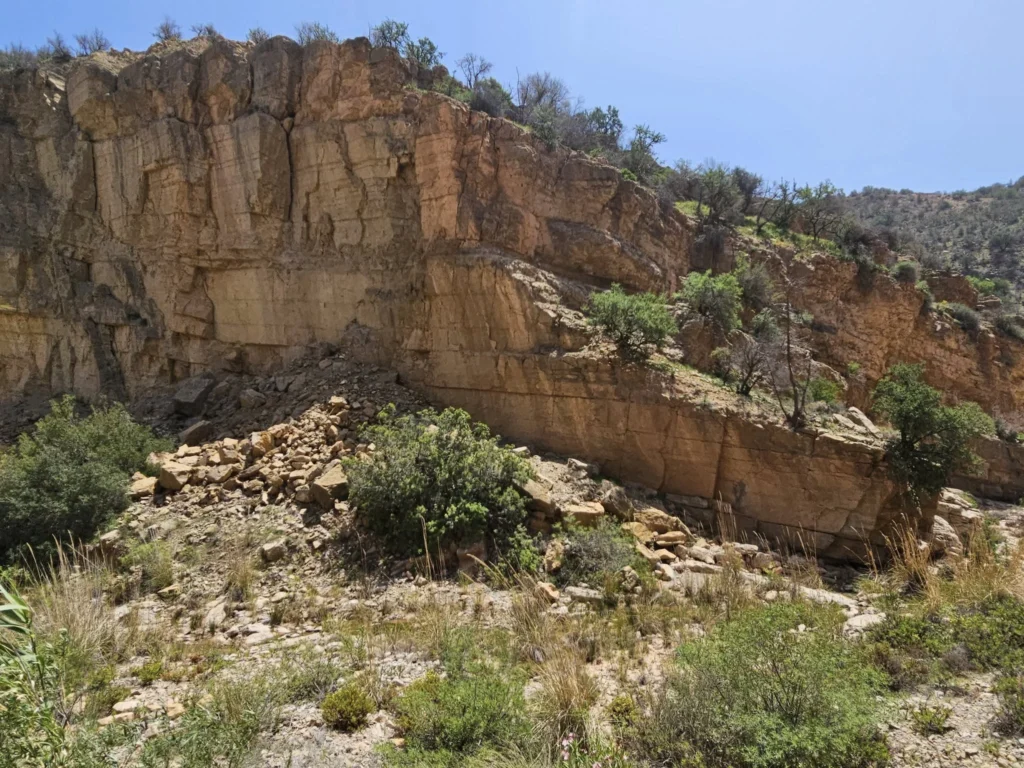
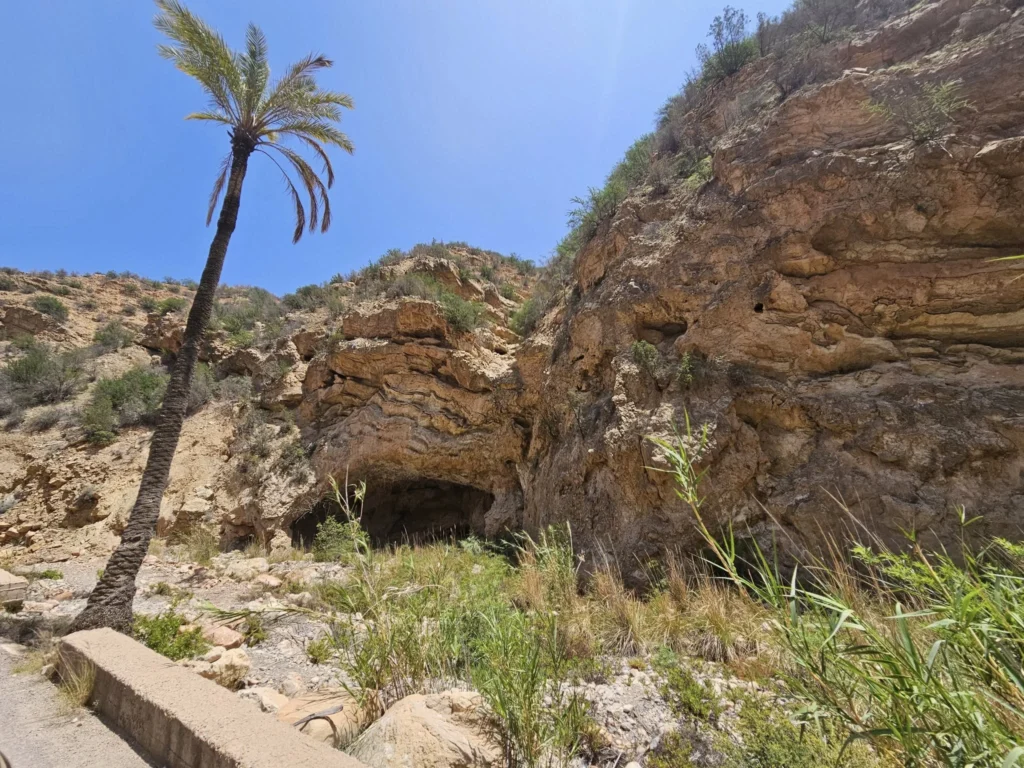
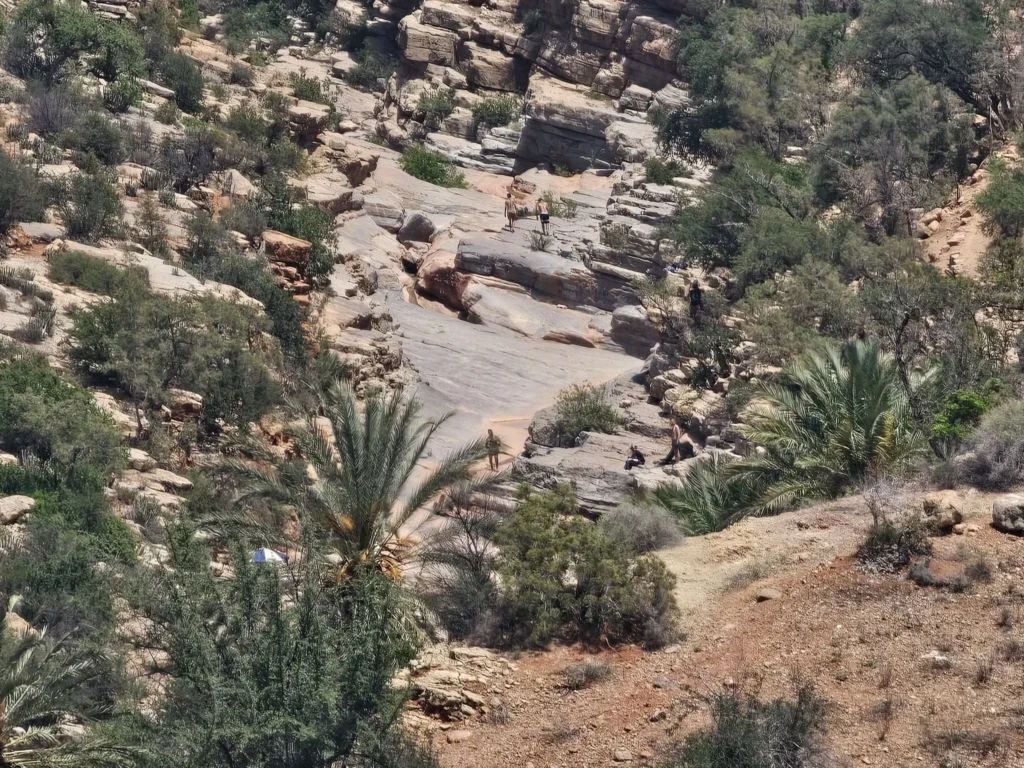
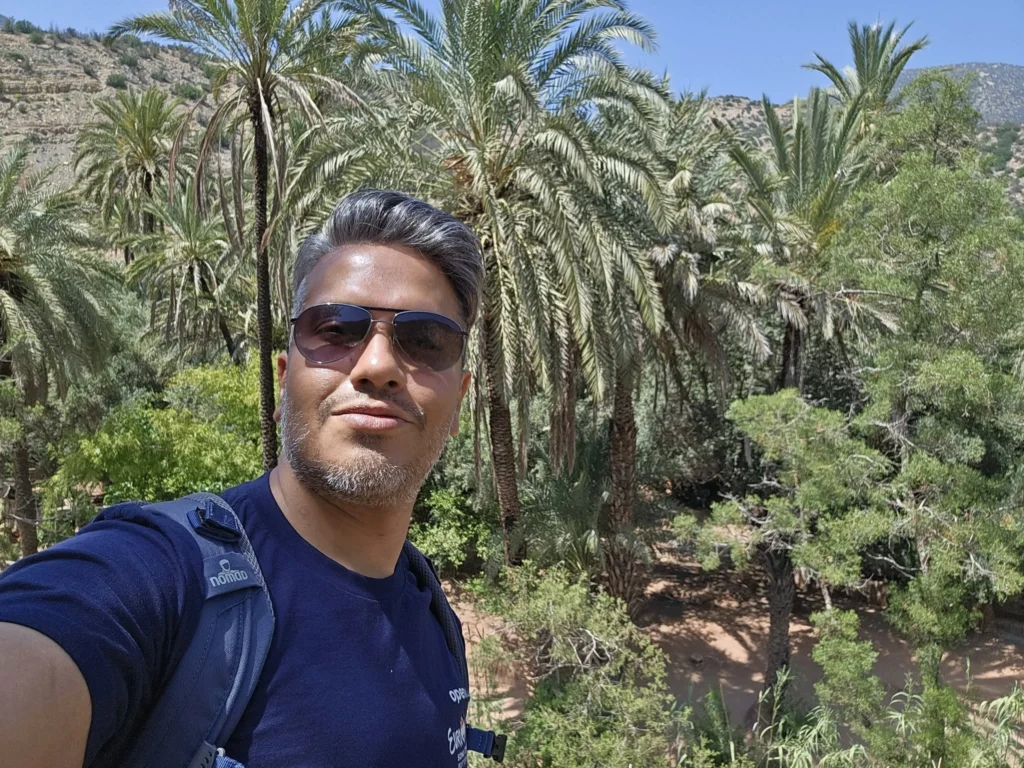
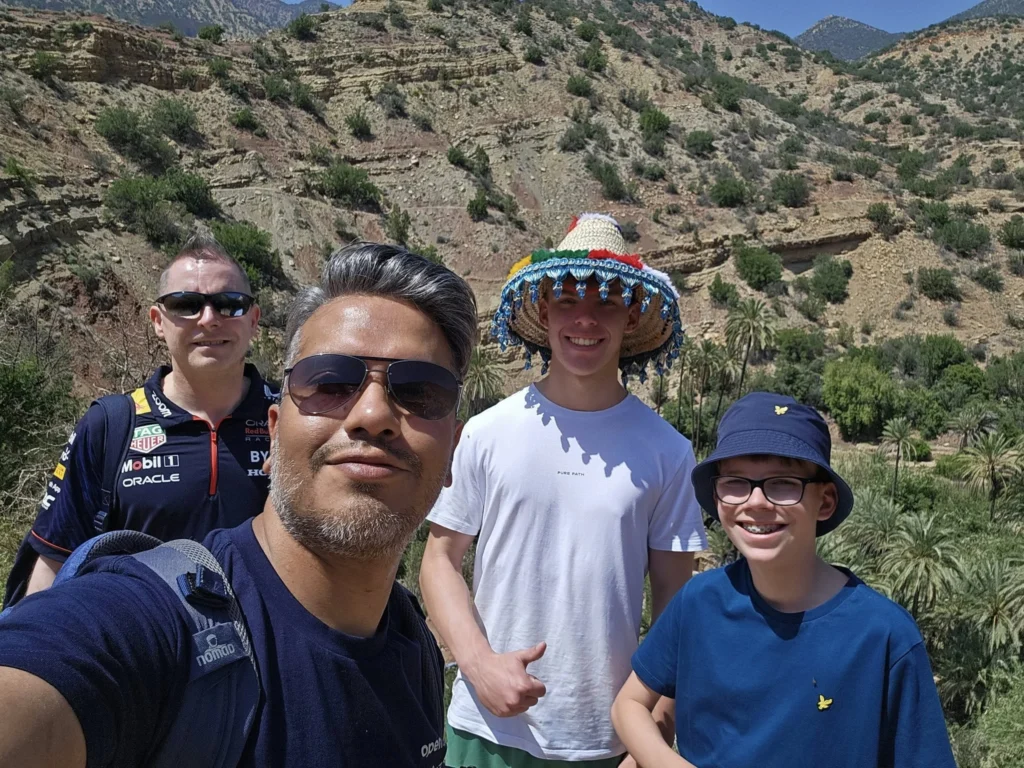
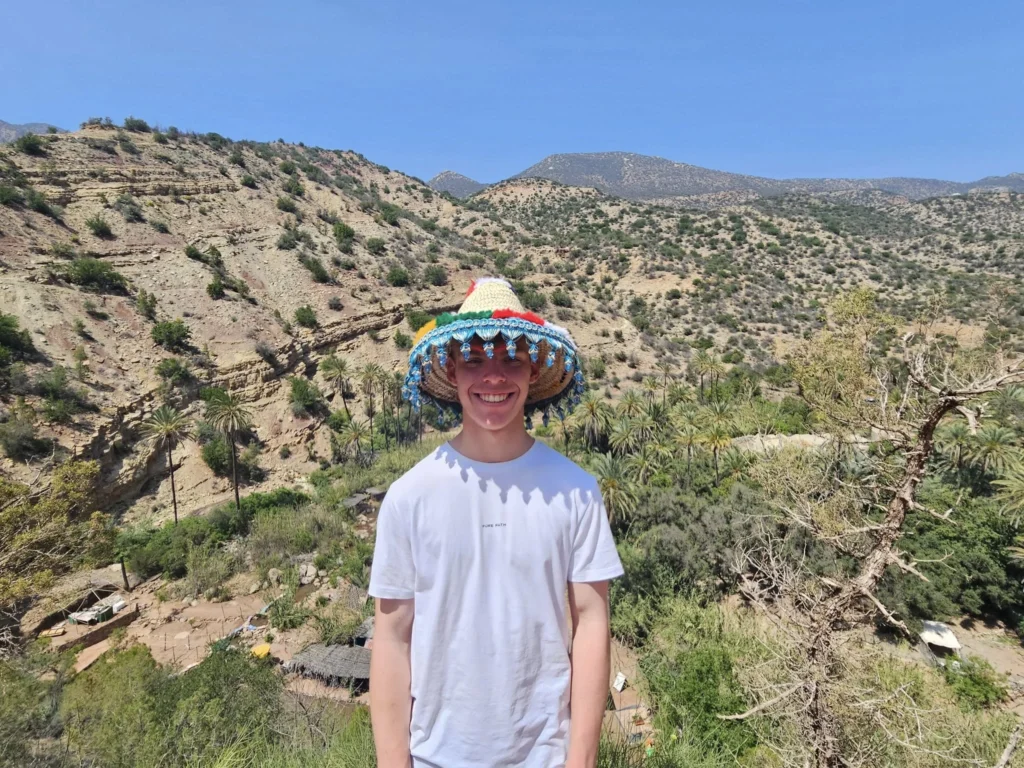
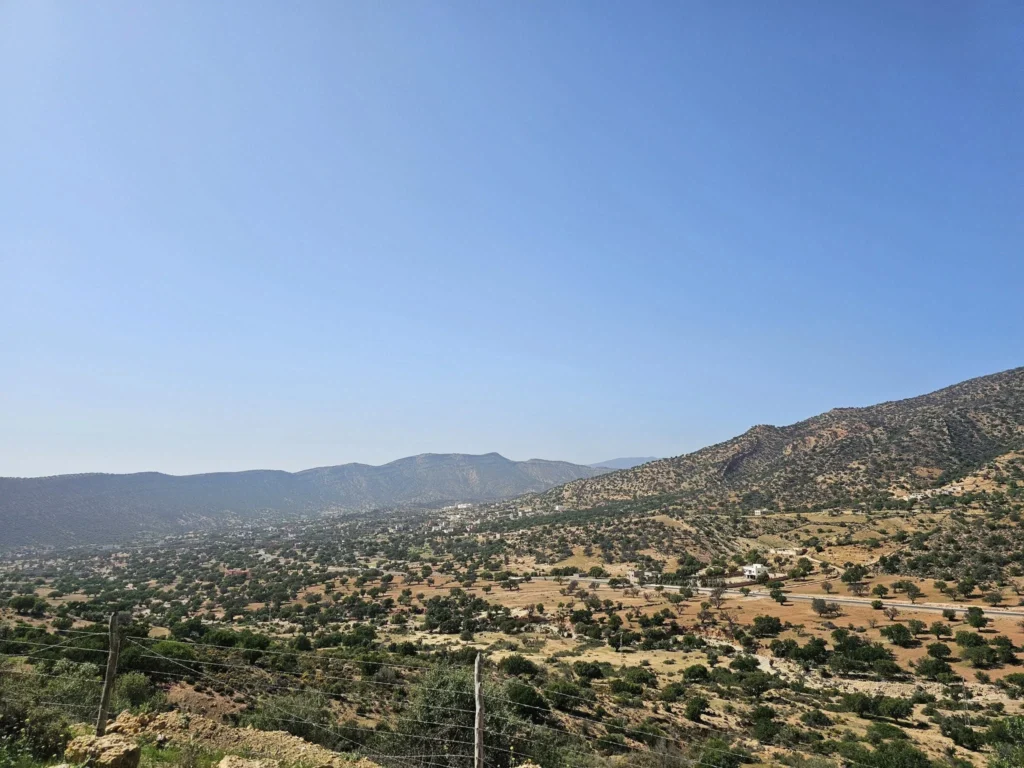
After the souk’s bustle, we craved tranquility, and Paradise Valley delivered beyond expectations. A 45-minute drive from Agadir took us to this lush oasis in the Tamraght River gorge. Surrounded by palm trees, argan groves, and rugged cliffs, the valley felt like a hidden Eden. Our guided trek along a rocky path revealed the region’s flora, with our guide explaining the cultural and economic significance of argan trees, whose oil is a Moroccan treasure.
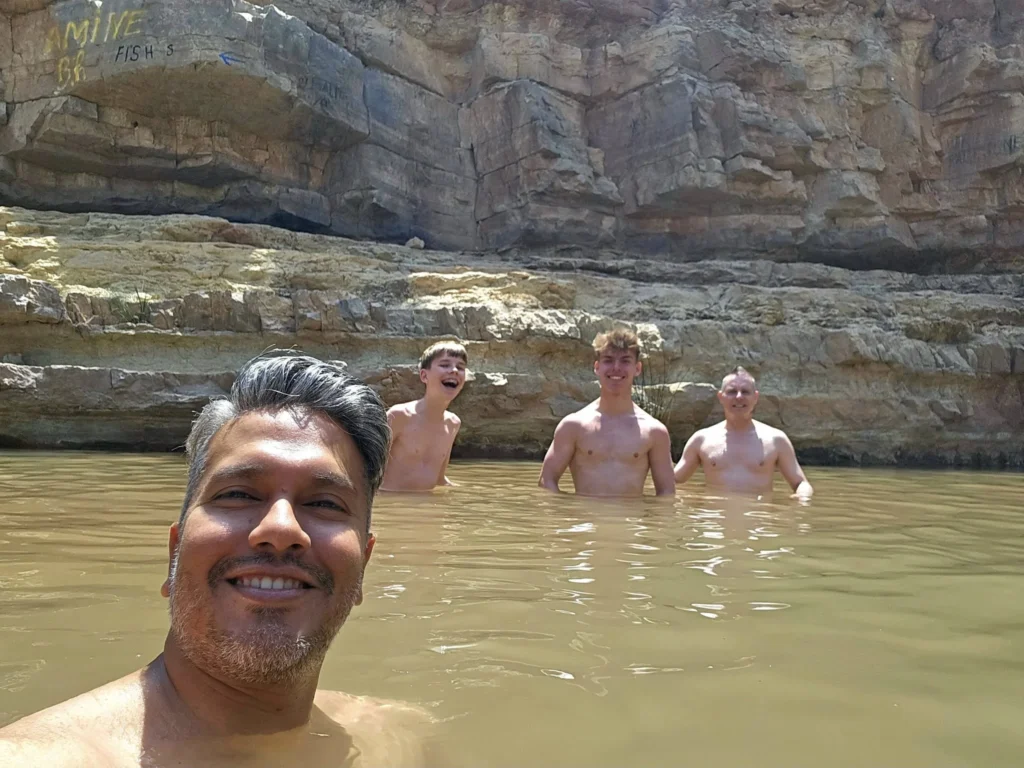
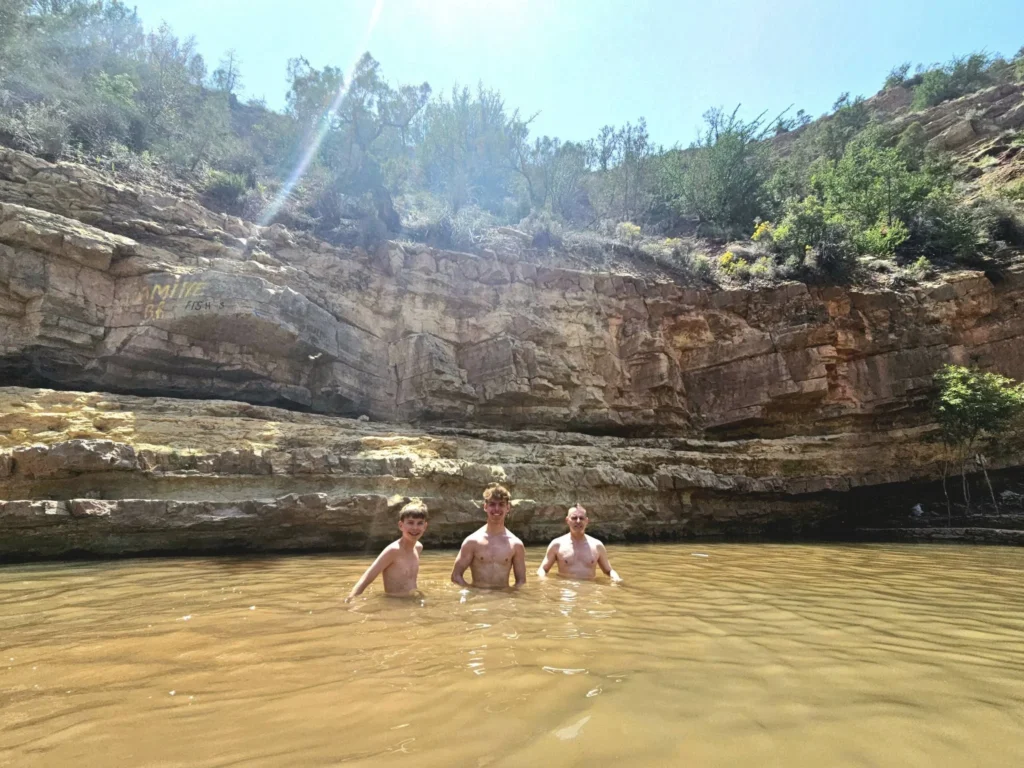
The valley’s crown jewel was its natural pools, fed by gentle waterfalls. Unable to resist, we kicked off our shoes and waded into the cool, crystal-clear water. To our surprise, tiny fish nibbled at our feet—a natural pedicure! The ticklish sensation gave way to laughter, and we swam, soaking in the valley’s beauty. The moment felt like a gift, a spontaneous connection with nature that made the day unforgettable.
In Paradise Valley’s pools, we found peace and play, nature’s embrace in Morocco’s heart.
Snippet: Paradise Valley Highlights
- Scenic Trekking: Explore palm-lined paths and rugged cliffs.
- Natural Pools: Swim in crystal-clear lakes with fish pedicures.
- Photography: Capture the valley’s lush beauty for stunning shots.


Aromatic Garden: A Culinary Interlude
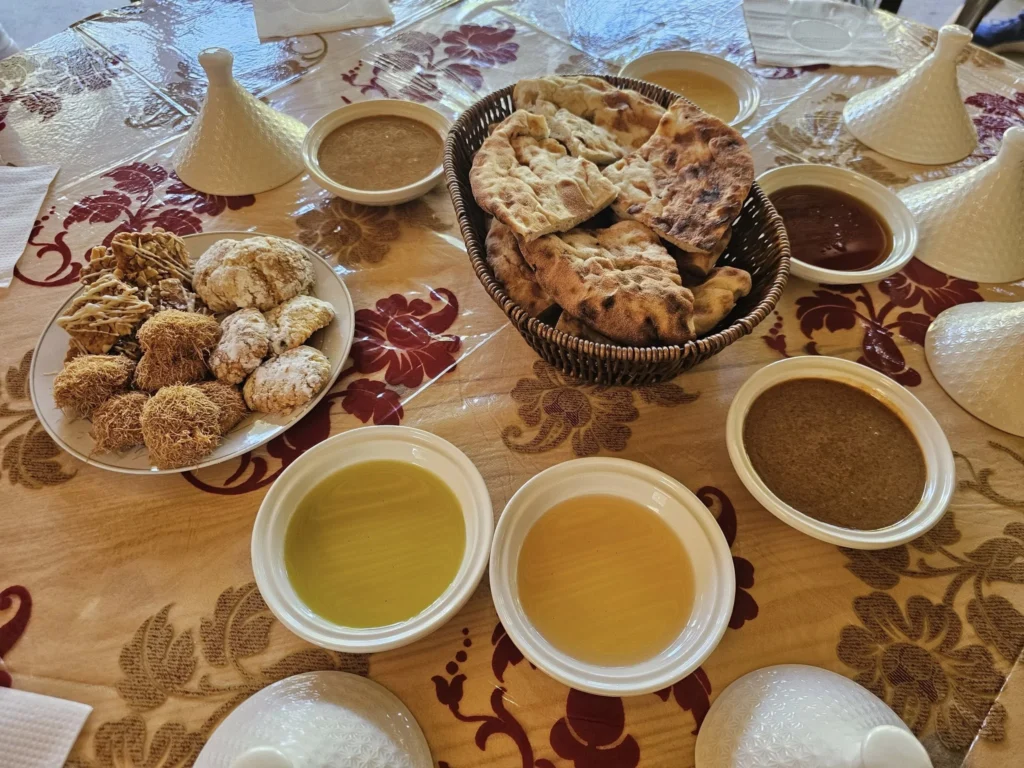
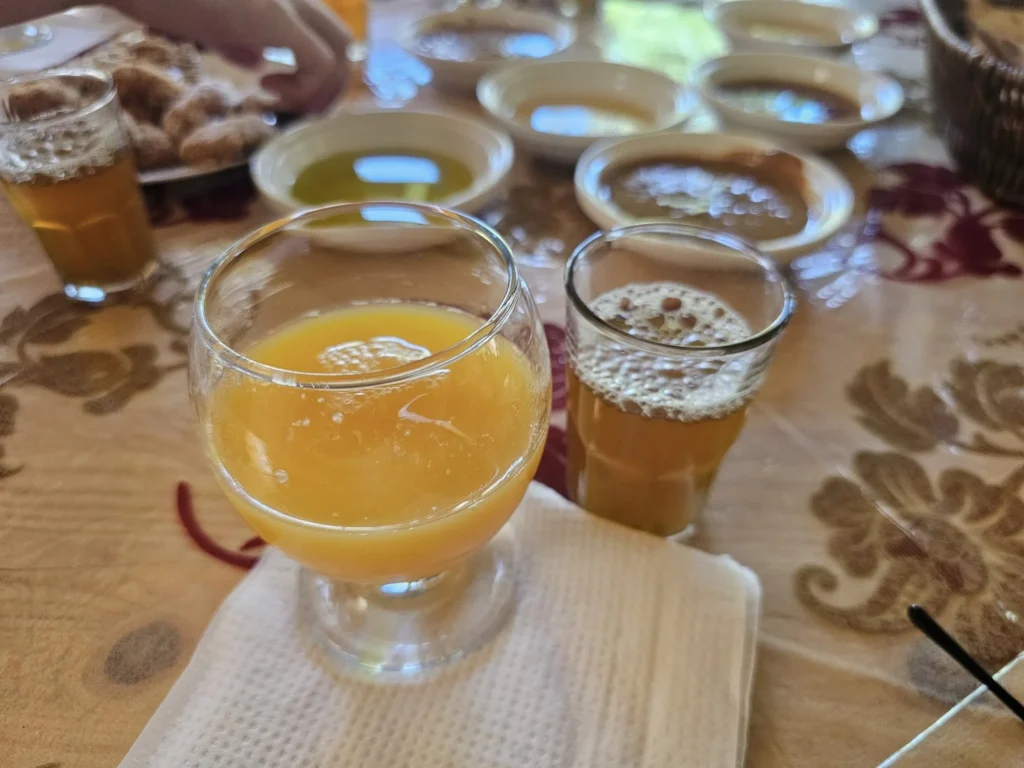
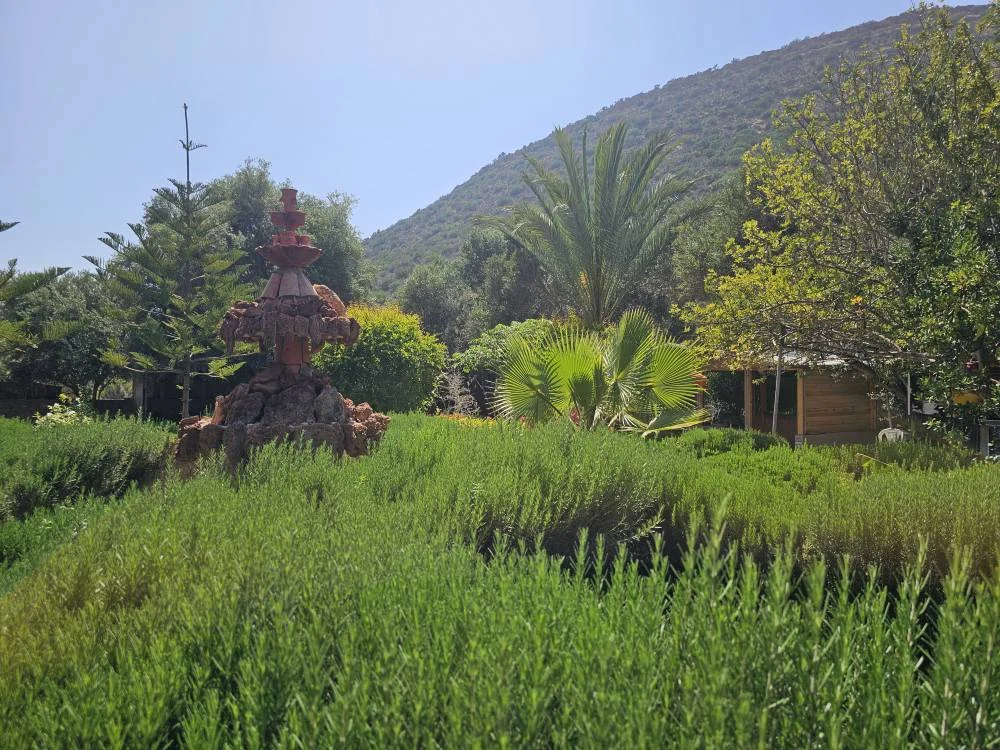
As the sun began to dip, we visited an aromatic garden near Paradise Valley, a fragrant haven of rosemary, lavender, and citrus trees. Our hosts welcomed us with warm hospitality, seating us under a shaded canopy for a tasting. We savored freshly baked Moroccan bread drizzled with argan oil and honey, paired with zesty orange juice and steaming mint tea. Each bite and sip burst with flavor, reflecting the region’s culinary richness.
Our hosts shared stories of traditional farming practices, from argan oil production to citrus cultivation, deepening our appreciation for Morocco’s land. The garden’s tranquility was a perfect counterpoint to the day’s adventures, offering a moment of reflection.
Evening: Reflections Aboard the Nieuw Statendam
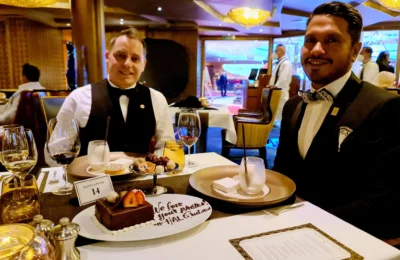
Returning to the Nieuw Statendam, we were greeted by the ship’s elegant design and attentive crew. The day’s experiences—sacred sites, vibrant markets, and natural wonders—swirled in our minds. That evening, we dined at the Tamarind restaurant for a Morimoto-inspired meal, a culinary masterpiece deserving its own post. Over exquisite dishes, we recounted Sven’s camel ride, the souk’s chaos, and Paradise Valley’s serenity, savoring the memories as much as the food.
Snippet: Why Agadir is a Cruise Must-Visit
- Diverse Experiences: From mosques to markets, beaches to oases, Agadir offers endless variety.
- Cultural Immersion: Engage with Morocco’s traditions through food, crafts, and hospitality.
- Seamless Access: The Nieuw Statendam’s port proximity makes exploration effortless.
Why Agadir Captivates: Final Reflections
Our day in Agadir was a kaleidoscope of experiences, blending cultural richness, historical resonance, and natural splendor. From the serene Mosque Mohammed V to the chaotic Souk El Had, and the tranquil pools of Paradise Valley, Agadir revealed Morocco’s multifaceted allure. The warmth of its people, the depth of its traditions, and the resilience of its history left an indelible mark.
For cruisers on the Nieuw Statendam’s Canary Island Enchantment itinerary, Agadir is a destination that surprises and delights. It’s a place where every moment—from a camel’s sway to a fish’s nibble—feels like a gift. As we sailed toward Arrecife in the Canary Islands, Agadir’s spirit lingered, a reminder of travel’s power to connect and transform.
























Sands of Agadir
In Agadir’s arms, where sea meets sky,
The Nieuw Statendam sails, where dreams don’t die.
From mosque’s white grace, where prayers ascend,
To marina’s shore, where waves befriend.

Oufella’s peak, with tales of yore,
Of kasbahs lost, yet spirits soar.
Sven’s camel strides through desert’s song,
A nomad’s joy, where hearts belong.

Souk El Had hums, a vibrant stream,
Spices flare, in saffron’s gleam.
Khobz and tea, a taste divine,
Morocco’s soul in every line.

Paradise Valley, green and still,
Pools that dance ‘neath rocky hill.
Fish that nibble, laughter free,
Nature’s gift, a memory.

In gardens sweet, where citrus blooms,
Argan’s gold and tea’s perfumes.
Agadir, you weave a spell,
Of lands reborn, where dreams do dwell.