
Our voyage aboard Holland America Line’s Nieuw Statendam for the Canary Island Enchantment with Morocco & Portugal itinerary was a tapestry of stunning destinations, with Dover, England, as the final port of call. This coastal town, framed by its iconic White Cliffs, served as our gateway to an exhilarating day in London, where history and modernity collide. From a swift train ride to the capital’s iconic landmarks to the serene sail-away from Dover’s cliffs, this adventure was a perfect crescendo to our cruise. In this in-depth blog post, we explore Dover’s storied past, recount our unforgettable London experience, and reflect on the poignant beauty of our departure.
Table of Contents
The History of Dover, England: A Coastal Bastion Through Millennia
Prehistoric Roots and Geological Significance
Dover, perched on England’s southeastern coast, is a town steeped in history, its significance shaped by its position at the narrowest point of the English Channel, just 21 miles from France. The White Cliffs of Dover, formed over 70 million years ago from chalk deposits, are a geological marvel and a UNESCO-recognized site. Archaeological evidence reveals human activity in the area as early as the Bronze Age (circa 1600 BCE), with flint tools, pottery, and burial mounds unearthed along the coast. These early inhabitants likely used Dover’s natural harbor for fishing and trade, laying the foundation for its maritime legacy.
The cliffs themselves, rising up to 350 feet, have been a natural fortress and a navigational landmark for millennia. Prehistoric communities exploited the chalk for tools and the fertile Kent landscape for agriculture, establishing Dover as a hub long before recorded history. The discovery of a 3,500-year-old Bronze Age boat, now housed in the Dover Museum, underscores the town’s ancient seafaring tradition, making it one of the world’s oldest known seagoing vessels.
Historical Gem: The Bronze Age boat at Dover Museum, discovered in 1992, offers a rare glimpse into the maritime prowess of ancient Britons, dating back to 1500 BCE.
Roman Dover: The Gateway to Britannia
The Roman conquest of Britain in 43 CE, under Emperor Claudius, marked a pivotal chapter for Dover. Likely a landing point for Roman legions, the town became Portus Dubris, a fortified port critical to Rome’s control of Britannia. The Romans constructed two lighthouses, one of which, the Pharos, still stands within Dover Castle’s grounds, a remarkably preserved relic of Roman engineering. Built from local flint and tufa, the Pharos guided ships across the Channel, facilitating trade in wine, olive oil, and pottery.
The Romans also developed a sophisticated infrastructure, including a fortified harbor and roads connecting Dover to Canterbury and London. Excavations have revealed a Roman fort with walls up to 10 feet thick, as well as a mansio (a guesthouse for officials) and bathhouses, indicating Dover’s role as an administrative and military hub. The Painted House, a well-preserved Roman villa with vibrant frescoes, offers a window into the lives of Dover’s Roman elite.
Dover Castle: The Medieval “Key to England”
Dover’s historical prominence is epitomized by Dover Castle, dubbed the “Key to England” for its defensive role. Founded after the Norman Conquest of 1066 by William the Conqueror, the castle was expanded by Henry II in the 1180s with the construction of its great keep, a towering structure with walls up to 21 feet thick. Designed to project royal power, the keep featured advanced defensive elements, including a complex entry system to thwart invaders.
During the First Barons’ War (1215–1217), French forces under Prince Louis besieged the castle but failed to capture it, thanks to its formidable design. Subsequent monarchs, including Henry III and Edward I, added concentric walls, towers, and a moat, making Dover one of Europe’s most impregnable fortresses. The castle also served as a pilgrimage hub, with travelers passing through en route to Canterbury’s shrine of Thomas Becket.
Did You Know? Dover Castle’s great keep, built by Henry II, was one of the last rectangular keeps in England, marking a shift toward more advanced castle designs.
Tudor and Stuart Eras: A Maritime Powerhouse
The Tudor period (1485–1603) saw Dover’s port grow as England’s naval ambitions expanded. Henry VIII, wary of European threats, fortified the castle with artillery and built coastal defenses like Deal and Walmer Castles. Dover’s harbor was deepened to accommodate larger ships, boosting trade in wool, cloth, and wine. The town’s strategic importance made it a target during the Spanish Armada crisis of 1588, though its defenses held firm.
In the Stuart era, Dover Castle endured the English Civil War (1642–1651), changing hands between Royalists and Parliamentarians. The town’s merchants thrived, with Dover becoming a key port for cross-Channel trade. By the late 17th century, regular ferry services to Calais solidified Dover’s role as a gateway to Europe, a legacy that continues with modern ferries and the Channel Tunnel.
Napoleonic Wars: Tunnels and Defenses
The Napoleonic Wars (1803–1815) brought renewed focus to Dover’s defenses. Fearing invasion, the British government carved an extensive network of tunnels beneath the White Cliffs to house up to 2,000 troops. These chalk-hewn tunnels included barracks, storerooms, and a hospital, designed to support a prolonged defense. Dover Castle was equipped with heavy artillery, and the town became a base for the Royal Navy, guarding the Channel against French ships.
World Wars: Dover as the Frontline
Dover’s 20th-century history is defined by its role in the World Wars. During World War I, the port was a lifeline for troop deployments and supplies to the Western Front. Hospital ships brought wounded soldiers to Dover’s docks, and the cliffs became a symbol of homecoming. The town’s strategic position made it a target for German U-boats, yet it remained resilient.
World War II elevated Dover to the “Frontline Town.” The White Cliffs, immortalized in Vera Lynn’s 1942 song “(There’ll Be Bluebirds Over) The White Cliffs of Dover,” became a beacon of British endurance. In 1940, the castle’s Napoleonic tunnels were repurposed as a command center for Operation Dynamo, the evacuation of 338,000 Allied troops from Dunkirk. Admiral Bertram Ramsay orchestrated the rescue from these tunnels, a feat that turned the tide of the war. Dover endured over 2,000 German shells and air raids, yet its spirit remained unbroken.
Historical Insight: The Dover Castle tunnels, open to visitors today, offer an immersive experience of Operation Dynamo, complete with wartime artifacts and audio reenactments.
Modern Dover: A Bridge to Europe
Today, Dover is a vibrant link between Britain and Europe, with the Channel Tunnel (opened 1994) and ferries connecting it to Calais. The Dover Museum showcases the town’s maritime heritage, while the White Cliffs attract hikers and history buffs. Dover’s blend of ancient roots, wartime resilience, and modern connectivity makes it a destination that bridges past and present, inviting travelers to explore its layered legacy.
Travel Tip: Visit the White Cliffs visitor center for guided walks and panoramic views, and don’t miss the Dover Museum’s Bronze Age boat exhibit.
Our Unforgettable Day: From Dover to London and Back
Our final day aboard Holland America Line’s Nieuw Statendam, docked in the historic port of Dover, was a thrilling gateway to London’s vibrant tapestry of history, culture, and modernity. The Canary Island Enchantment with Morocco & Portugal cruise had already captivated us with exotic ports, but this day trip to the British capital was the crescendo of our journey. From a swift train ride to iconic landmarks and a private black cab tour weaving through London’s storied streets, every moment was a blend of awe and discovery. The day culminated with a serene sail-away from Dover’s White Cliffs, leaving us with memories to cherish forever.
A Swift Train Ride to London’s Heart
Our adventure began as the Nieuw Statendam docked at Dover’s bustling port, its sleek white hull framed by the town’s historic harbor. Eager to explore London, we walked to Dover Priory station and boarded a high-speed Southeastern train to London St Pancras. The 70-mile journey took just 65 minutes, the train gliding through Kent’s emerald hills, past quaint villages and rolling fields, at speeds up to 140 mph. The modern carriage, with plush seats and expansive windows, offered a comfortable and scenic start, setting an anticipatory tone for the day ahead.
The train from Dover to London was a time machine, whisking us from historic cliffs to the capital’s pulse in just over an hour.
Arriving at St Pancras International, we were struck by the station’s Victorian grandeur—its red-brick arches and soaring glass roof a testament to 19th-century engineering. Stepping into Pancras Square, just outside, we found a vibrant urban plaza buzzing with energy. Sleek modern buildings mingled with historic architecture, and the iconic King’s Cross Station nearby added a touch of magic for Harry Potter fans. We were a bit late so we didn’t had the time to admire the station’s famous Platform 9¾, where a luggage cart embedded in the wall and a sign marked the fictional gateway to Hogwarts. But nevertheless the lively atmosphere, with street performers and coffee shops, set a perfect tone for our London adventure.
Travel Tip: Visit Platform 9¾ at King’s Cross early to avoid crowds and snap a photo with the iconic Harry Potter sign.


The London Eye: A Skyward Spectacle
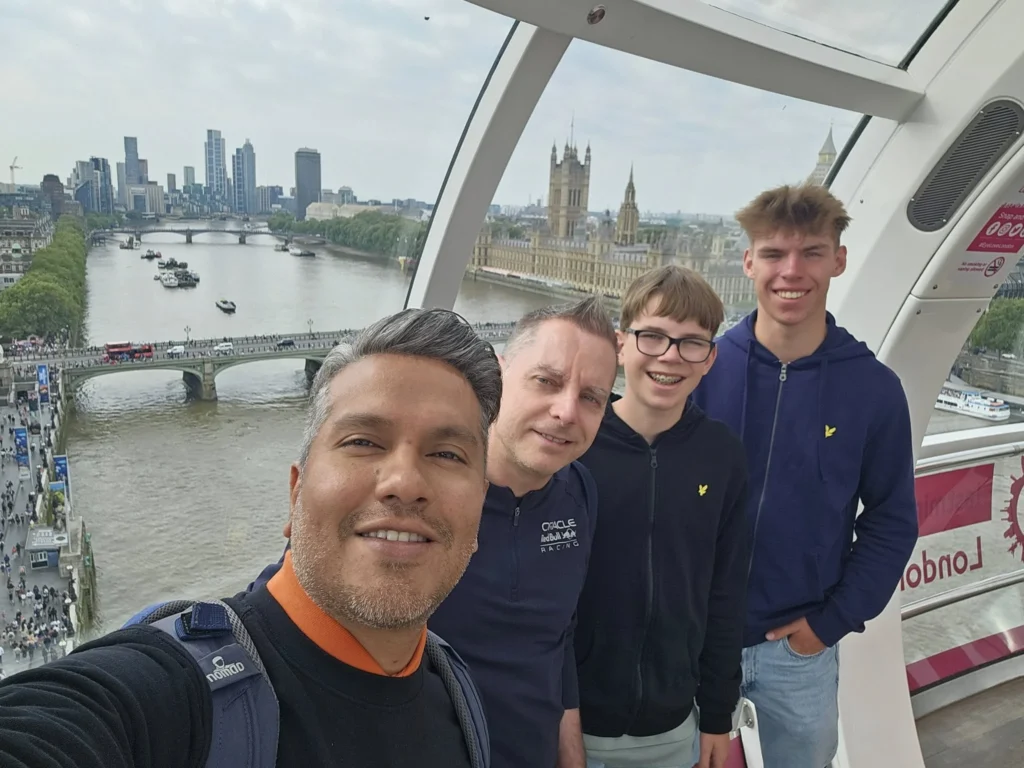
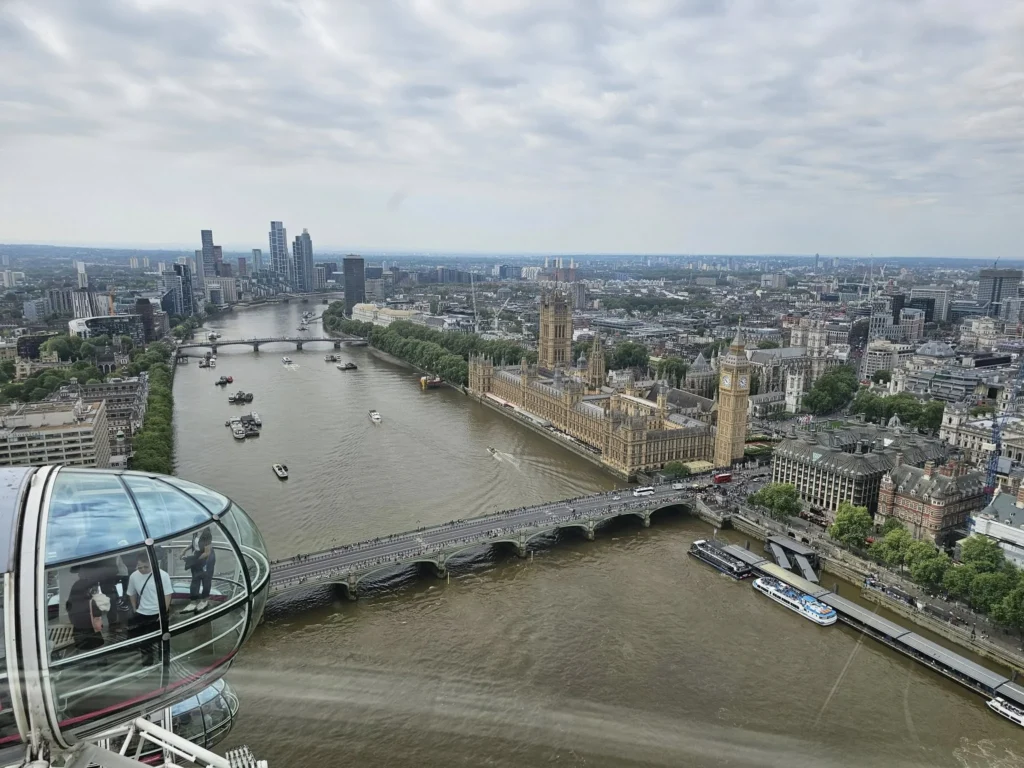
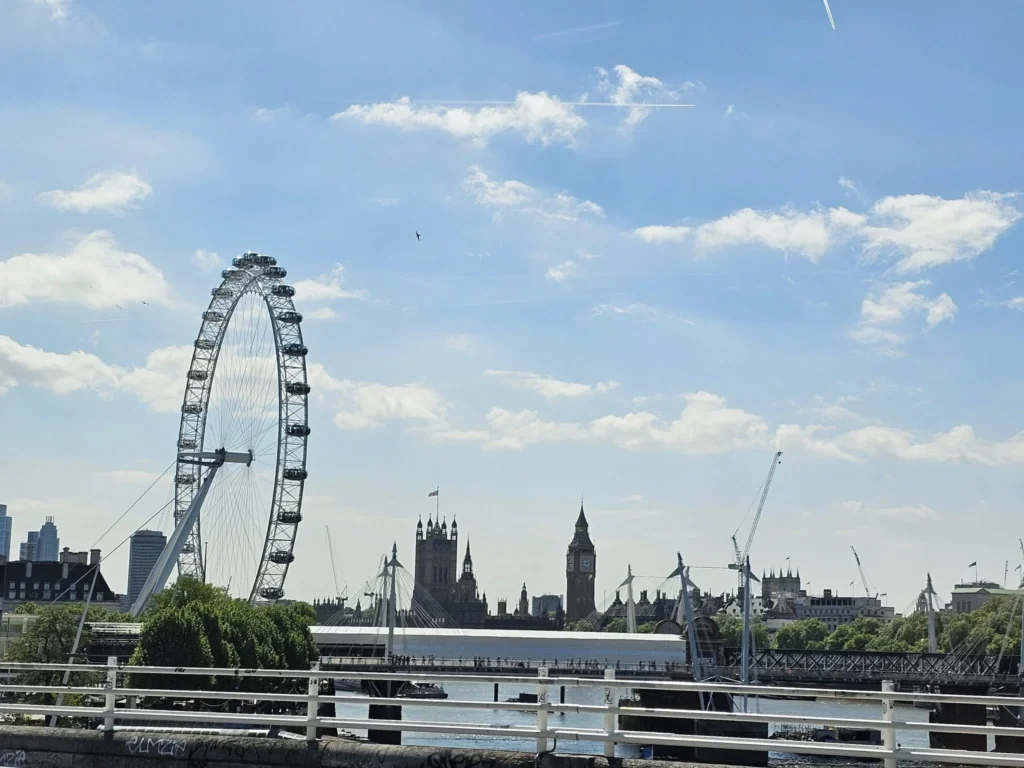
Our first major stop was the London Eye, a 135-meter observation wheel on the South Bank of the Thames. Erected in 2000 as a temporary millennium project, its enduring popularity has made it a permanent icon. We pre-booked tickets to skip the queues and stepped into a spacious glass capsule. As the wheel slowly rotated, London unfolded in a breathtaking panorama. The Thames sparkled below, flanked by the Gothic spires of the Houses of Parliament and the sleek silhouette of the Shard. St. Paul’s Cathedral’s dome anchored the skyline, while distant Hampstead hills added depth to the view.
The 30-minute ride was a serene prelude, offering unobstructed vistas of landmarks we’d soon explore. We snapped photos of Big Ben’s golden stonework and Westminster Abbey’s intricate facade, marveling at how London weaves centuries of history into a vibrant present. The Eye’s gentle pace allowed us to absorb the city’s vastness, from the bustling South Bank to the serene flow of the river.
The London Eye lifted us above the city, revealing London’s soul in a single, breathtaking spin.
Pro Tip: Book London Eye tickets online for a morning slot to enjoy clearer views and shorter lines.


Big Ben and the Houses of Parliament: The Pulse of Democracy
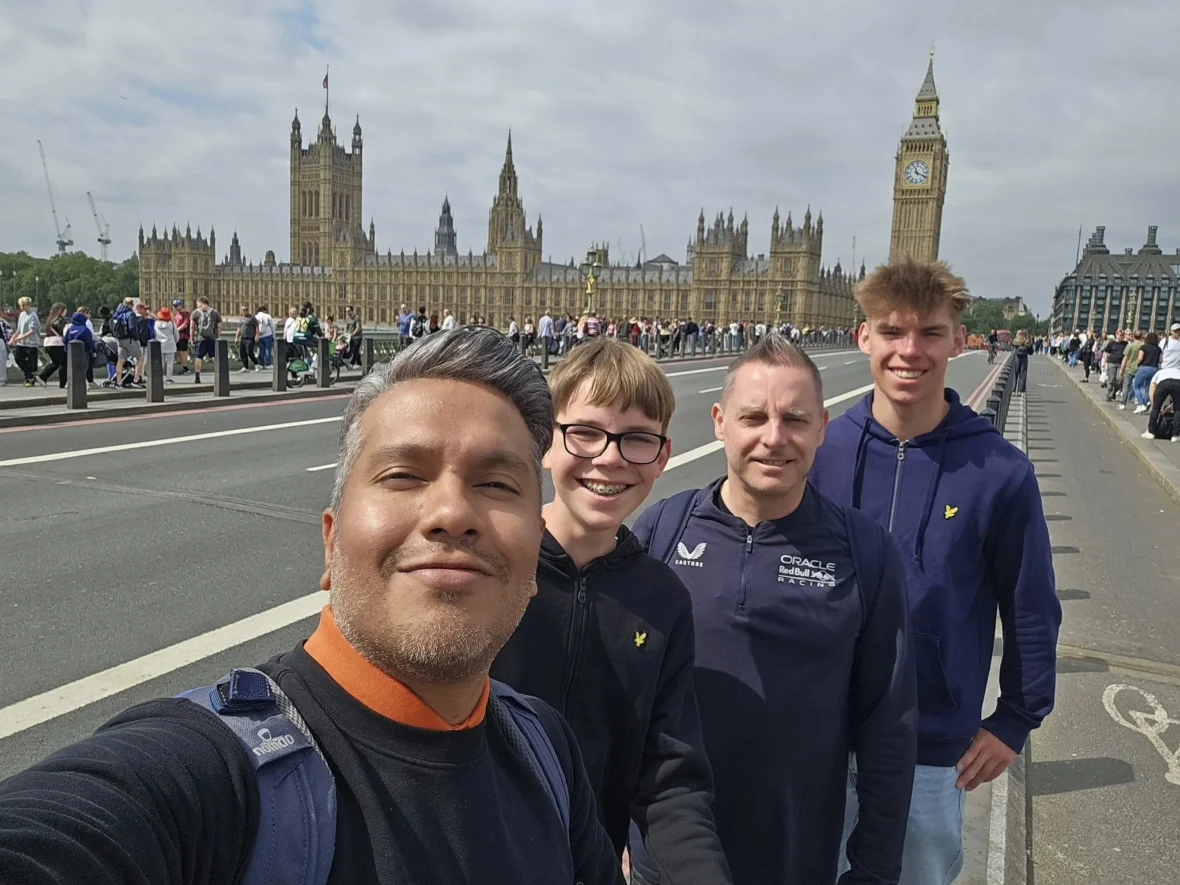
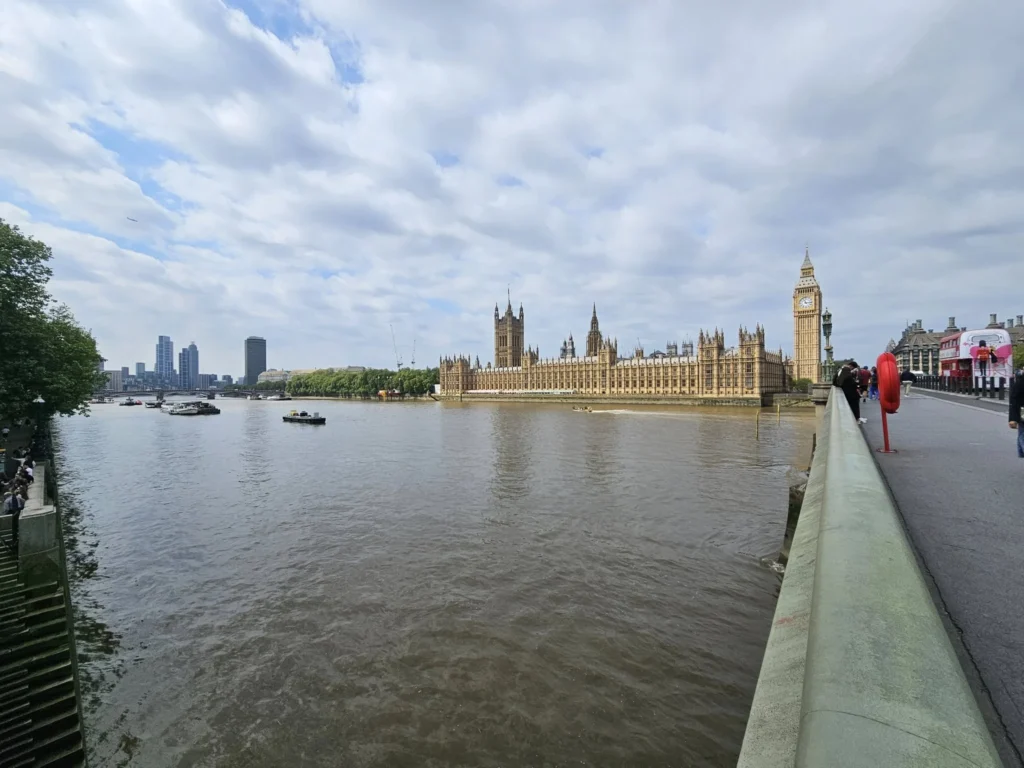
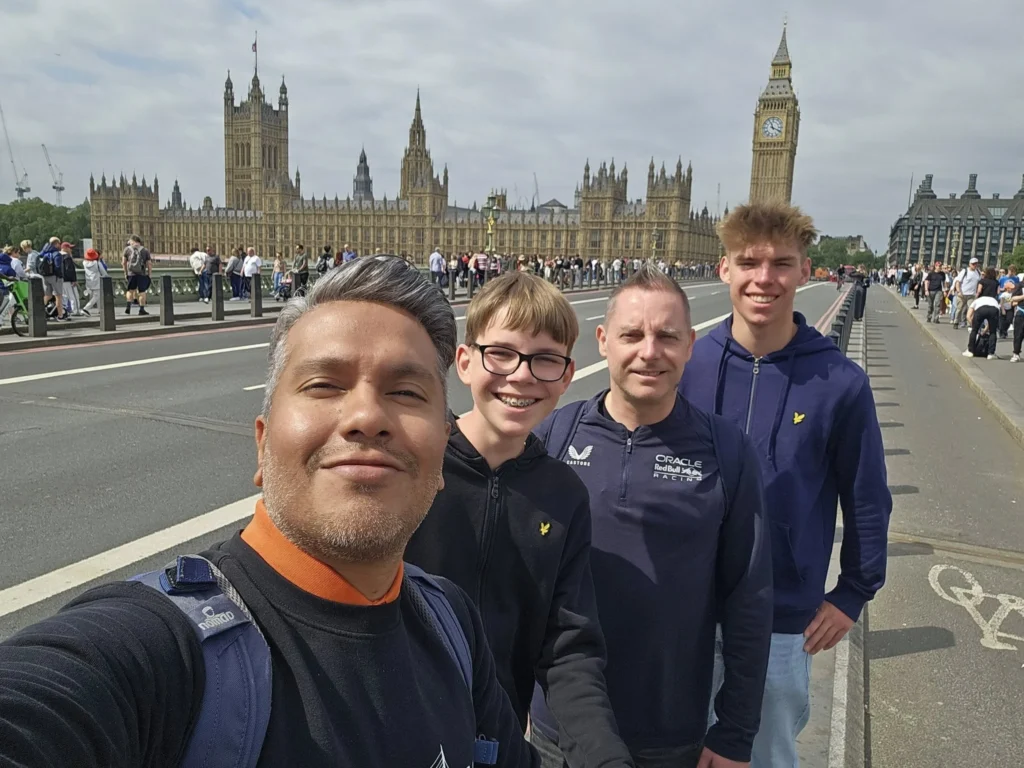
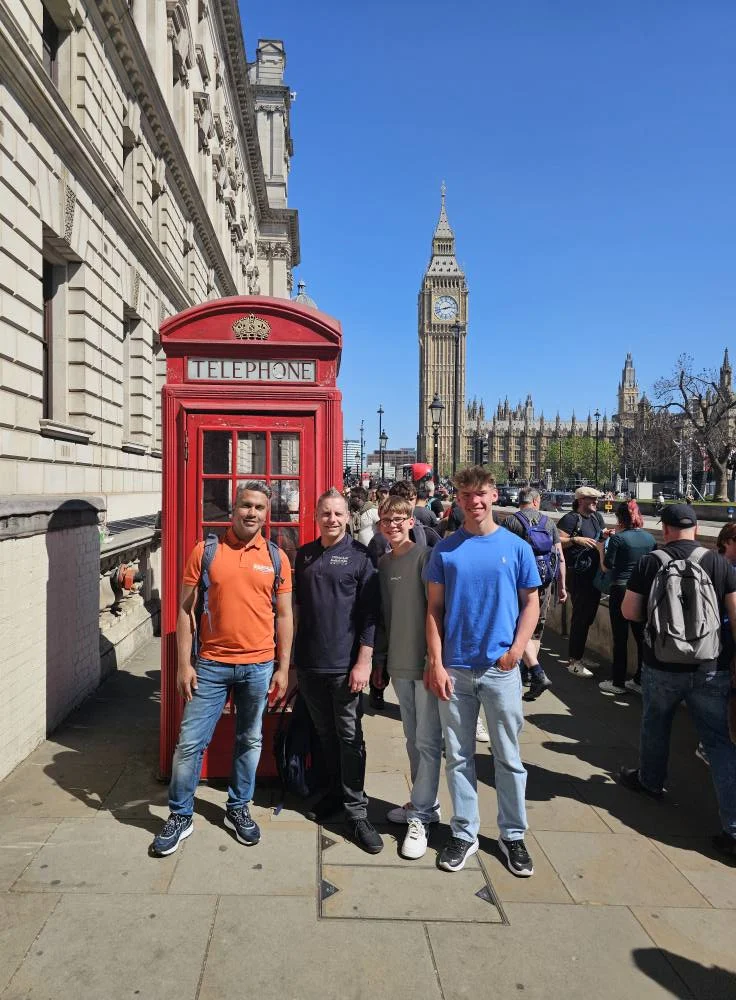
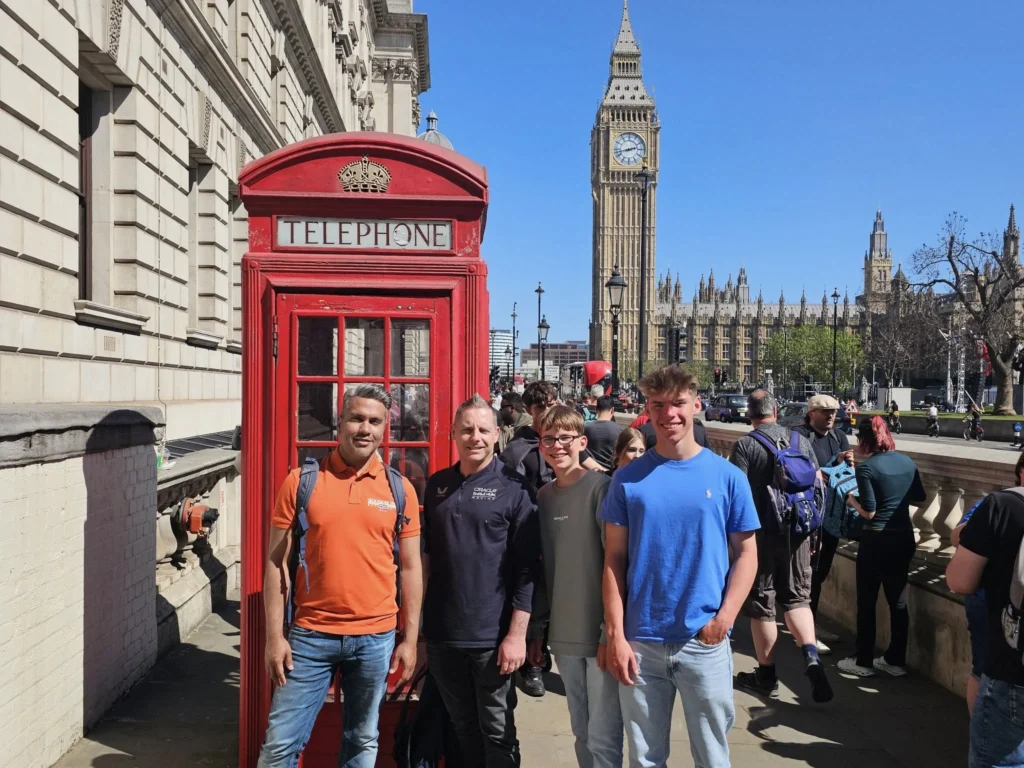
Next, we headed to the Palace of Westminster, home to the Houses of Parliament and the iconic Elizabeth Tower, known as Big Ben for the Great Bell within. Completed in 1859, the tower’s Gothic design, with its ornate stonework and four 23-foot clock faces, is a masterpiece of Victorian architecture. The chimes, echoing across Westminster, felt like the city’s heartbeat. Our cab driver, a knowledgeable Londoner, shared tales of parliamentary history, from the Magna Carta’s legacy to modern debates that shape the nation.
We lingered by the Thames, admiring the Palace’s intricate spires and golden stone, a UNESCO World Heritage Site. Statues of statesmen like Winston Churchill in Parliament Square added gravitas, while the bustling Westminster Bridge buzzed with tourists and red double-decker buses. The site’s blend of history and political significance was palpable, making it a cornerstone of our day.
Historical Note: Big Ben’s chimes, first rung in 1859, are broadcast daily by the BBC, a tradition that began during World War II.

A Private Black Cab Tour: London’s Icons and Hidden Gems
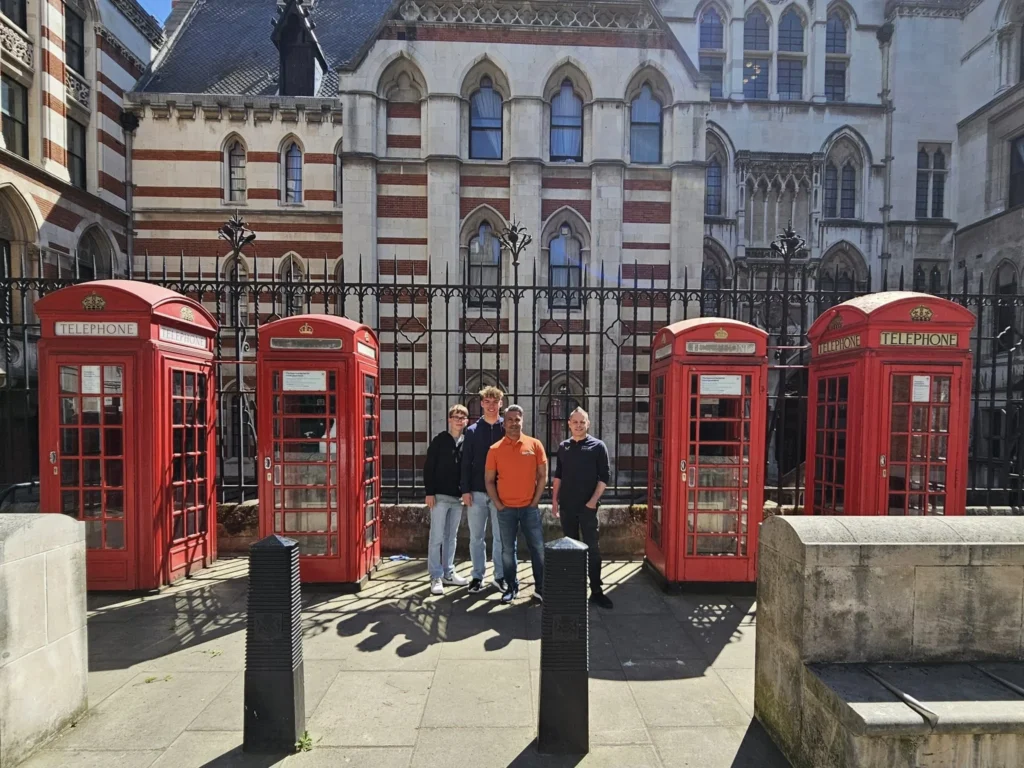
Our private black cab tour was the heart of our adventure, allowing us to explore London’s landmarks and hidden gems with efficiency and insight. Our driver (Greg Dorrington), a licensed guide with “The Knowledge” of London’s 25,000 streets, tailored the itinerary to our interests, weaving stories of royalty, rebellion, and pop culture into each stop. The iconic black cab, with its spacious interior and nimble navigation, was the perfect vessel for our whirlwind journey through the capital.
Millennium Bridge: A Harry Potter Connection
Our tour began at the Millennium Bridge, a sleek pedestrian bridge spanning the Thames, nicknamed the “Wobbly Bridge” due to its initial swaying when opened in 2000. Harry Potter fans will recognize it as the bridge destroyed by Death Eaters in Harry Potter and the Half-Blood Prince. Its modern steel design, connecting St. Paul’s Cathedral to the Tate Modern, offered stunning views of the river and skyline. We walked across, feeling the cinematic magic and admiring the blend of old and new London.
Crossing the Millennium Bridge felt like stepping into a Harry Potter scene, with St. Paul’s looming majestically ahead.
London Bridge: A Historic Crossing
Next, we visited London Bridge, often confused with its flashier neighbor, Tower Bridge. This unassuming concrete structure, rebuilt in 1973, carries a rich history dating back to Roman times. Our driver recounted tales of its medieval predecessor, lined with shops and houses, and the famous nursery rhyme. The bridge offered views of the Thames’ bustling traffic, with boats gliding beneath and skyscrapers like the Gherkin in the distance. Its understated charm contrasted with the grandeur of our next stops, grounding us in London’s layered past.


Borough Market: A Culinary Delight
A short drive brought us to Borough Market, London’s oldest food market, dating back to 1014. The vibrant stalls, tucked under a glass canopy, overflowed with artisanal cheeses, freshly baked bread, and exotic spices. We sampled warm sausage rolls and sipped locally roasted coffee, immersing ourselves in the market’s lively atmosphere. Street musicians and the hum of multilingual chatter added to the sensory feast. The market’s proximity to the Thames and its blend of tradition and modernity made it a highlight of our tour.
Travel Tip: Arrive at Borough Market early to avoid crowds and savor samples from vendors offering everything from British pies to Turkish baklava.

Tower Bridge: A Victorian Marvel
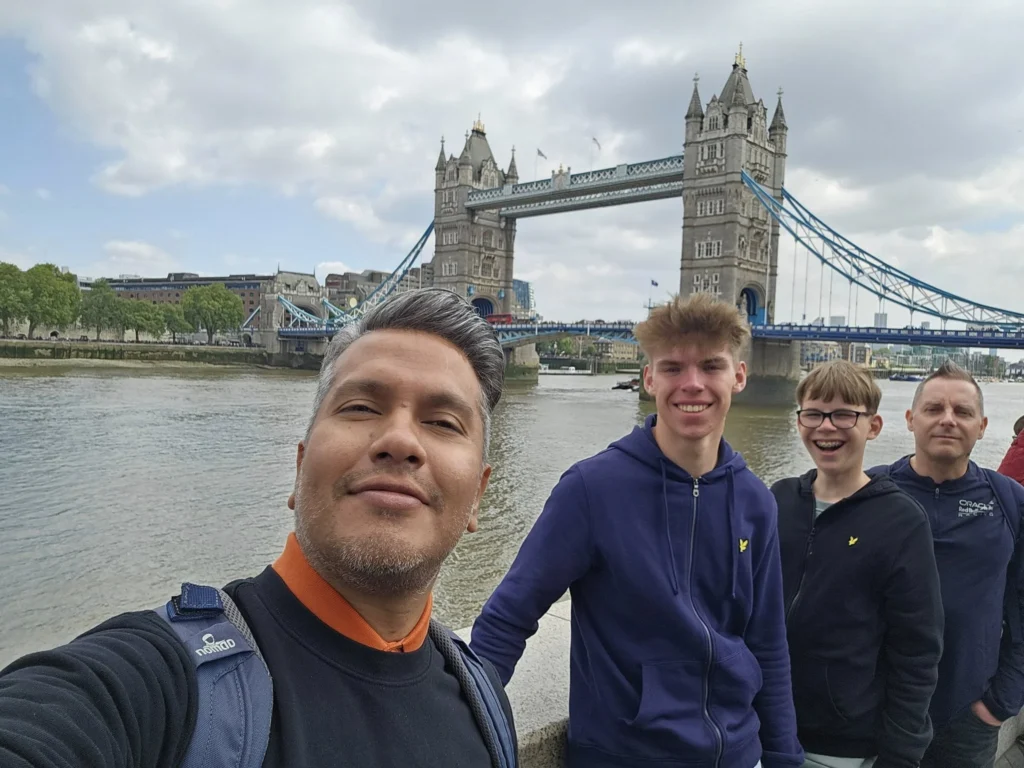
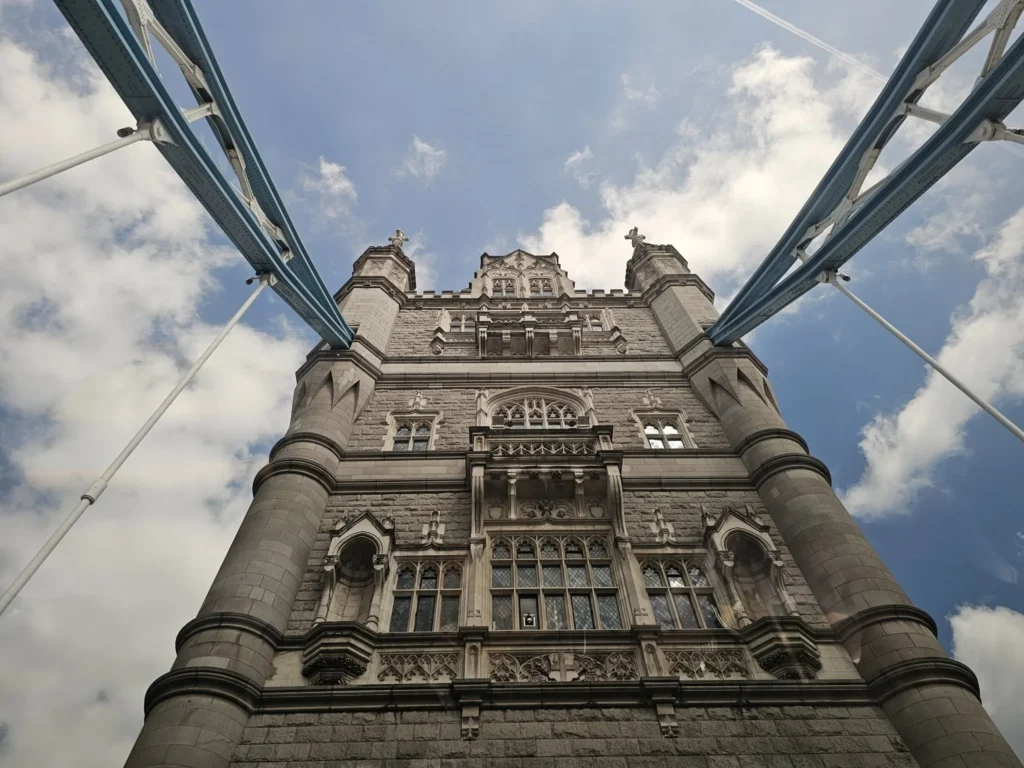
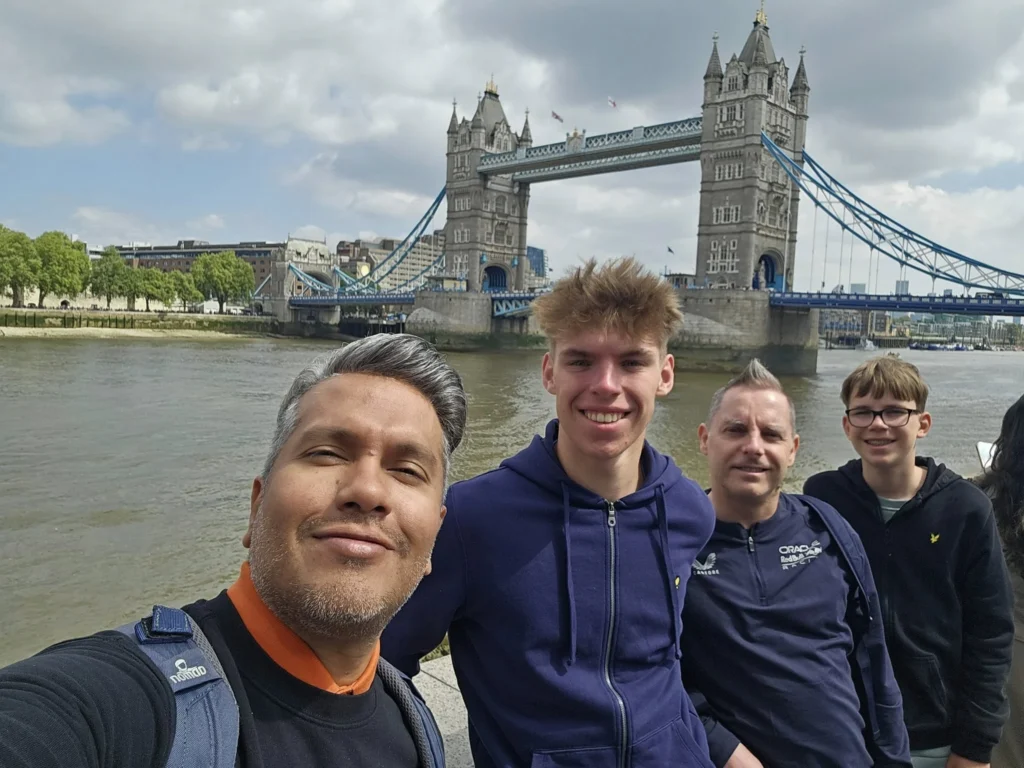
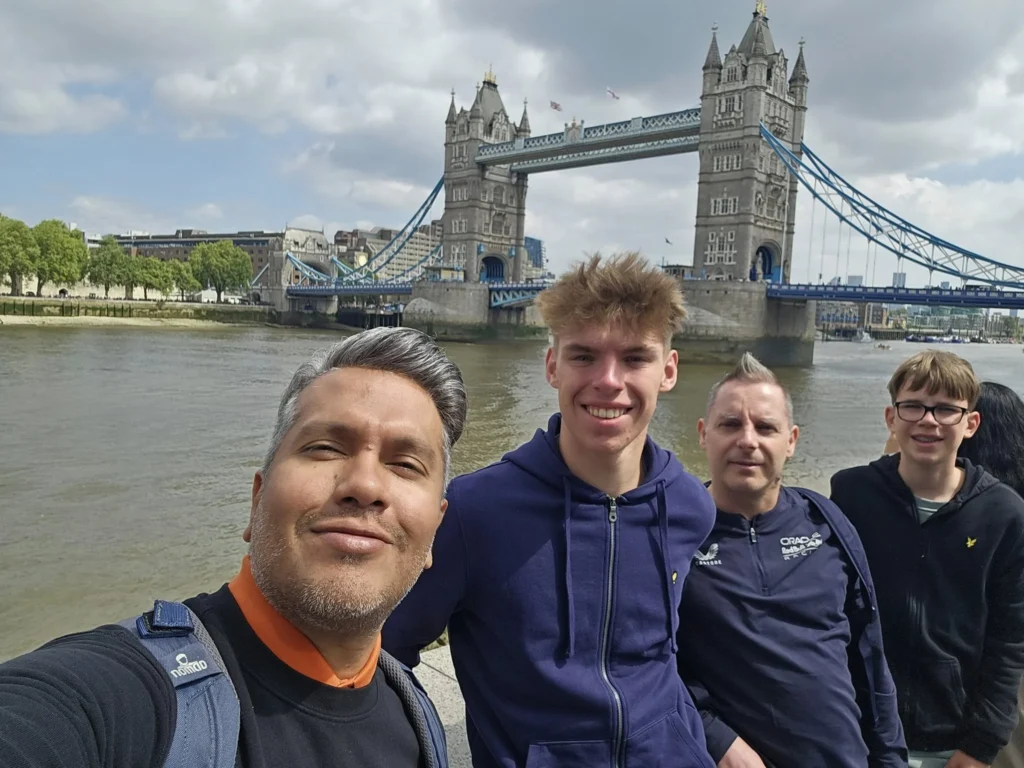
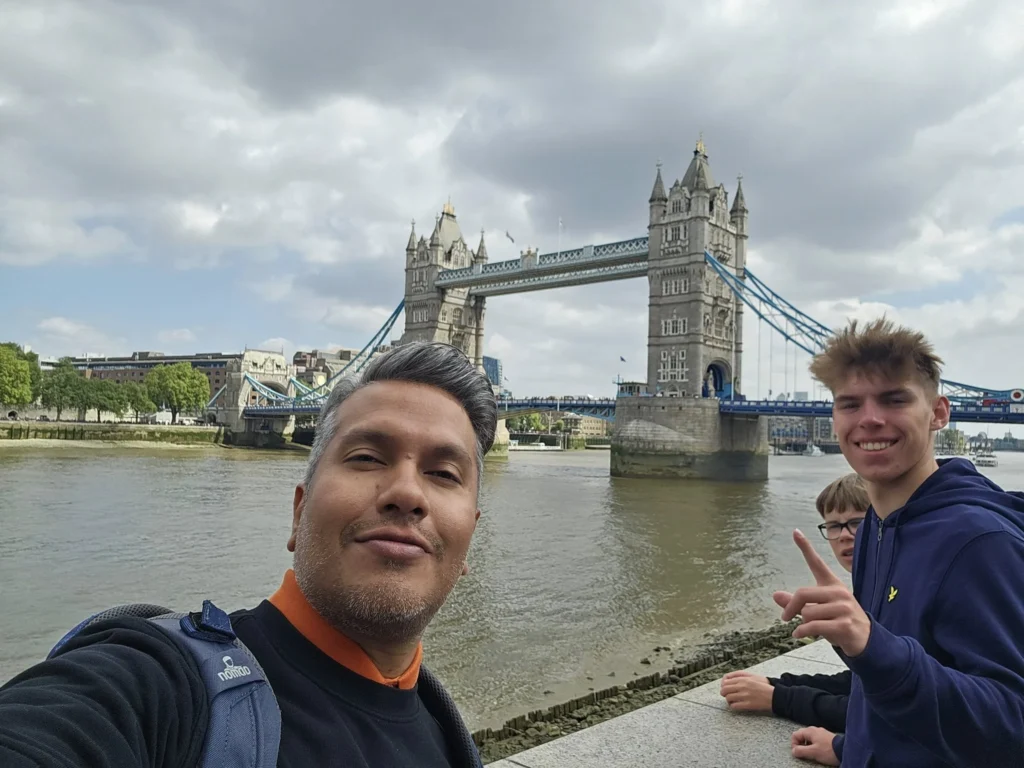
Tower Bridge, a Victorian icon, was a showstopper. Completed in 1894, this bascule and suspension bridge combines functionality with grandeur. Its twin towers, painted blue and green, frame the Thames, and we learned it opens over 800 times a year to allow ships to pass. Walking across its pedestrian path, we admired the river’s flow and the bridge’s intricate details, from its stone cladding to its high-level walkways. The nearby Tower of London, with its grim history of executions, added a dramatic backdrop.
Fun Fact: Tower Bridge’s walkways, 140 feet above the Thames, offer glass-floored views for thrill-seekers.

Tower of London: A Fortress of History
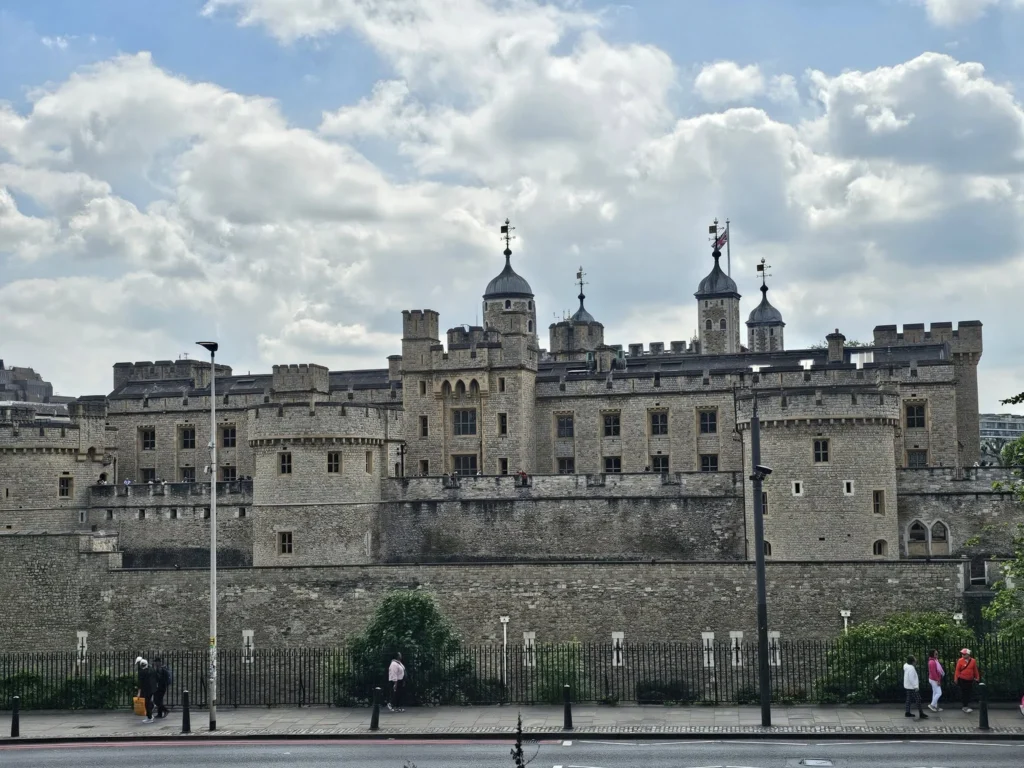
The Tower of London, a UNESCO World Heritage Site, was our next stop. This 11th-century fortress, with its imposing stone walls and moat, has served as a royal palace, prison, and treasury. Our driver shared tales of its infamous prisoners, from Anne Boleyn to Guy Fawkes, and the Crown Jewels housed within. We didn’t enter due to time constraints, but the exterior’s medieval might, set against the modern City of London skyline, was striking. The ravens, said to protect the kingdom, added a touch of mystique.


Harry Potter and Kingsman: Pop Culture Magic
For a modern twist, our tour included Harry Potter and Kingsman filming locations. We visited Leadenhall Market, a vibrant Victorian market with colorful arches that inspired Diagon Alley in the Harry Potter films. Its cobblestone paths and bustling vendors felt like stepping into the Wizarding World. We also stopped at Savile Row, home to the Kingsman tailor shop from the spy franchise, its sleek storefront evoking cinematic espionage. These stops bridged London’s historic roots with its pop culture allure, delighting fans in our group.
Leadenhall Market was a spellbinding escape—Harry Potter fans will feel Hogwarts come alive!


St. Paul’s Cathedral: A Dome of Resilience
St. Paul’s Cathedral, with its iconic Baroque dome, was a visual and spiritual anchor. Designed by Sir Christopher Wren after the Great Fire of 1666, its grand stonework and golden cross have dominated London’s skyline for over 300 years. During the Blitz, it stood as a symbol of hope, famously photographed amid smoke. Though we didn’t enter, the cathedral’s serene presence, with lush gardens and grand steps, left a lasting impression. Its proximity to the Millennium Bridge tied our tour’s narrative together.
The Graffiti Tunnel: Urban Art on Leake Street
A hidden gem, the Graffiti Tunnel on Leake Street near Waterloo Station, was an unexpected delight. This 300-meter tunnel, legally dedicated to street art, burst with vibrant murals, from abstract designs to political statements. We strolled through, marveling at the ever-changing gallery created by artists like Banksy. The tunnel’s gritty, creative energy contrasted with London’s historic landmarks, showcasing the city’s dynamic underbelly. It was a perfect stop for Instagram-worthy photos and a taste of modern London culture.
Travel Tip: Bring a camera to the Graffiti Tunnel—its colorful murals change regularly, making every visit unique.



Westminster Abbey: A Gothic Masterpiece
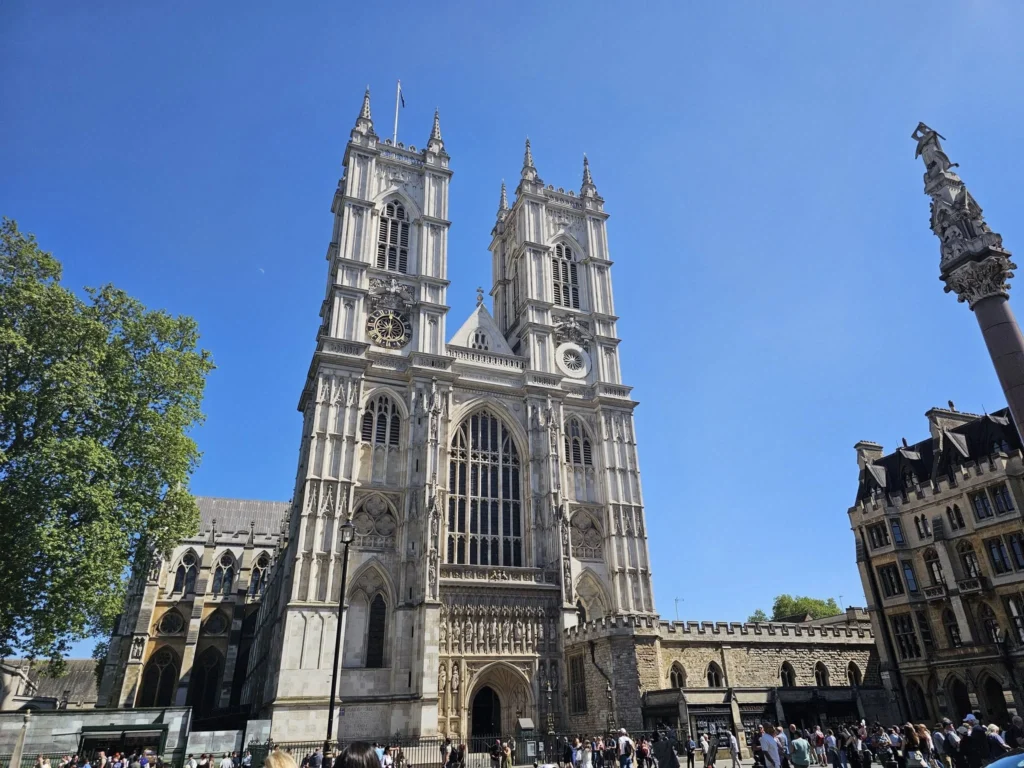
We returned to Westminster Abbey, a Gothic masterpiece that has hosted coronations, weddings, and burials for over 1,000 years. Its soaring arches, intricate stained glass, and statues of saints exuded solemnity. The abbey’s role in history, from William the Conqueror’s 1066 coronation to King Charles III’s in 2023, was palpable. Though we didn’t enter, the exterior’s intricate stonework and the nearby Westminster School and Jewel Tower added depth to the experience, making it feel like a living museum.

Buckingham Palace: Royal Grandeur
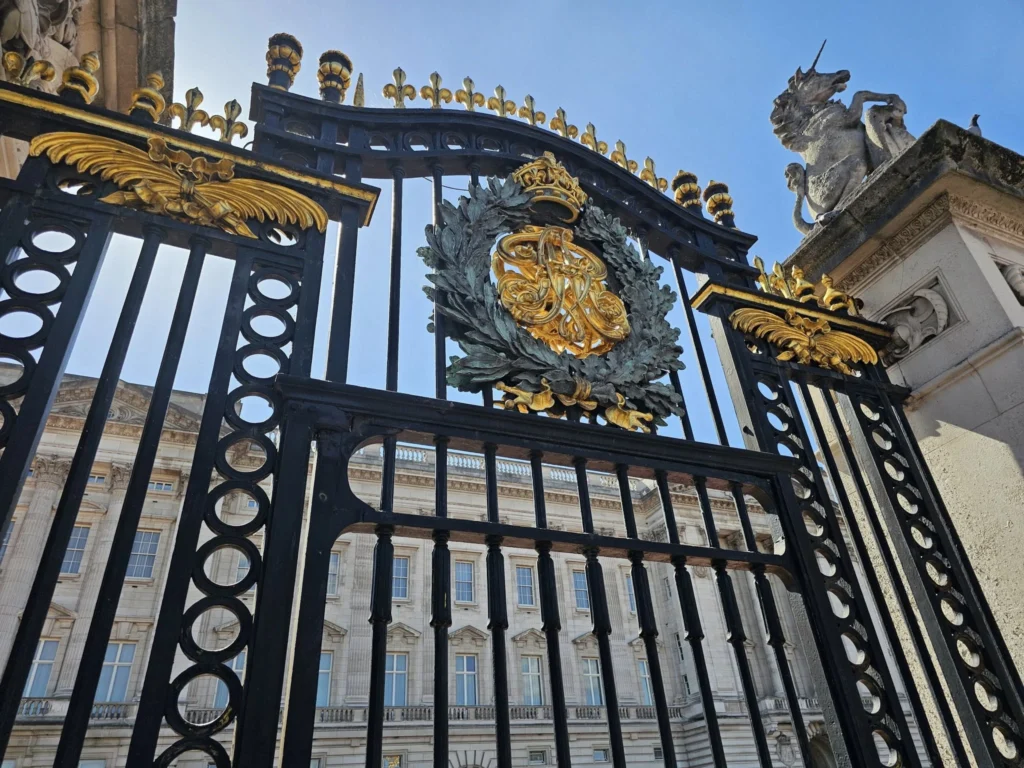
Our final stop was Buckingham Palace, the official residence of the British monarch. The palace’s neoclassical facade, with its iconic balcony and gilded gates, evoked royal pomp. The Grenadier Guards, in scarlet tunics and bearskin hats, stood sentinel, their precision a nod to centuries of tradition. We imagined the Changing of the Guard, though our schedule didn’t align. The Victoria Memorial, gleaming in the sunlight, and the sprawling gardens hinted at the palace’s role as a hub of royal life.
Buckingham Palace’s grandeur felt like a step into royal history, with guards and gates straight from a storybook.


Savoring London’s Eclectic Energy
Between stops, we soaked in London’s vibrant culture. The streets pulsed with red buses, black cabs, and diverse crowds speaking countless languages. We paused for lunch at a traditional pub near Covent Garden, savoring crispy fish and chips, mushy peas, and a pint of ale—a quintessential British experience. The pub’s wood-paneled interior and lively chatter added warmth. Trafalgar Square’s street performers and National Gallery’s iconic facade added to the city’s charm, while the aromas of Borough Market lingered in our memories. London’s blend of ancient cobblestone alleys and modern skyscrapers made every moment visually captivating.
The Sail-Away: Dover’s White Cliffs in Twilight
Returning to Dover by train, we arrived at the port as the Nieuw Statendam prepared for its final sail-away. From the ship’s deck, we watched the White Cliffs of Dover emerge, their chalky faces glowing in the twilight. These cliffs, a symbol of British resilience during World War II, felt like a poignant farewell to our cruise. The gentle hum of the ship’s engines and the cool Channel breeze created a moment of serenity as we reflected on the day’s whirlwind—London’s landmarks, Dover’s history, and the seamless beauty of the journey.
Cruise Highlight: The sail-away from Dover, with the White Cliffs as a backdrop, is a serene moment that encapsulates the town’s timeless allure.



Tips for Your Dover-to-London Adventure
- Train Travel: Book high-speed train tickets from Dover Priory to London St Pancras via Southeastern’s website for the best fares. The journey takes ~65 minutes.
- Private Tours: Choose a licensed black cab tour for a personalized experience. Drivers with “The Knowledge” offer rich insights and flexible routes. Ours was perfect, Greg Dorrington thank you so mutch for this unforgetteble experience.
- Prioritize Landmarks: Focus on must-see sites like the London Eye, Tower Bridge, and Buckingham Palace for a day trip. Save museums for longer visits.
- Dover Exploration: Visit the White Cliffs visitor center for hiking trails and panoramic views before boarding.
- Packing Essentials: Wear comfortable shoes for London’s uneven streets, carry a light jacket for unpredictable weather, and bring a portable charger for photos.












Cliffs and Chimes: A Journey Through Time
Beneath the chalky cliffs of Dover’s shore,
Where waves whisper tales of yore,
We sailed with Nieuw Statendam’s grace,
To London’s heart, a storied place.

From Dover’s port, a train did fly,
Through Kent’s green fields beneath the sky,
To London’s pulse, where history wakes,
In towers tall and river’s snakes.

The Eye did spin, a wheel of dreams,
Above the Thames, where sunlight gleams,
Big Ben’s deep chimes sang through the air,
A timeless song, both bold and fair.

Westminster’s spires, a Gothic hymn,
Where kings and poets rest within,
And Buckingham’s gates, with guards in red,
Spoke of a crown, where history’s led.

Tower Bridge rose, its arms stretched wide,
To let the Thames’ tall ships abide,
St. Paul’s grand dome, a beacon bright,
Guides weary souls through London’s night.

In markets old, where wizards roam,
Leadenhall’s charm, a Potter’s home,
And Kingsman’s shop, with tailored flair,
Wove modern tales in London’s air.

Back to Dover, where cliffs stand tall,
Their white embrace, a final call,
As Nieuw Statendam sailed away,
We held the memories of the day.

From ancient stones to city’s din,
This journey’s spark will glow within,
A tapestry of cliffs and chimes,
A voyage etched through endless times.