
Embarking on a cruise with Holland America Line’s Nieuw Statendam for the Canary Island Enchantment with Morocco & Portugal itinerary promised a blend of vibrant cultures, stunning landscapes, and unforgettable experiences. One of the highlights of our journey was our stop at Leixões, the gateway to the enchanting city of Porto, Portugal. Despite a very rainy day, our exploration of Porto was filled with charm, history, and unexpected delights. From a thrilling tuk-tuk tour to savoring a meal at the exquisite Tamarind restaurant onboard, our day in Porto was a whirlwind of adventure. This blog post dives deep into the rich history of Leixões and Porto, followed by a detailed recounting of our unforgettable experience, complete with a poetic reflection to close.
Table of Contents
The History of Leixões and Porto, Portugal
The Origins of Leixões: A Safe Haven by the Sea
Leixões, located just 4 kilometers north of the Douro River’s mouth in Matosinhos, has served as a vital seaport for Porto and northern Portugal for centuries. Its name, derived from the Portuguese term for “rugged cliffs,” hints at its rugged coastal setting, which has historically provided a natural shelter for vessels. As early as the 16th century, Leixões was recognized as a safe anchorage, a refuge for ships escaping the perilous storms of the Atlantic. A 17th-century account describes it as a “marvelous anchorage” where ships found calmness amid furious storms, a reputation that would shape its development into a major port.
The need for a reliable port became evident due to the challenges posed by the Douro River’s mouth, known for its dangerous sandbar and unpredictable floods. The river’s bar, riddled with hidden rocks and prone to silting, caused frequent shipwrecks, making navigation to Porto’s docks treacherous. A tragic event in 1852, when the steamship Porto crashed onto rocks near the Castle of São João da Foz, claiming 66 lives, spurred authorities to seek a solution. While initial efforts focused on improving the Douro’s navigability, Leixões gradually emerged as the more viable option for a modern port.
The Birth of the Port of Leixões
Construction of the Port of Leixões began in 1884, marking a significant milestone in Portugal’s maritime history. Designed as an artificial harbor, it was formed by two massive breakwaters stretching 5,240 and 3,756 feet, creating a sheltered basin. The project, completed in 1890, was a feat of engineering, utilizing steam-powered cranes and block-lifting mechanisms to transport 50-ton artificial blocks from nearby shipyards. The port’s early infrastructure included five quays for handling various goods, from grains to asphalt, laying the foundation for its role as a commercial hub.
Initially conceived as a “shelter port” for ships awaiting safe passage into the Douro, Leixões evolved into a full-fledged commercial port by the early 20th century. In 1908, plans were proposed to transform it into a trading hub, and by 1913, the Junta Autónoma de Instalações Marítimas do Porto Douro e Leixões was established to oversee its development. The first major dock, Doca No. 1, was inaugurated in 1941, constructed with contributions from Dutch and British engineering firms. Over the decades, the port expanded with additional docks, a fishing harbor, and a container terminal, solidifying its status as Portugal’s largest port in the northern region.
Porto: A City Shaped by Trade and Tradition
While Leixões provided the maritime infrastructure, Porto, just 8 kilometers away, was the cultural and economic heart of the region. With origins dating back to the 5th century, Porto’s history is intertwined with its role as a trading center, particularly for port wine, its most famous export. The city’s strategic location along the Douro River made it a hub for merchants, but the river’s navigational challenges necessitated the development of Leixões. Porto’s medieval district, Ribeira, a UNESCO World Heritage Site, reflects its rich past with cobblestone streets, colorful houses, and historic docks like Bicalho and Cantareira.
Porto’s growth was fueled by its port wine trade, which flourished in the 17th and 18th centuries. The wine, fortified with brandy to withstand long sea voyages, became a staple in Britain, and the cellars of Vila Nova de Gaia, across the Douro, became synonymous with brands like Sandeman and Graham’s. The city’s architectural landmarks, such as the 12th-century Sé Cathedral and the ornate São Bento Railway Station, adorned with over 20,000 azulejo tiles, showcase its cultural heritage. The iconic Dom Luís I Bridge, designed by a disciple of Gustave Eiffel, connects Porto to Vila Nova de Gaia, symbolizing the city’s blend of tradition and innovation.
Leixões in the Modern Era
Today, the Port of Leixões is a bustling hub for cruise ships, cargo, and fishing, handling everything from container ships to sardine catches. Its North Cruise Terminal, a wooden structure resembling a ship’s hull, is a nod to its architectural heritage, while the newer South Terminal accommodates larger vessels. In 2023, the European Investment Bank provided a €60 million loan to modernize the port, emphasizing its strategic importance. Leixões also embraces sustainability, incorporating renewable energy and eco-friendly practices to reduce its carbon footprint.
Porto, meanwhile, has earned international acclaim, named Europe’s Best Destination three times. Its blend of medieval charm and modern vibrancy, from the historic Ribeira to contemporary art hubs like the Casa da Música, draws millions of visitors. The city’s port wine culture remains a cornerstone, with Vila Nova de Gaia’s cellars offering tastings and tours that celebrate centuries-old traditions. Together, Leixões and Porto form a dynamic duo, connecting Portugal’s northern region to the world while preserving its rich heritage.
Leixões was not just a port; it was a lifeline, a gateway that allowed Porto to thrive as a beacon of trade and culture.
Our Rainy Adventure in Leixões and Porto
Arriving at Leixões: A Wet Welcome
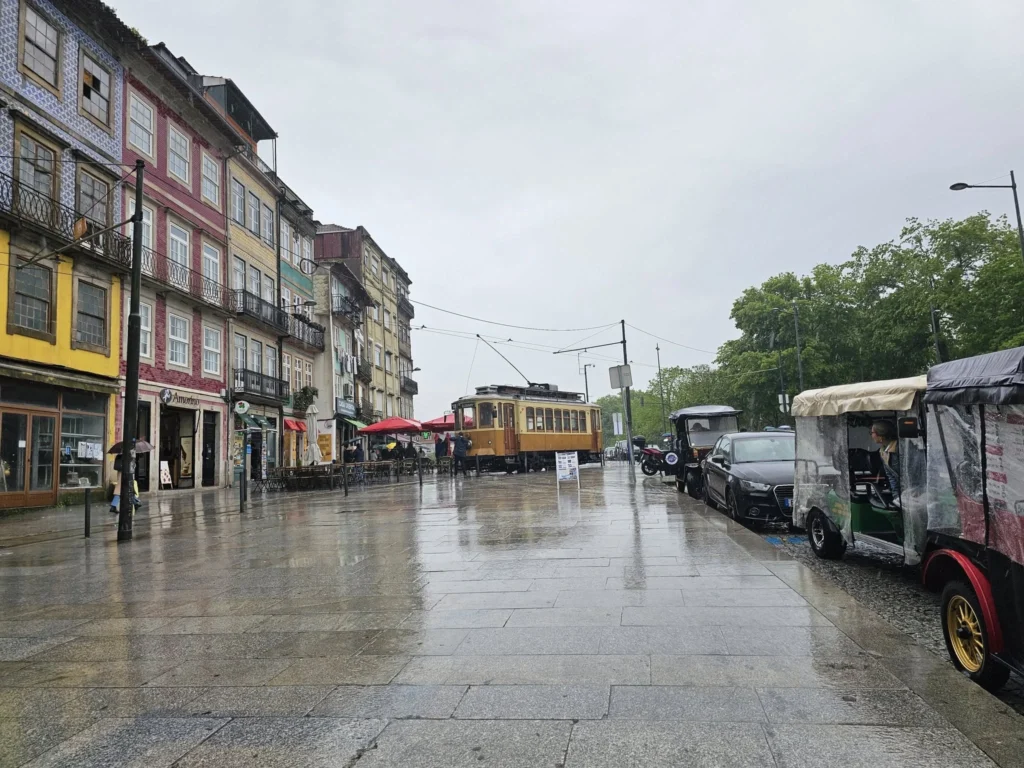
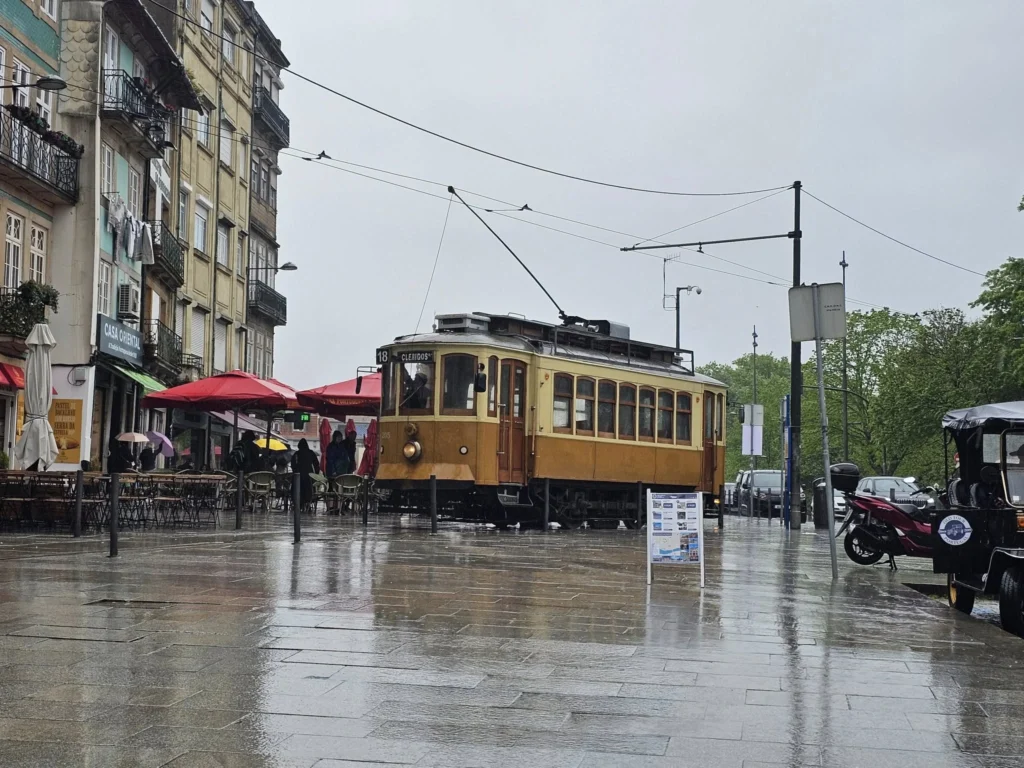
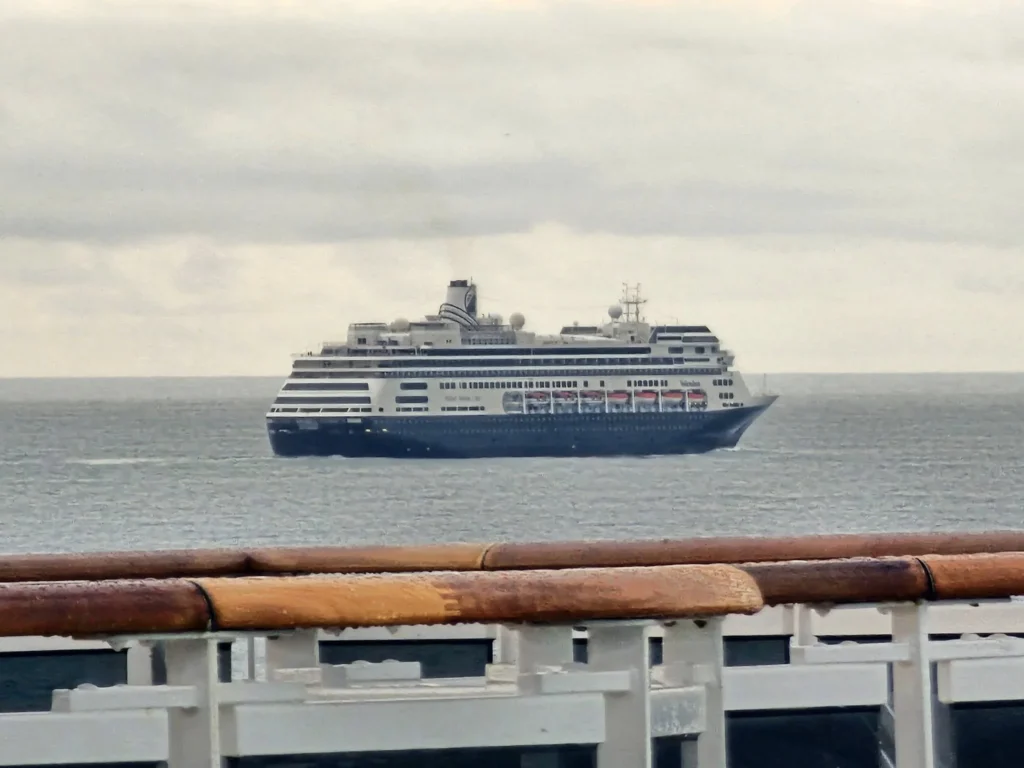
Our day in Leixões began with a dramatic downpour, the kind of rain that turns streets into rivers and umbrellas into futile accessories. As the Nieuw Statendam docked at the Port of Leixões, the gray skies and relentless rain might have deterred some, but for us, it was an invitation to embrace the adventure. Porto, with its storied history and vibrant charm, was calling, and a little (or a lot of) rain wasn’t going to stop us. After all, as we told ourselves, the rain gave us a perfect excuse to return to this captivating city on a sunnier day.
Rain in Porto? Just another layer of magic in a city that wears its charm in every weather.
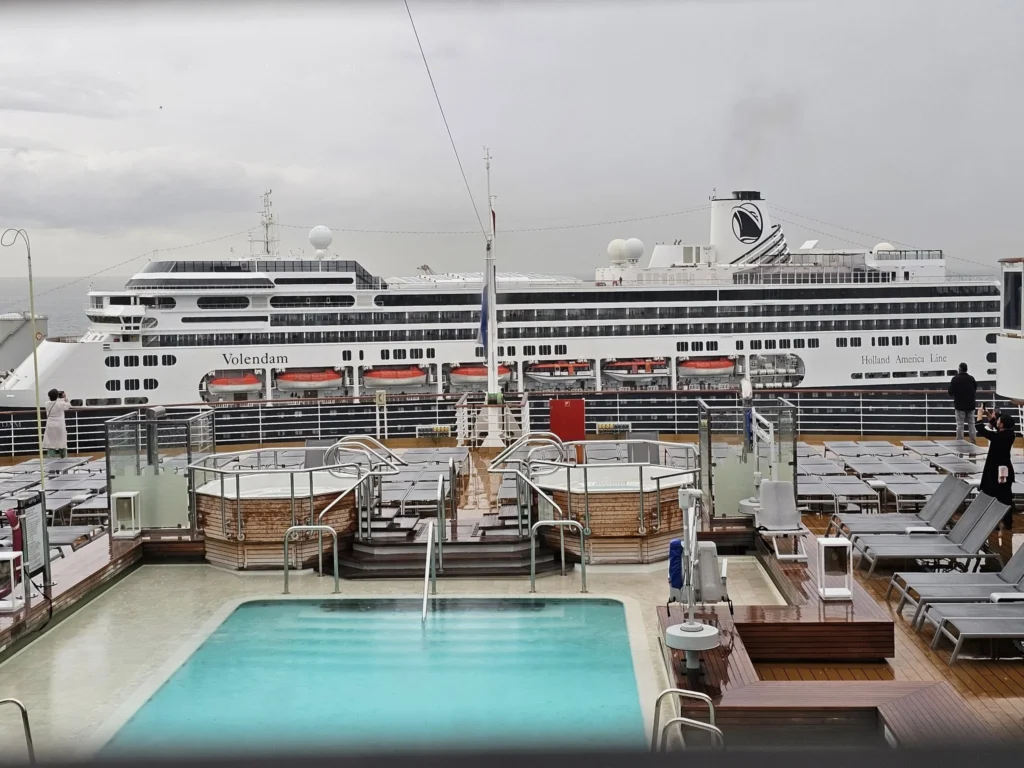
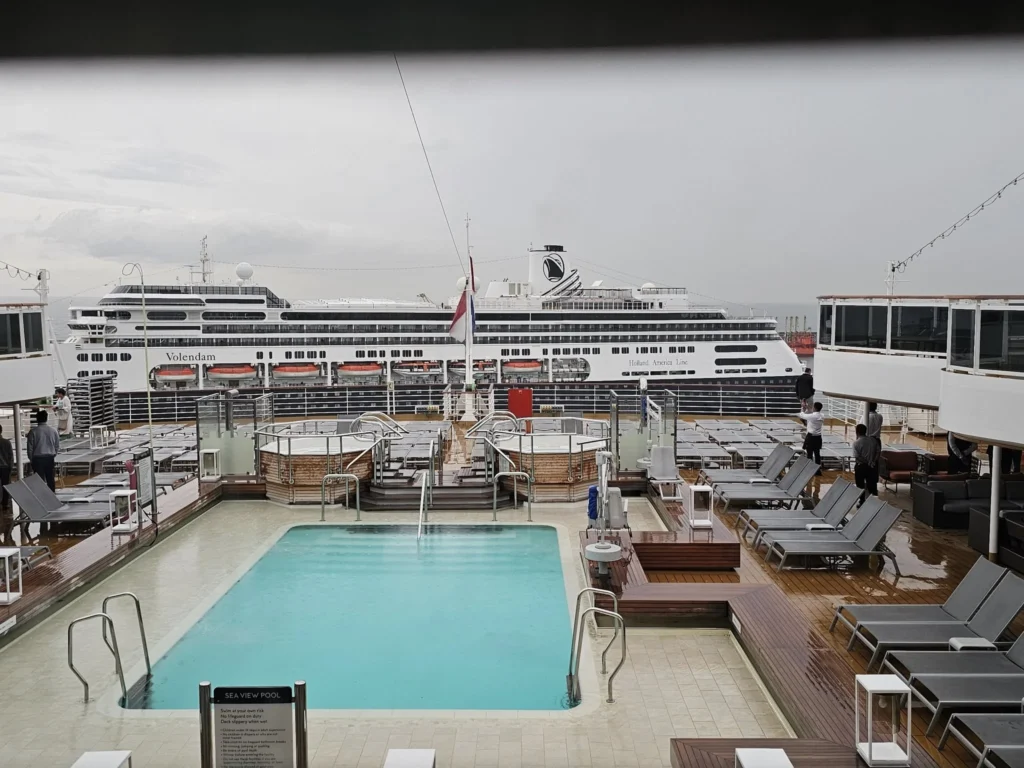
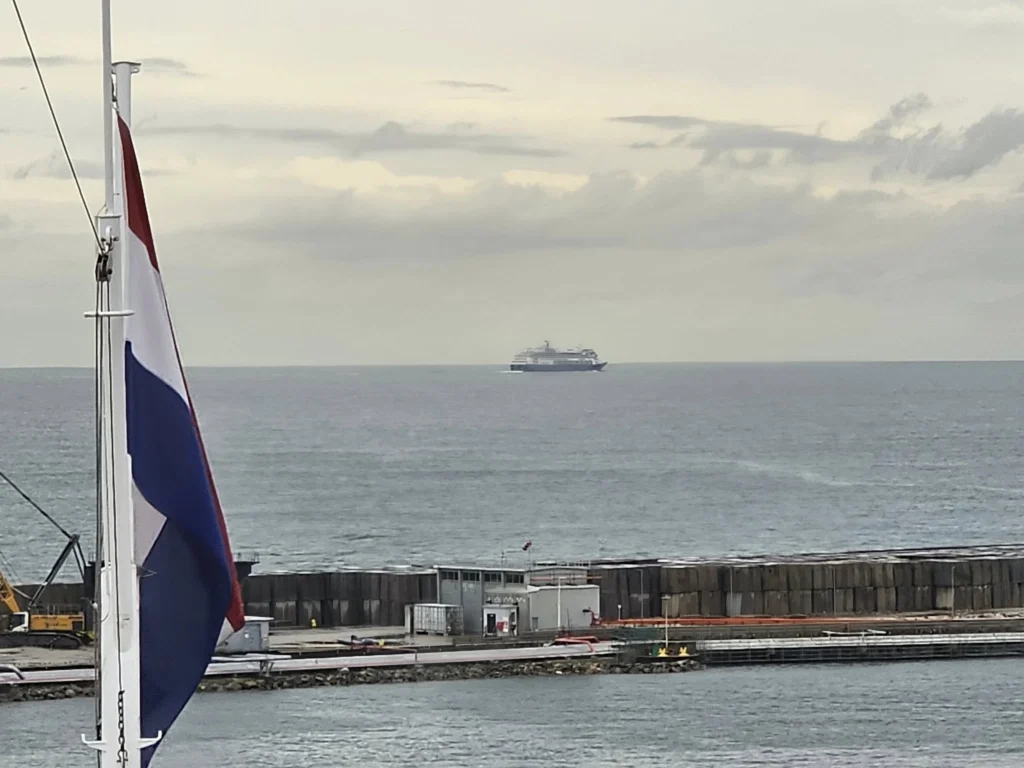
Leixões itself was a functional yet fascinating port. The North Cruise Terminal, with its sleek, ship-like design, welcomed us with a sense of maritime history. We learned that this terminal, part of Matosinhos’ architectural heritage, is a testament to the port’s evolution from a 19th-century shelter to a modern cruise hub. A short shuttle ride from the pier to the port gate, necessitated by the port’s no-walking policy, added a touch of anticipation as we prepared to explore Porto, just 8 kilometers away.
Tuk-Tuk Tour: Navigating Porto’s Charms
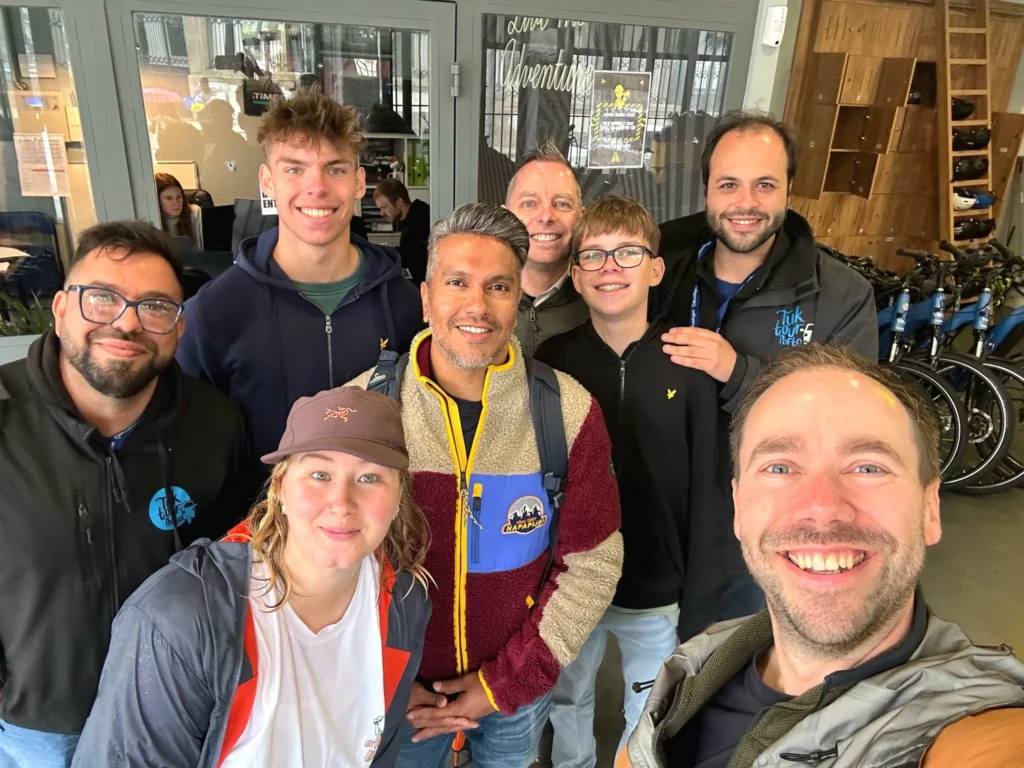
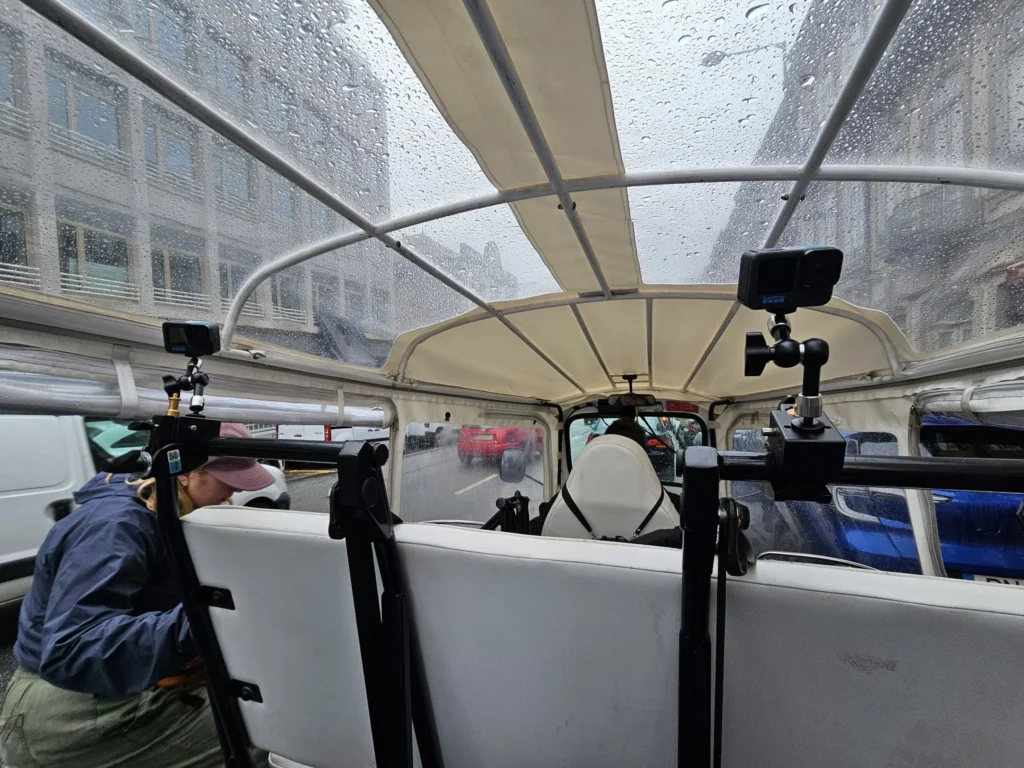
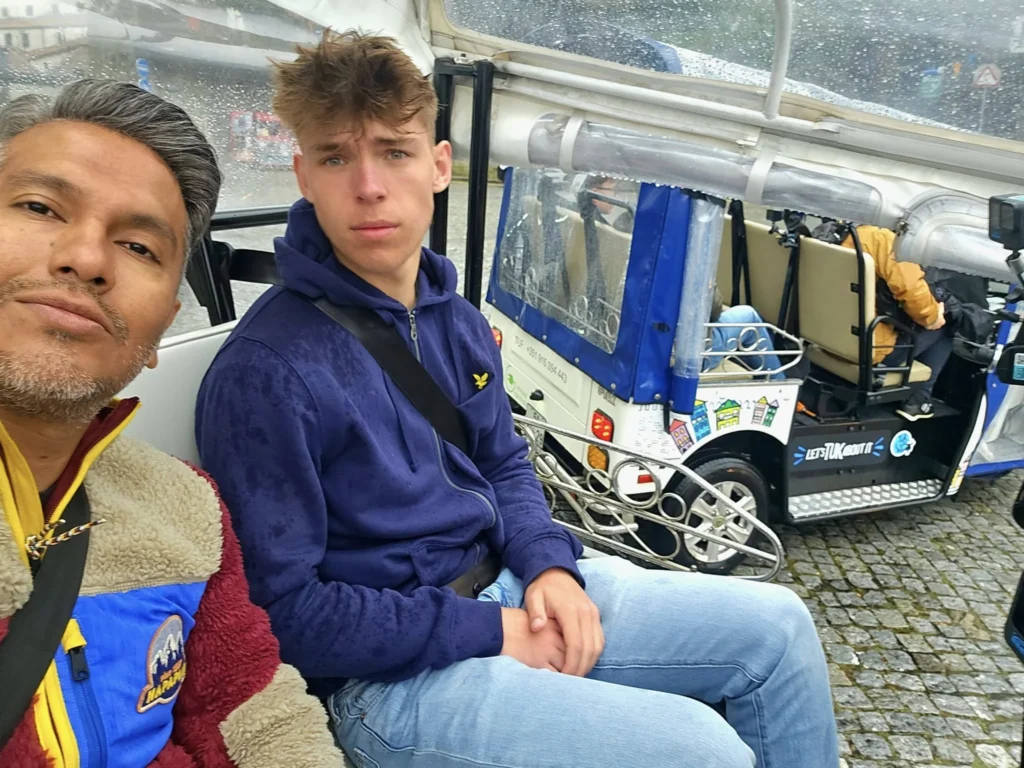
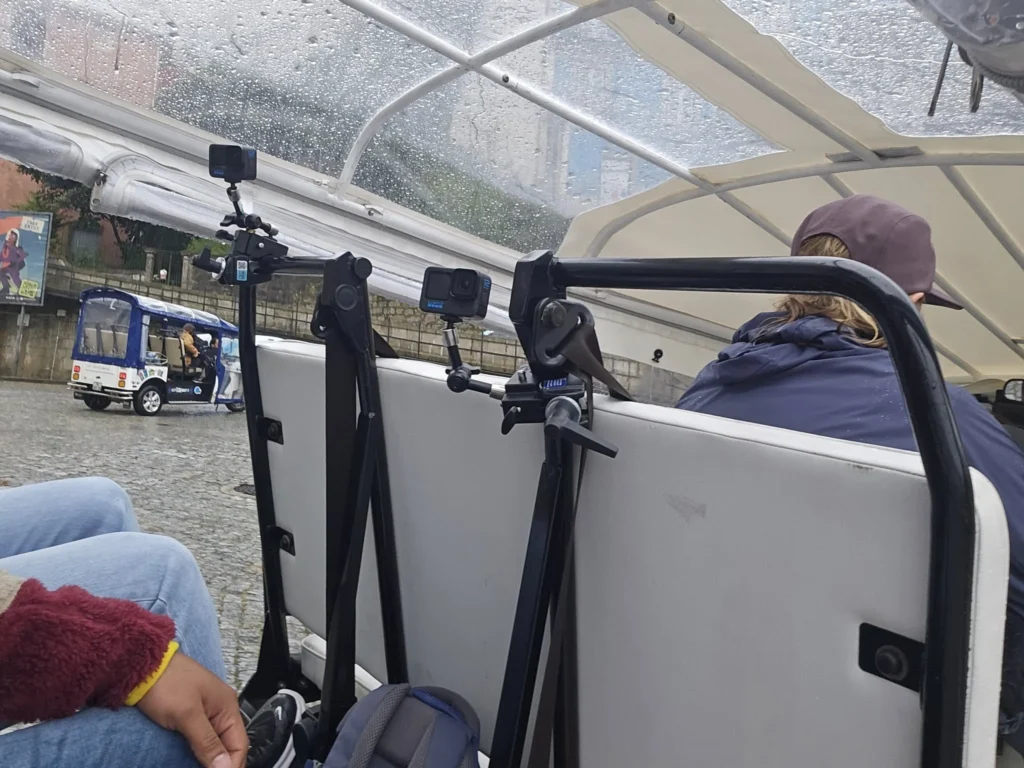
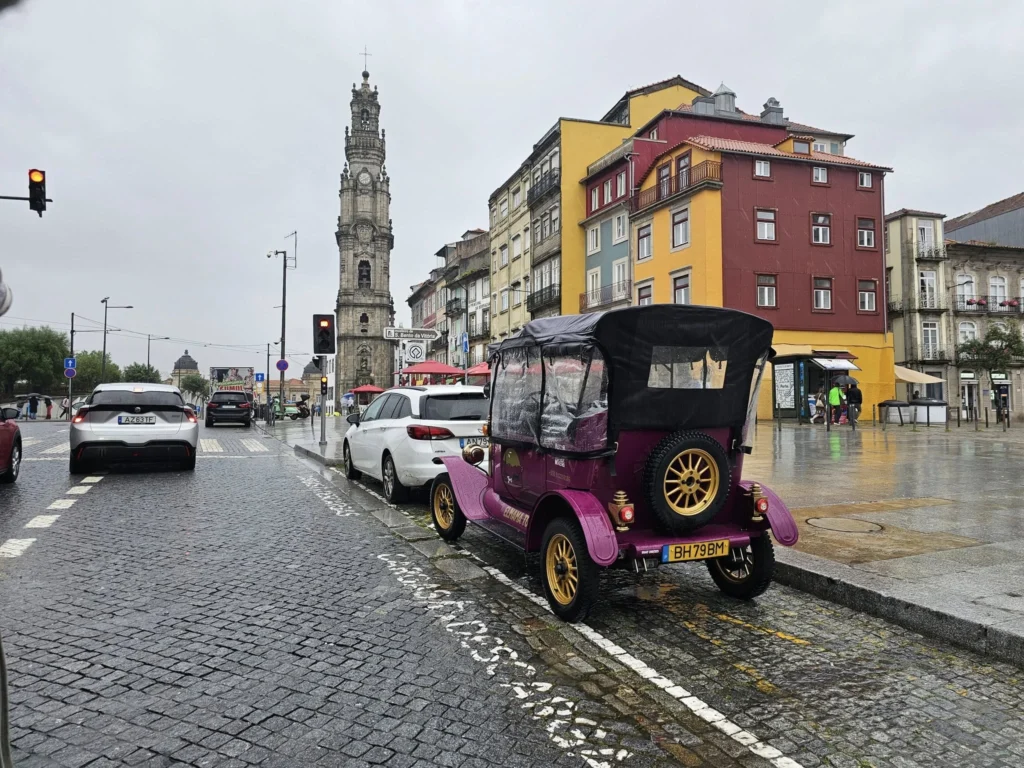
Our exploration of Porto began with a thrilling tuk-tuk tour, a perfect choice for navigating the city’s hilly terrain and narrow streets in the rain. Our guide, a local with a contagious passion for Porto, zipped us through the city in a cozy, covered tuk-tuk, shielding us from the worst of the weather. Adding an element of intrigue, a film crew joined us, capturing our journey for a project we’re not yet allowed to discuss. The presence of cameras and microphones made us feel like stars in our own travel documentary, though we’ll keep the details under wraps for now.
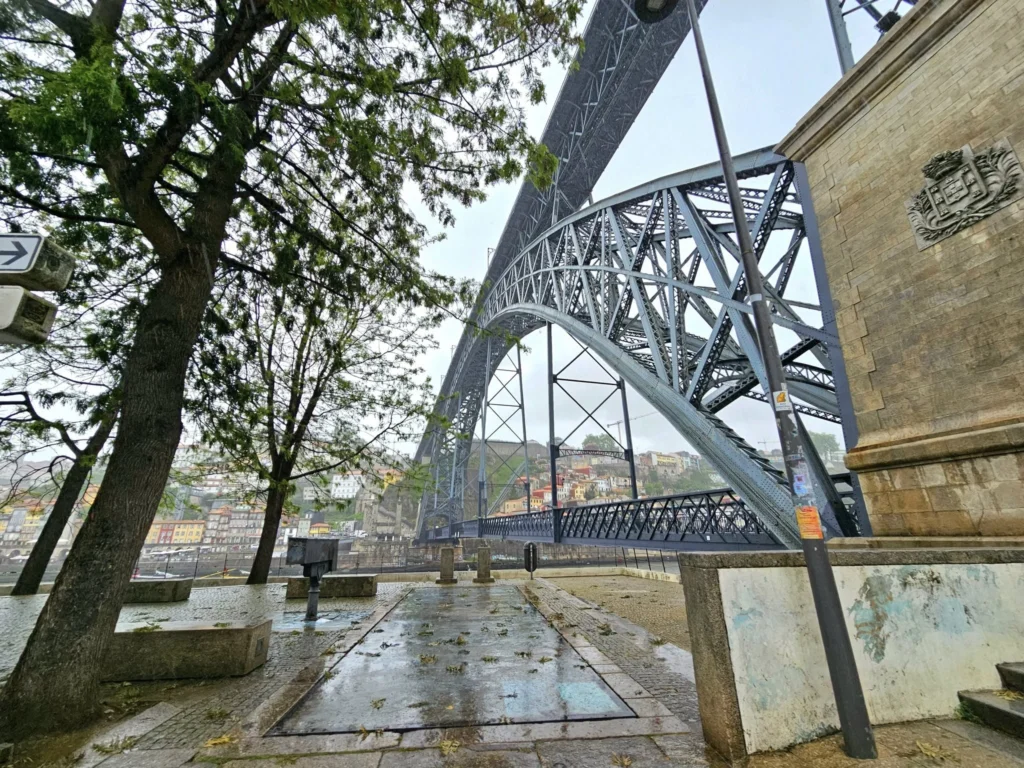
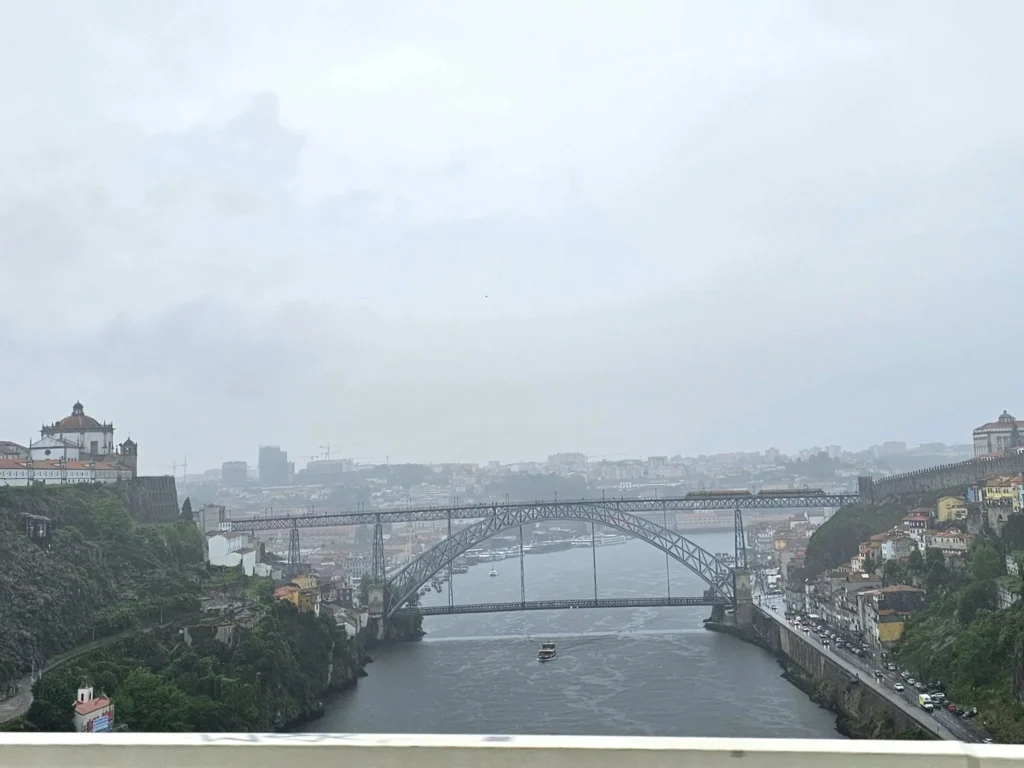
Our first stop was the iconic Dom Luís I Bridge, a double-decked marvel designed by Téophile Seyrig, a disciple of Gustave Eiffel. Spanning the Douro River, the bridge connects Porto to Vila Nova de Gaia, its iron lattice gleaming even in the rain. We marveled at its engineering from the tuk-tuk, catching glimpses of the river below and the colorful buildings lining the waterfront. Our guide shared that the bridge, completed in 1886, is not only a functional crossing but also a symbol of Porto’s industrial ambition. Walking its upper deck for panoramic views was tempting, but the rain kept us snug in our tuk-tuk, promising a future visit.
Did You Know? The Dom Luís I Bridge, standing 45 meters tall, was the longest arch bridge in the world when it opened in 1886, a testament to Porto’s forward-thinking spirit.


Exploring Porto’s Historic Heart
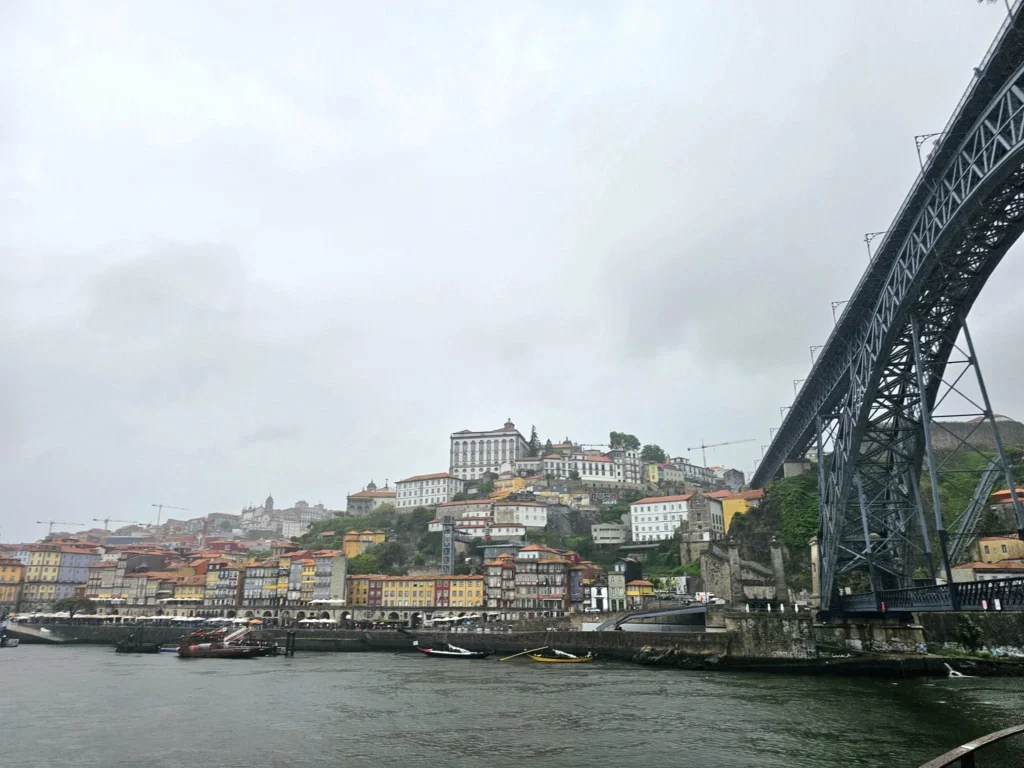
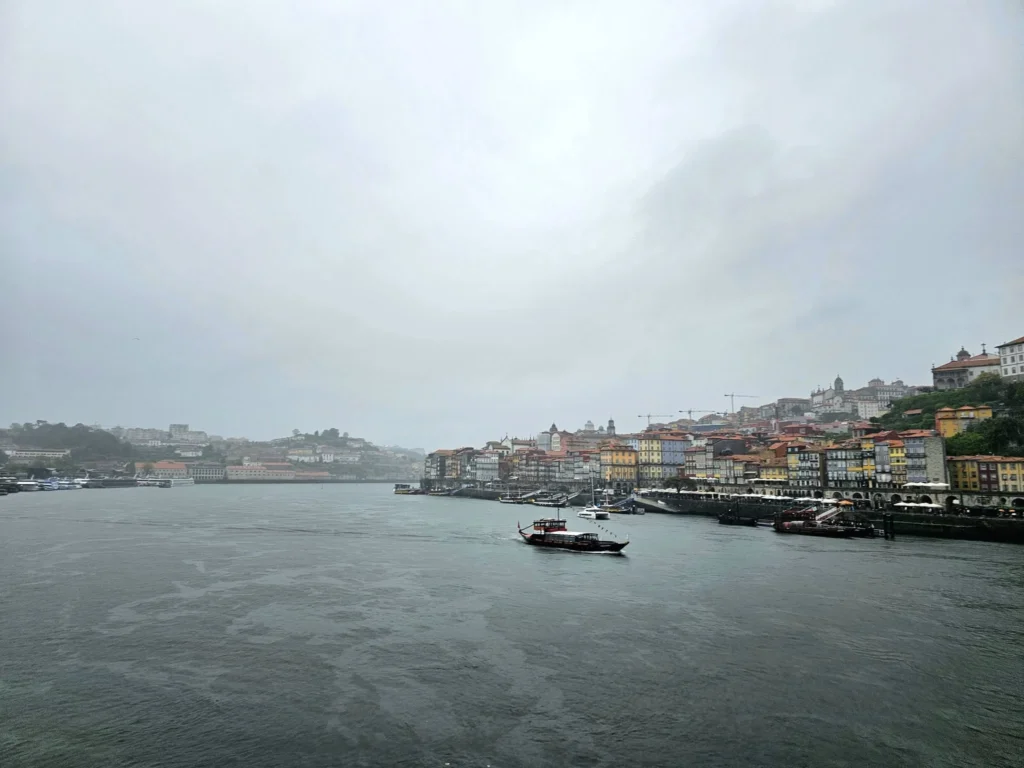
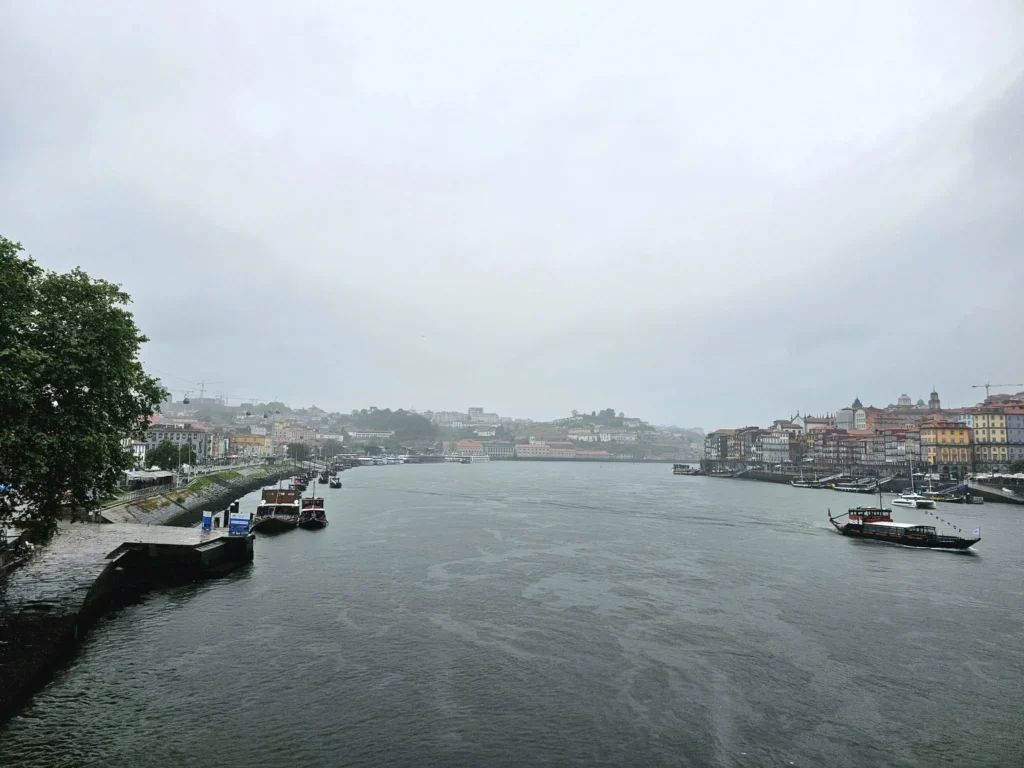
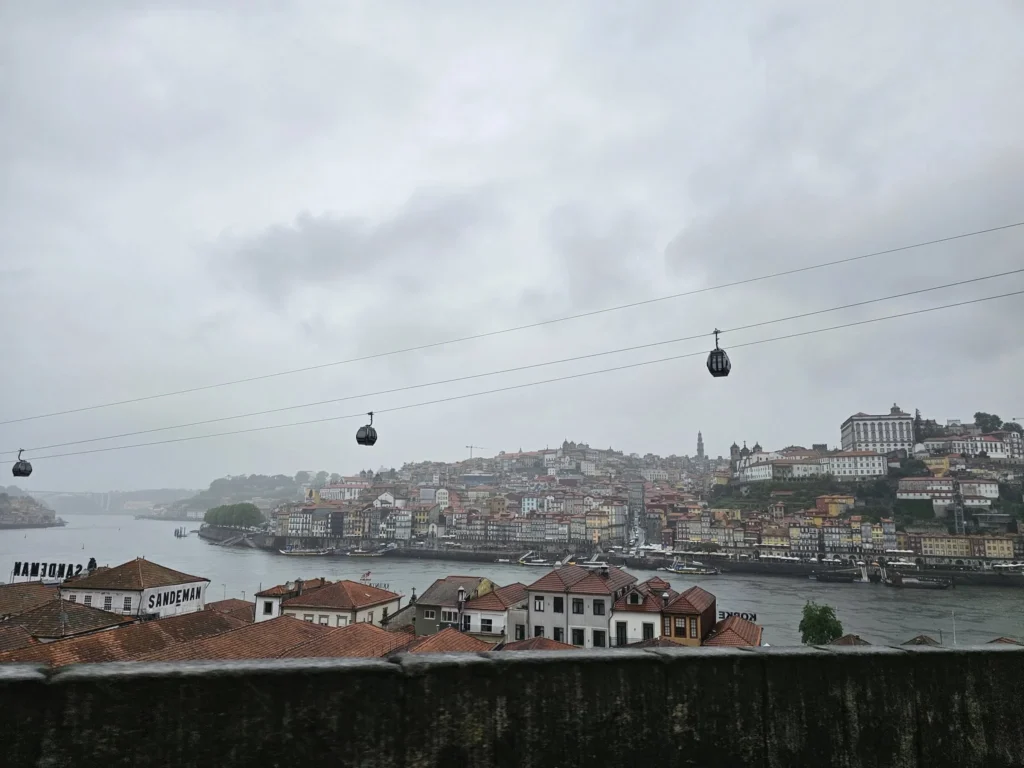
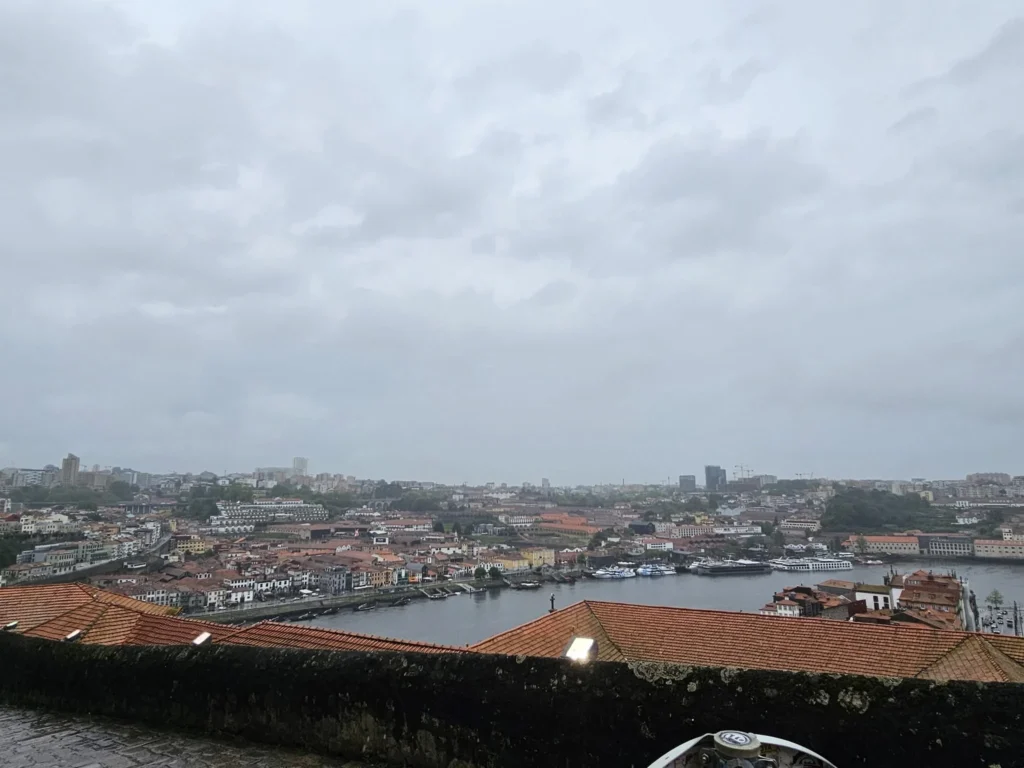
From the bridge, we caught distant views of the Ribeira District, Porto’s UNESCO World Heritage-listed waterfront. The rain blurred the scene, but the colorful facades, quaint cafes, and bustling energy were unmistakable. Ribeira’s medieval arches and cobblestone streets, tucked along the Douro, exuded a timeless charm. We imagined sipping coffee at one of the riverside cafes or strolling the promenade on a drier day, but for now, the tuk-tuk offered a perfect vantage point to soak in the atmosphere without getting soaked ourselves.
Across the river, the Vila Nova de Gaia port wine cellars beckoned, their signs for Sandeman, Graham’s, and Taylor’s visible even through the mist. These historic cellars, where port wine is aged to perfection, are a cornerstone of Porto’s identity. Our guide shared tales of the wine’s fortification process, developed to preserve it during long sea voyages to Britain. While we didn’t cross the river for a tasting, the sight of Gaia’s hillside cellars sparked our curiosity, adding another item to our list for a return visit.

The Majesty of Porto Cathedral
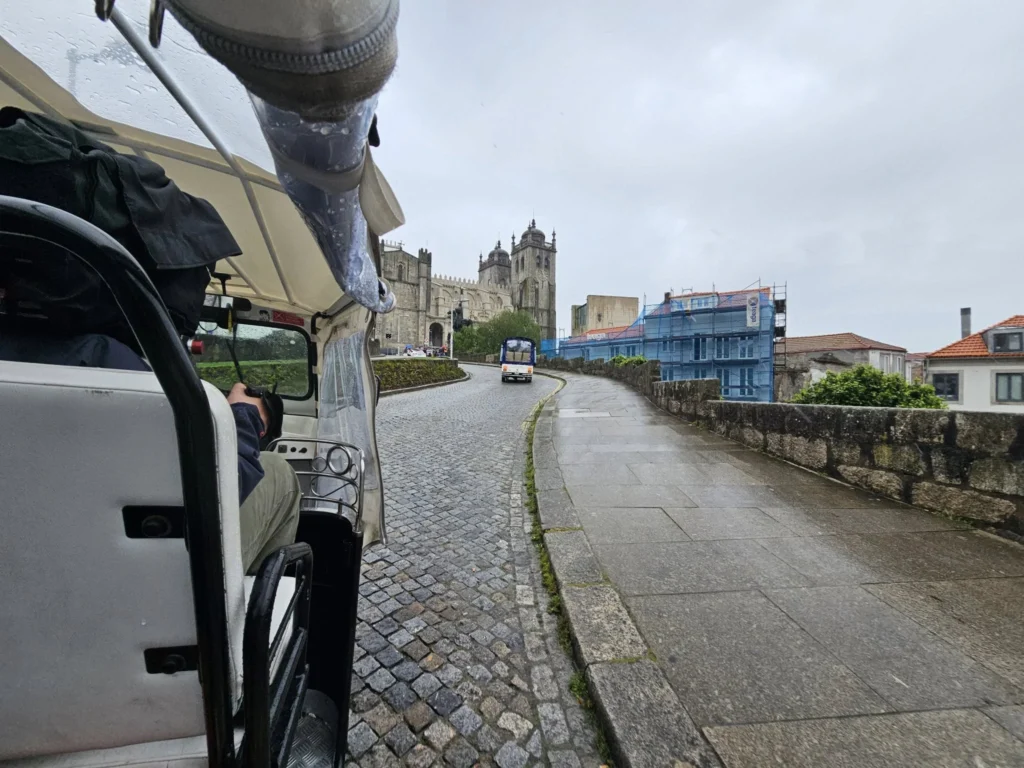
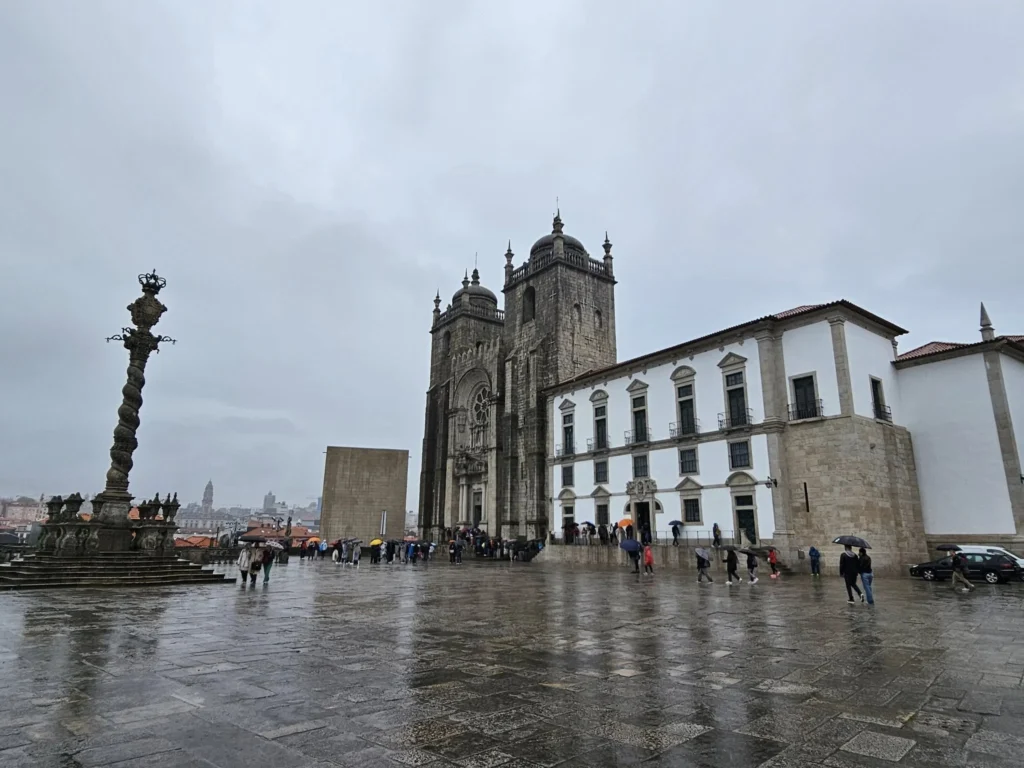
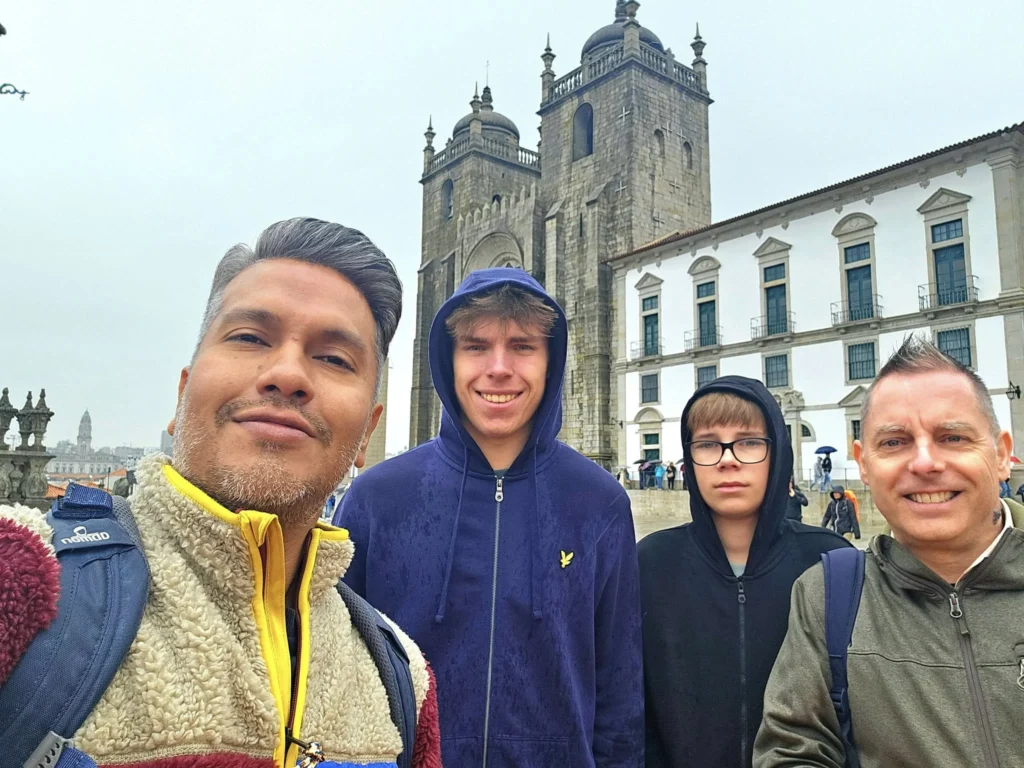
Our tuk-tuk wound its way to the Sé do Porto, the city’s 12th-century cathedral, a Romanesque and Gothic masterpiece perched on a hill. The rain added a mystical aura to its stone facade, with intricate carvings and towering presence standing resolute against the elements. We stepped out briefly, umbrellas in hand, to admire the cathedral’s grandeur and the panoramic views of Porto’s red-tiled roofs and the Douro below. The cloisters, adorned with azulejo tiles, were a highlight, though we kept our visit short to stay dry. The cathedral’s crypt and terrace, which we glimpsed from outside, promised more treasures for a future exploration.
The Sé do Porto stood like a guardian over the city, its ancient stones whispering stories of centuries past, undaunted by the rain.

São Bento Station: A Tiled Masterpiece
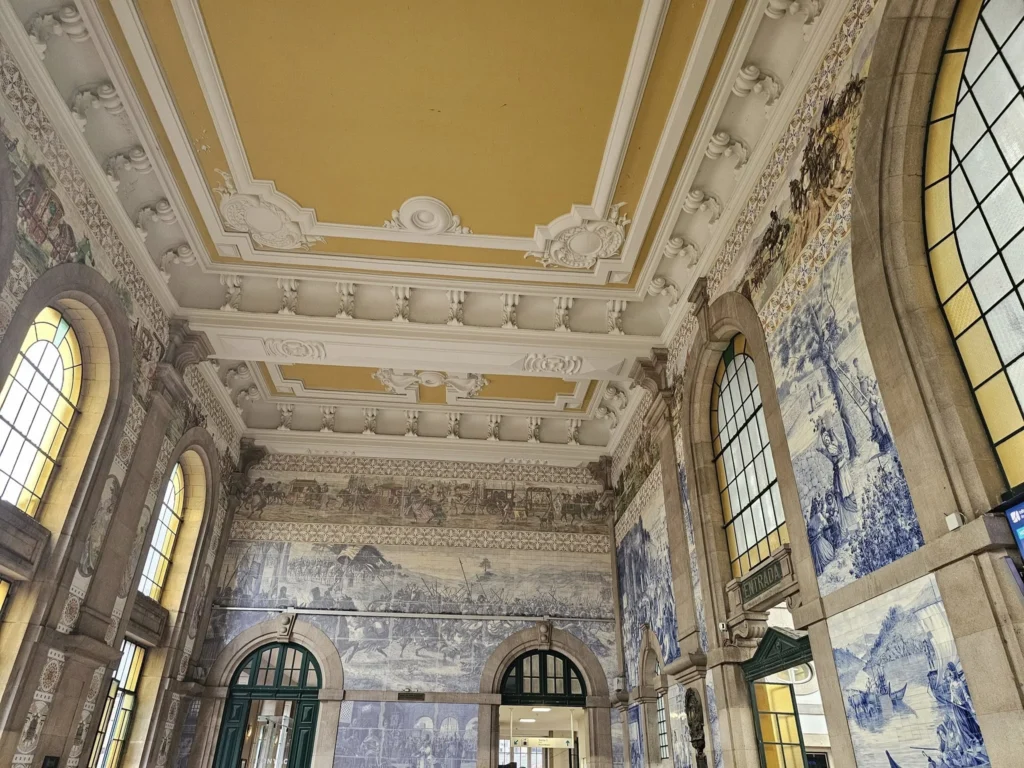
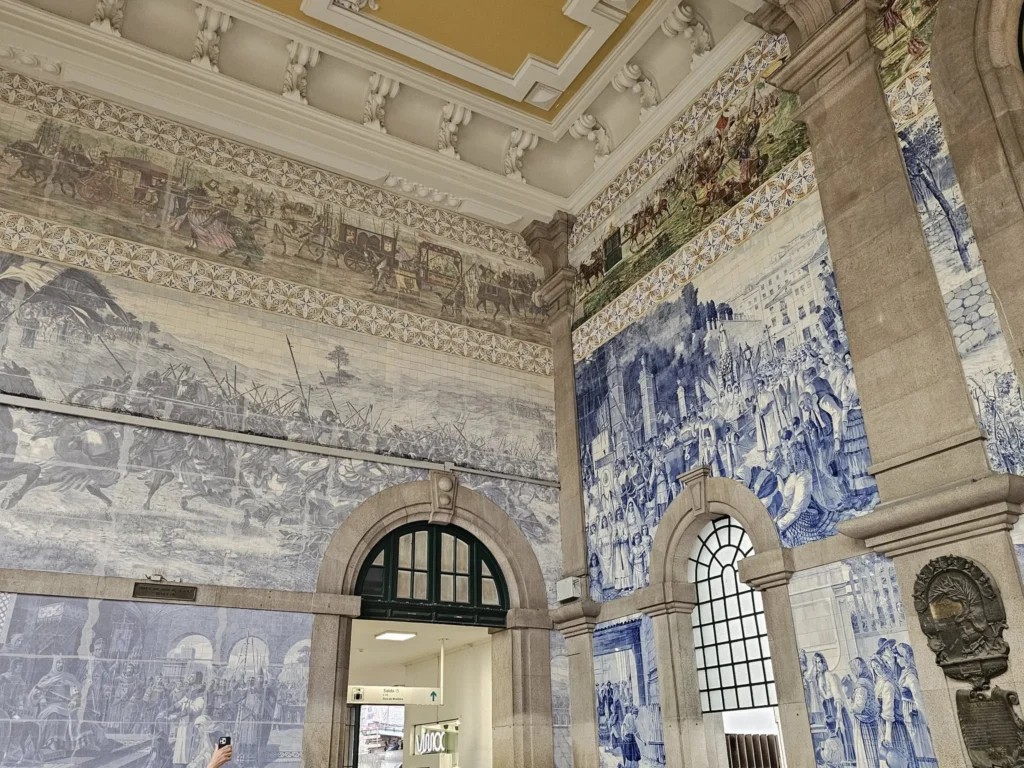
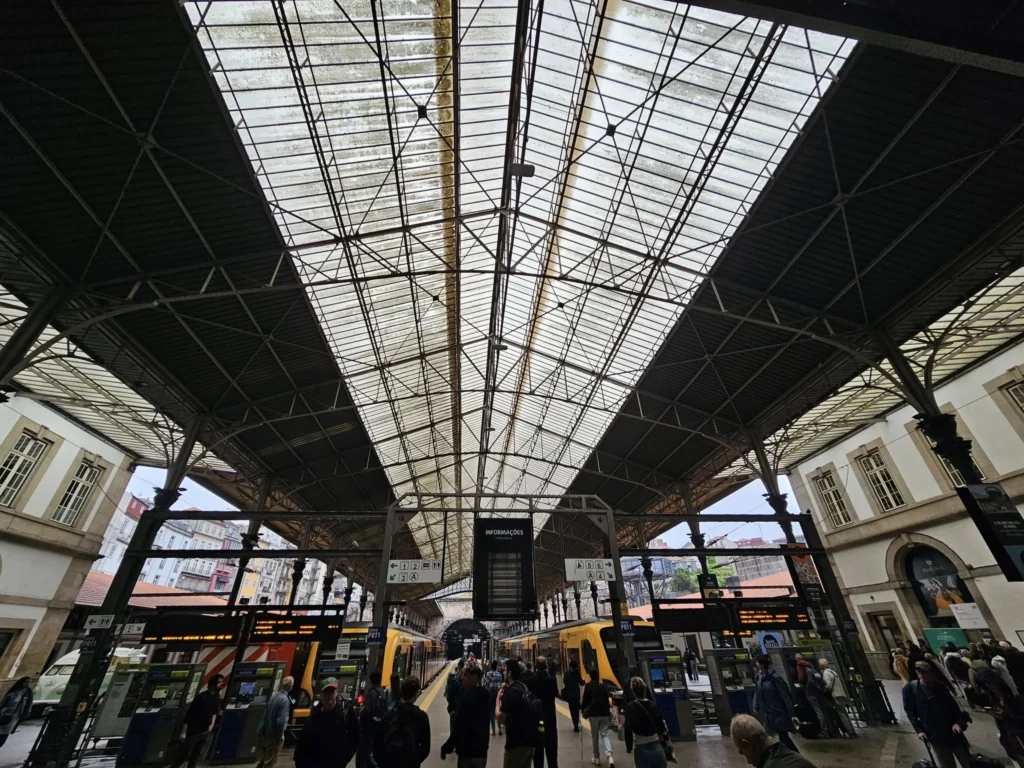
No visit to Porto is complete without seeing São Bento Railway Station, and our tuk-tuk tour delivered us to this architectural gem. Stepping into the station’s atrium felt like entering a living museum. Over 20,000 blue and white azulejo tiles, designed by Jorge Colaço and completed in 1916, cover the walls, depicting scenes from Portugal’s history, from battles to rural life. The rain outside made the station’s warm, vibrant interior even more inviting. We lingered, snapping photos and marveling at the artistry, feeling a deep connection to Porto’s cultural heritage.


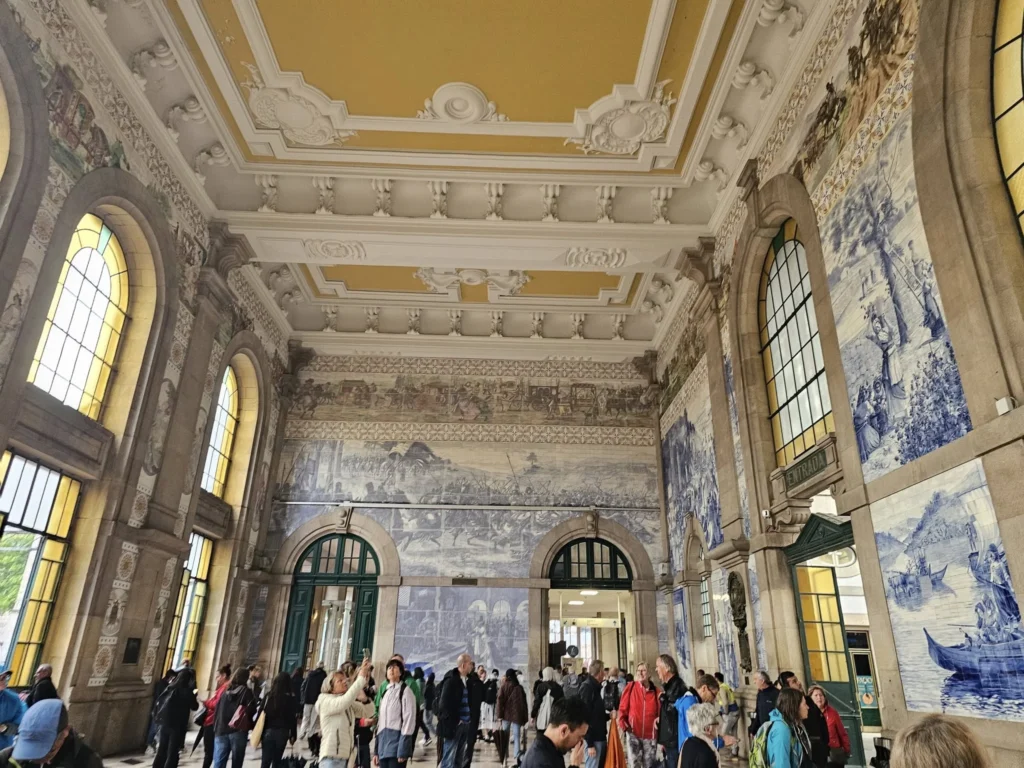
Travel Tip: Visit São Bento Station early in the day to avoid crowds and fully appreciate the azulejo tiles, which tell Portugal’s story in stunning detail.
Navigating Narrow Streets and Old Buildings
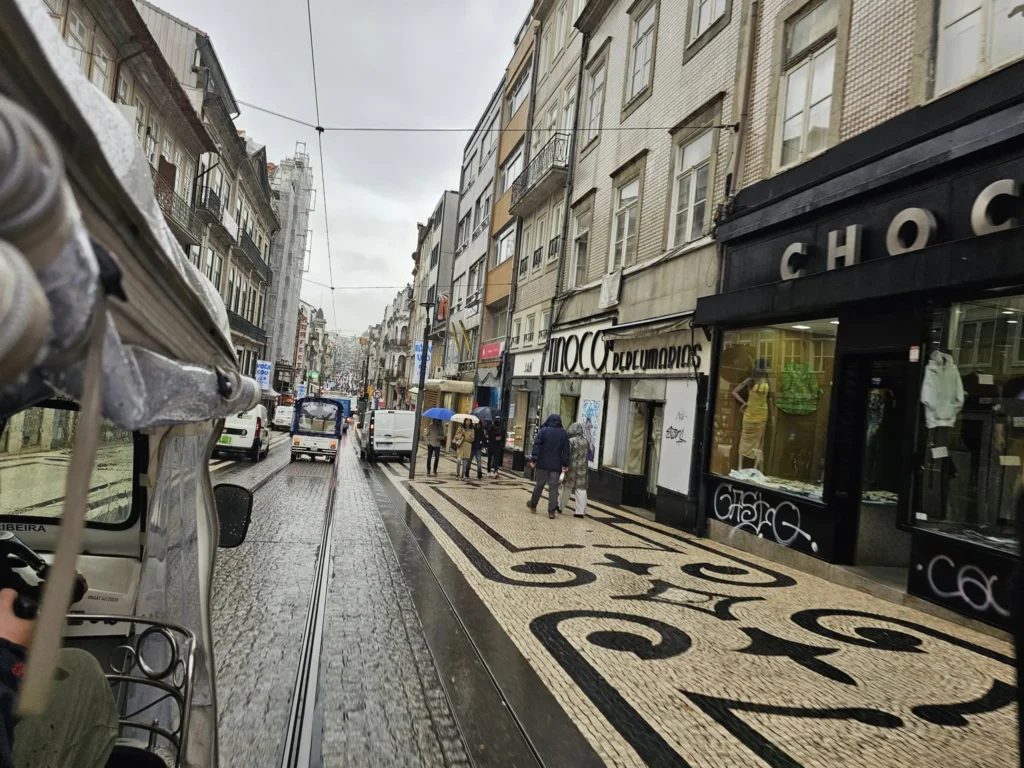
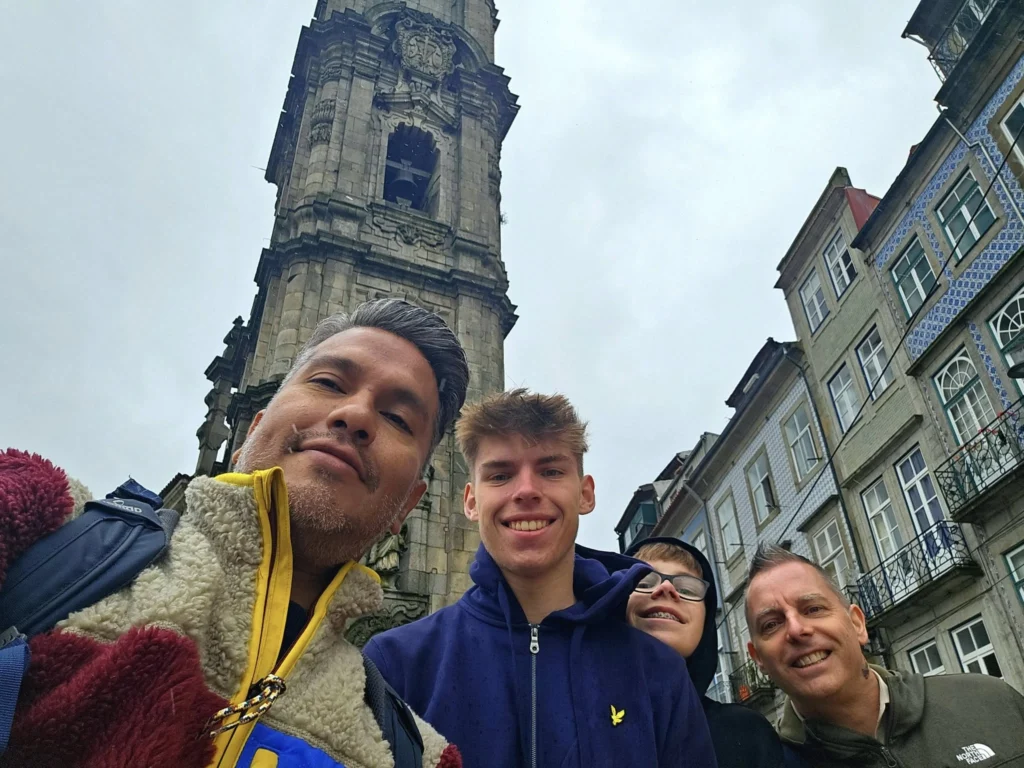
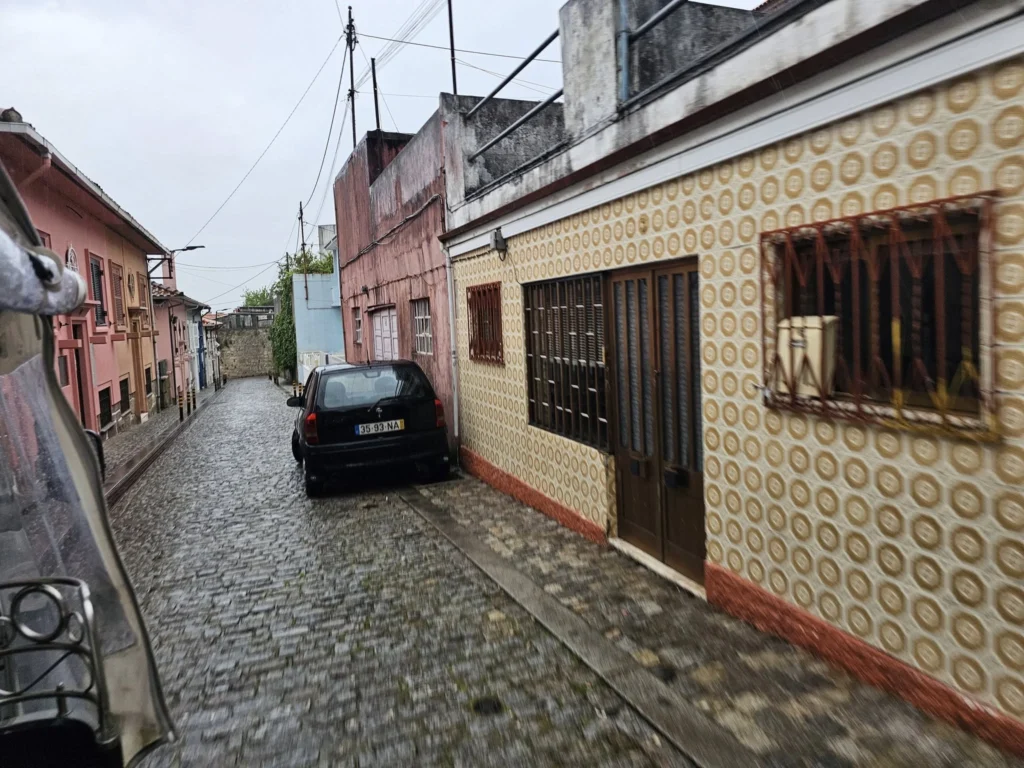
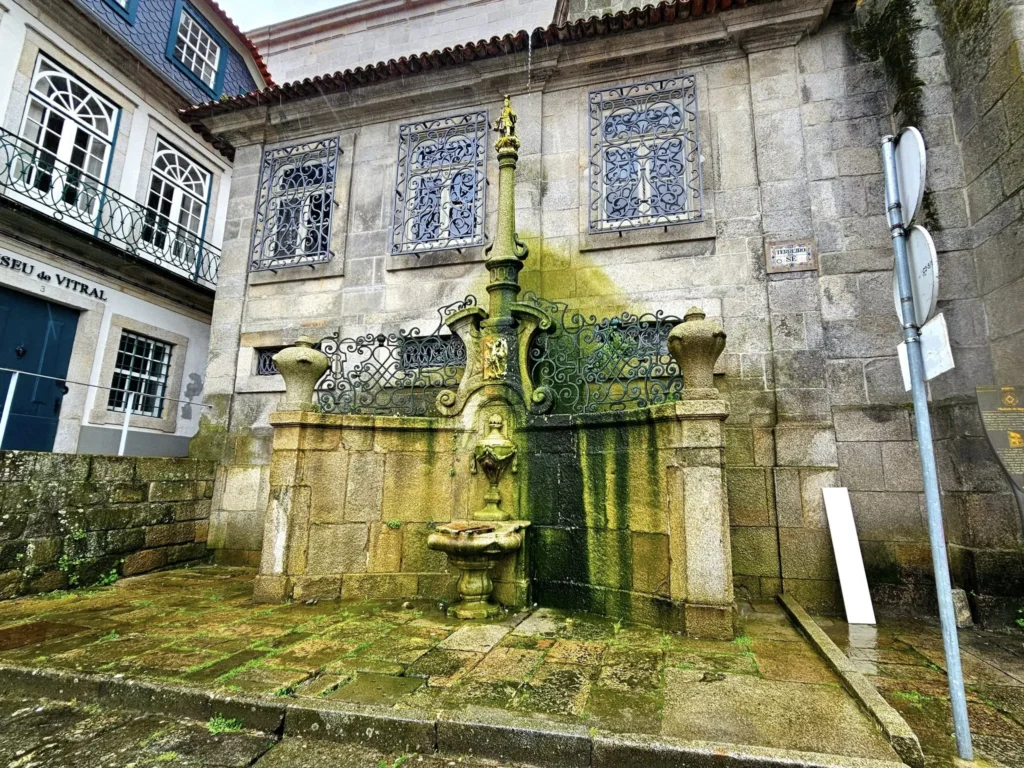
Porto’s charm lies in its labyrinthine streets, and our tuk-tuk wove through narrow alleys lined with centuries-old buildings. The rain lent a glossy sheen to the cobblestones, enhancing the city’s medieval ambiance. We passed faded facades adorned with laundry hanging from wrought-iron balconies, a quintessential Porto sight. Our guide pointed out hidden churches and tucked-away cafes, sharing stories of the city’s resilience, including its nickname, Cidade Invicta (Invincible City), earned during a 19th-century siege. These fleeting glimpses of Porto’s soul left us eager to explore more on foot next time.


Returning to the Nieuw Statendam
With the rain showing no signs of letting up, our time in Porto was shorter than planned. After a whirlwind tuk-tuk tour, we returned to the Nieuw Statendam, our home away from home. The shuttle ride back to Leixões gave us a moment to reflect on Porto’s allure, from its historic landmarks to its vibrant energy. The rain, while a challenge, added a unique layer to our experience, making every sight feel like a discovery earned through the elements. We boarded the ship with wet shoes but warm hearts, already dreaming of a sunnier return to Porto.
Dining at Tamarind: A Culinary Haven
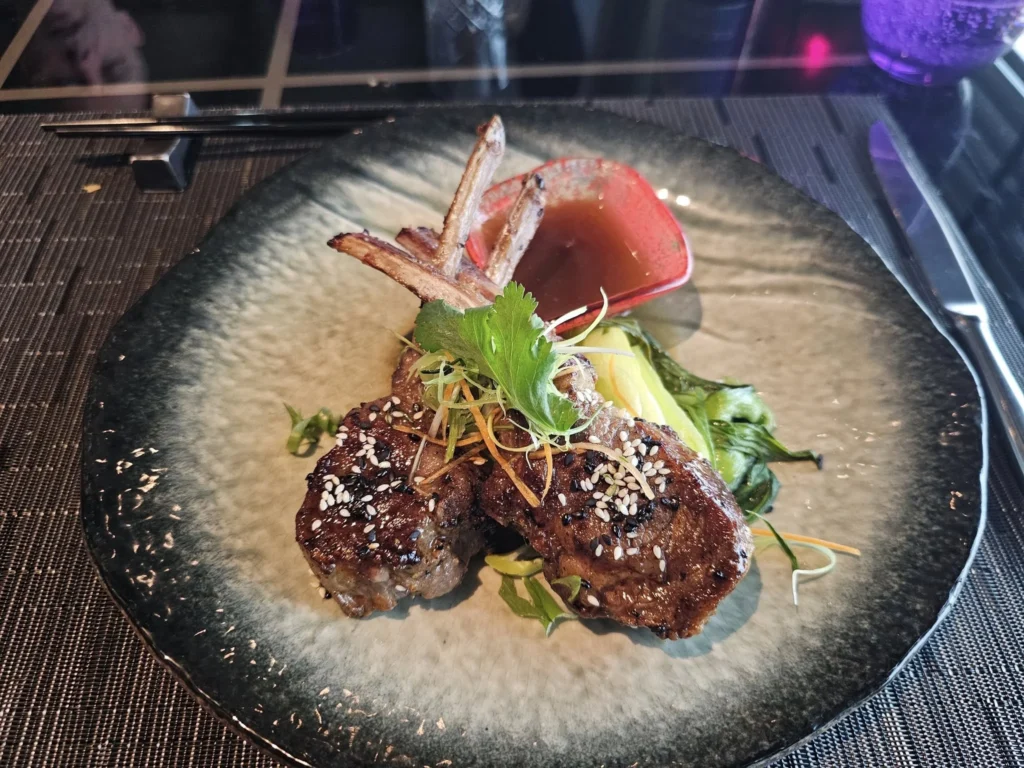
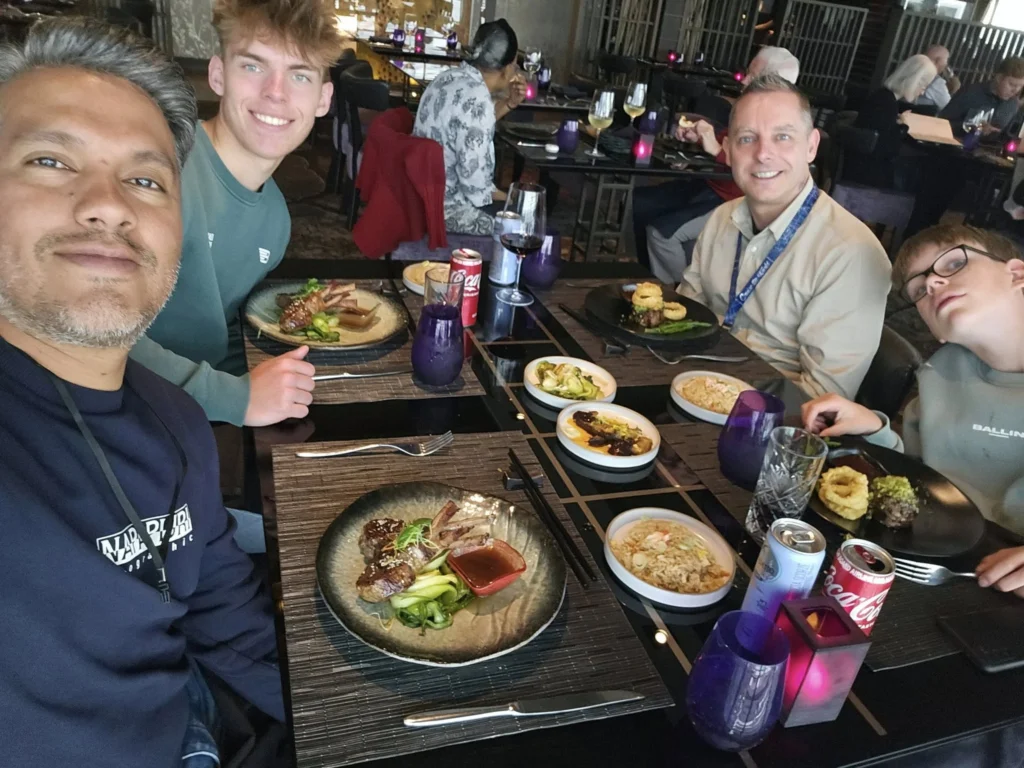
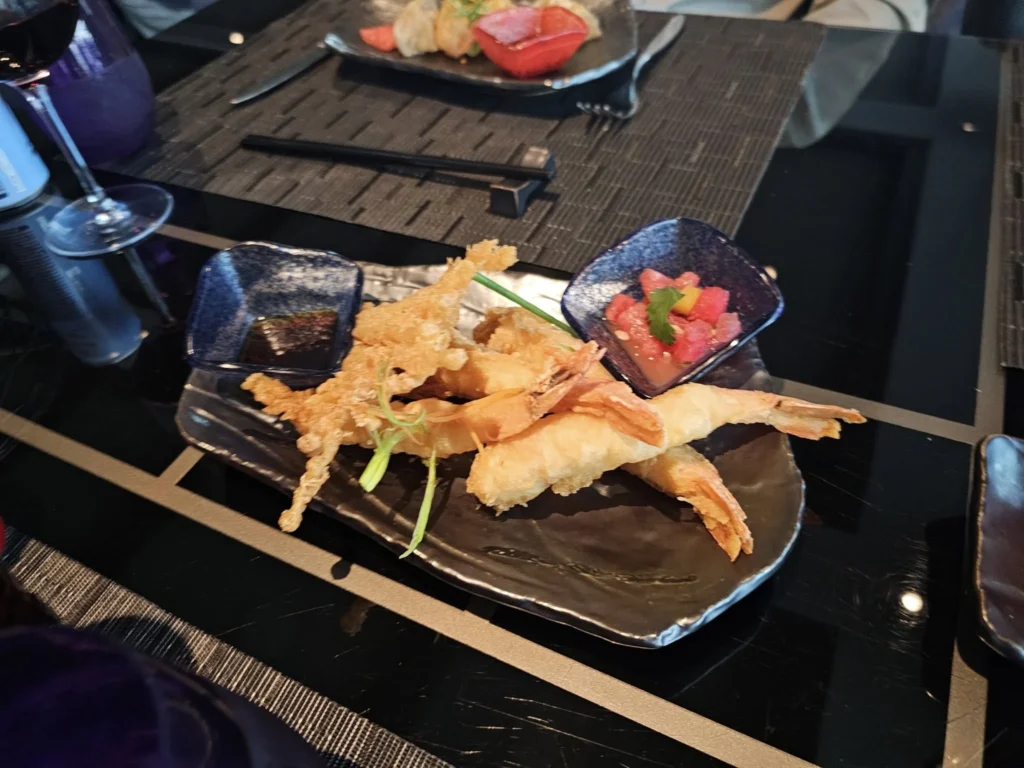
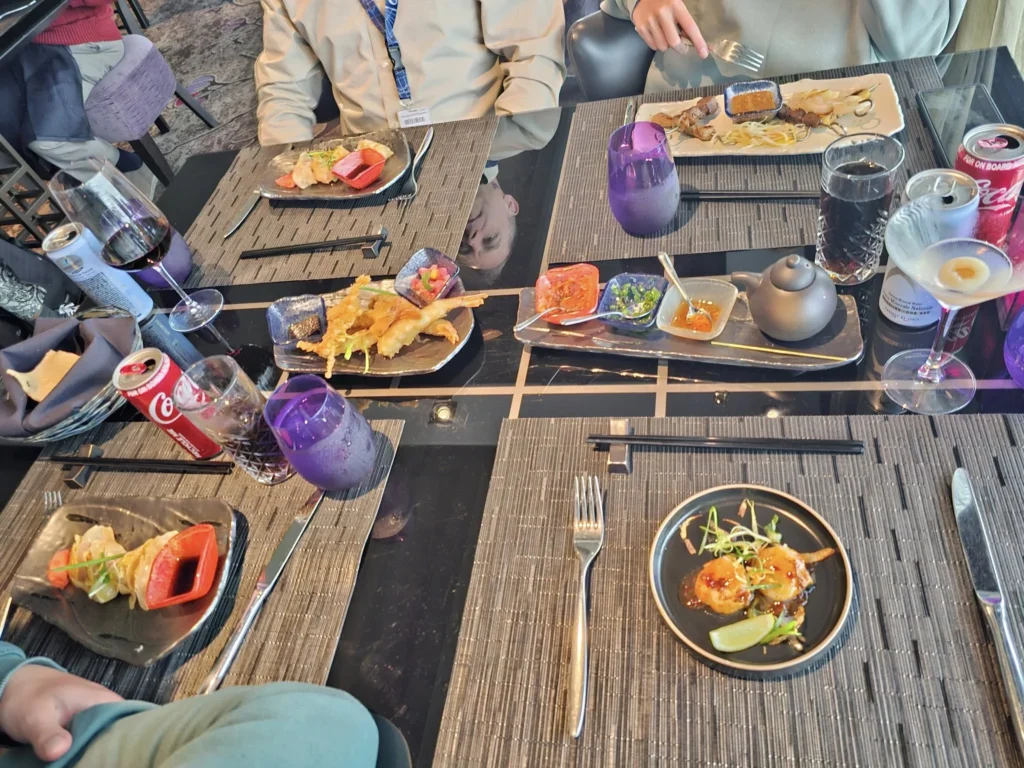
Back onboard, we treated ourselves to dinner at Tamarind, the Nieuw Statendam’s specialty restaurant and our favorite dining spot. After a damp day, the warm, elegant ambiance of Tamarind was a welcome retreat. Inspired by Southeast Asian, Chinese, and Japanese cuisines, the menu offered a symphony of flavors, from tamarind-glazed shrimp to miso-marinated black cod. Each dish was a work of art, paired with attentive service that made us feel pampered. The panoramic ocean views through Tamarind’s windows, even with rain streaking the glass, added a serene backdrop to our meal.
At Tamarind, every bite was a journey, a perfect blend of spice and sophistication that warmed us from the inside out.
We savored cocktails infused with exotic ingredients, like lemongrass and ginger, and indulged in desserts like the mango cloud, a light, tropical delight. The kids, usually picky eaters, found plenty to love, with kid-friendly options presented with the same flair. Dining at Tamarind was more than a meal; it was a highlight of our day, a moment to reconnect and share stories of our Porto adventure.


Lido Fun Fair: A Kid’s Paradise
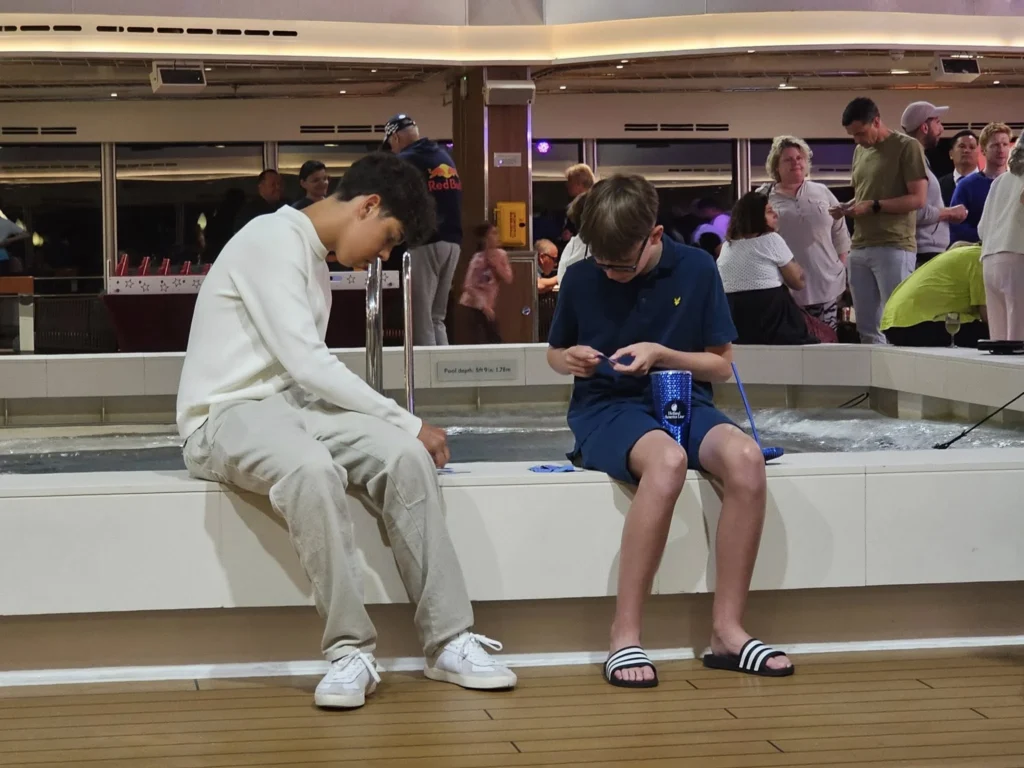
After dinner, we headed to the Lido Midship for the Lido Fun Fair, a Nieuw Statendam event that turned the pool deck into a carnival wonderland. The kids’ eyes lit up at the sight of games, cotton candy, and colorful decorations. From ring toss to mini-golf, the fair offered endless entertainment, with crew members dressed as clowns and magicians adding to the festive vibe. Our boys darted from one activity to the next, their laughter echoing across the deck. Even the adults got in on the fun, trying our luck at carnival games and savoring popcorn under the retractable roof, which kept the rain at bay.
The Lido Fun Fair was a testament to Holland America Line’s family-friendly ethos, creating memories that the kids will cherish. As parents, we appreciated the chance to relax and watch them revel in the joy of the moment. The event capped our day perfectly, balancing the cultural immersion of Porto with lighthearted onboard fun.
Family Travel Tip: The Lido Fun Fair is a must for families on the Nieuw Statendam, offering free, interactive fun that keeps kids entertained for hours.


Reflections and Two Days at Sea
As we settled into our stateroom, the rain still pattering outside, we felt a mix of satisfaction and anticipation. Porto, with its bridges, cathedrals, and tiled wonders, had left an indelible mark, despite our abbreviated visit. The tuk-tuk tour, the film crew’s presence, and the cozy moments at Tamarind and the Lido Fun Fair made the day unforgettable. With two sea days ahead before reaching London, we looked forward to relaxing onboard, recounting our Porto stories, and planning our next adventure.





















Raindrops and Porto’s Charm
In Leixões’ arms, where waves embrace the shore,
The Nieuw Statendam rests, a traveler’s door.
Through rain that falls like silver threads of time,
We chase Porto’s heart, its rhythm and rhyme.

Tuk-tuks hum through streets of ancient stone,
Dom Luís I stands, iron-wrought and lone.
Ribeira whispers tales of days long past,
While Gaia’s cellars guard the wine to last.

The cathedral looms, a sentinel in gray,
Its spires pierce the mist, where dreams hold sway.
São Bento’s tiles, blue stories set in clay,
Sing of Portugal’s soul, come what may.

Rain paints the city in a glossy sheen,
Yet every corner holds a vibrant scene.
From narrow lanes to bridges soaring high,
Porto’s charm endures beneath a weeping sky.

Back on the ship, Tamarind’s warmth unfolds,
Flavors of the East in stories yet untold.
The Lido laughs with children’s gleeful play,
A carnival of joy to close the day.

Though rain may fall, our spirits never fade,
In Porto’s embrace, sweet memories are made.
With sea days ahead, we sail into the night,
Carrying Porto’s glow, its endless light.